Drought robs Amazon communities of 'life-giving' river
-
 Loading...
 - Elizabeth Martinez
- 18 Mar 2022
- 397 Views
- 0 Like
- 0 Comment
Orlando Rufino stands in the bed of the river that he says has been "life-giving" for his people for hundreds of years.
"It's life, because it's what gives us everything," he explains.
A key source of transport, food and income for families like Mr Rufino's, the river has always snaked through dense jungle in southern Colombia, eventually linking up with the mighty Amazon.
But instead of wading through water, his feet sink into dry sand. Wooden boats that normally travel along its steady current sit forgotten next to him.
"Even during droughts, it has always gone up to here," Mr Rufino, 43, says, holding his hand over his head. "Right now, it's critical."
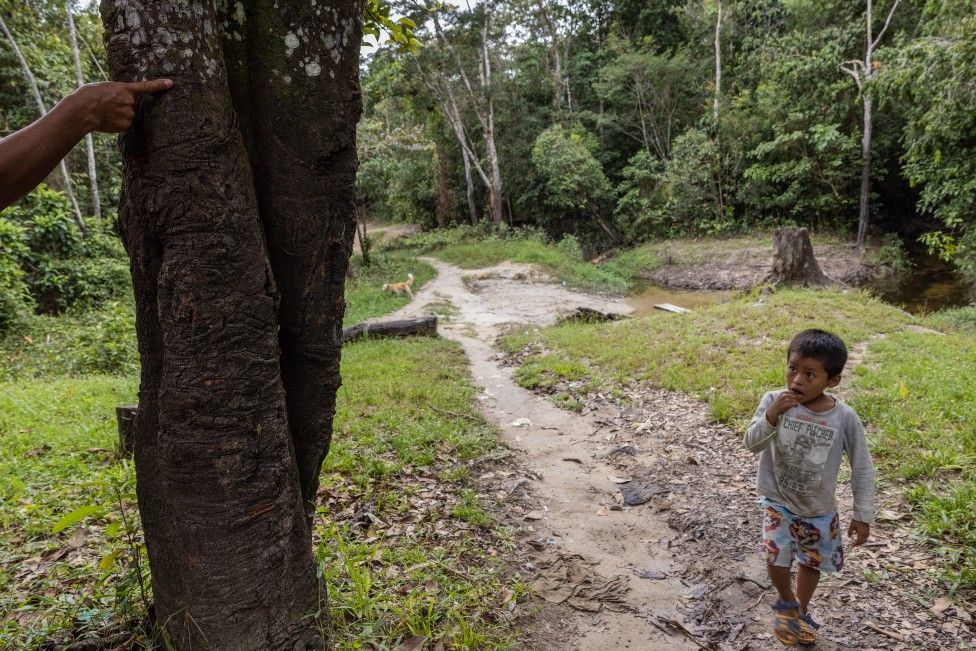
Historically, the dry season in the region runs from July to December. While the river level goes down during this time, it almost always remains deep enough for boats to travel, Mr Rufino says.
But over the past five years, the droughts have gradually worsened. This year, it has stretched for months longer than normal.
Usually metres deep, right now the river is little more than a trickle.
Such low water levels pose an existential threat to the estimated 30 million people that call the Amazon basin home, including Mr Rufino's indigenous Ticuna people.
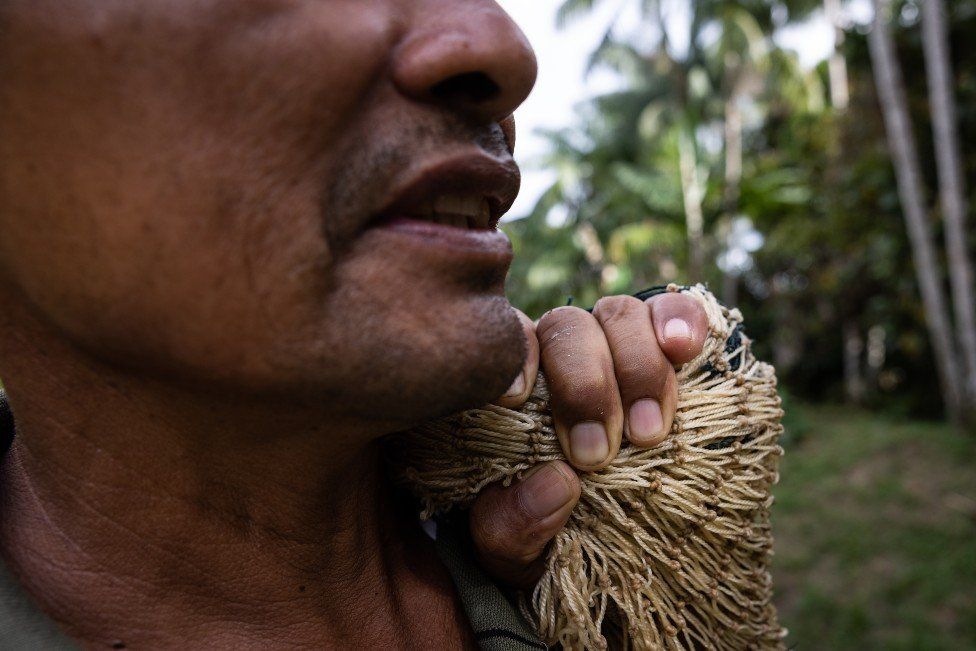 The director of the Foundation for Conservation and Sustainable Development, Rodrigo Botero, says that climate change is to blame for the increased frequency of the droughts.
"And the ones who suffer are the people with the fewest resources," he adds.
Mr Botero, a scientist working across Colombia's Amazon region, has documented the destruction over the past decades.
Dubbed "the lungs of the planet", the Amazon basin's 6.9 million square kilometres (2.7m sq miles) of rainforest - land more than twice the size of India - has suffered rampant deforestation, which fuels climate change.
Roughly 15% of that forest has been destroyed across Bolivia, Brazil, Colombia, French Guiana, Guyana, Peru, Suriname and Venezuela since 1978, data gathered by the non-profit conservation news platform Mongabay suggests.
"Between deforestation and these massive droughts... local communities face more new problems every day," warns Mr Botero.
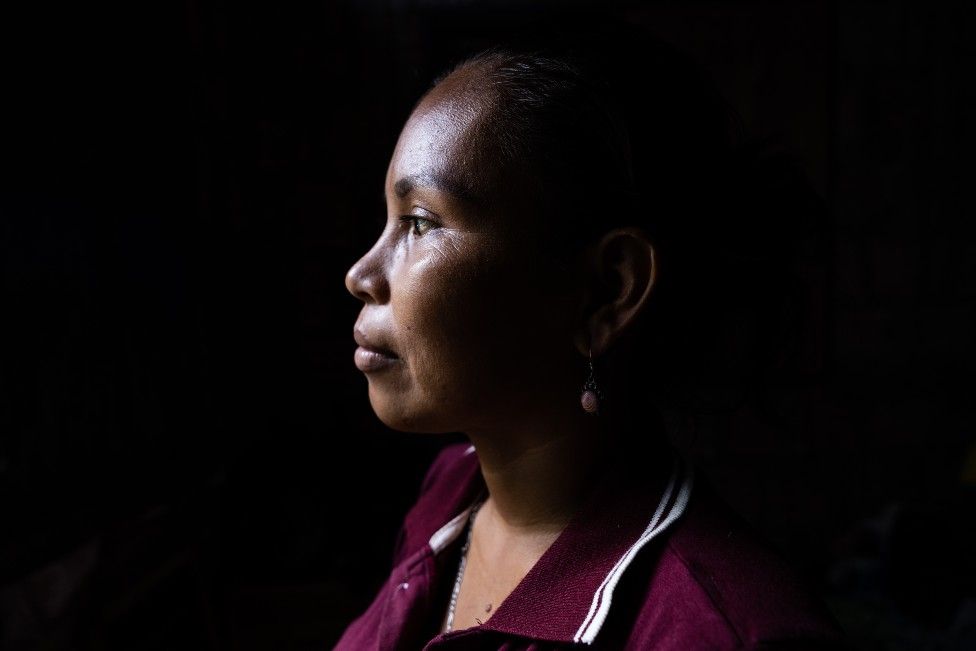
Deisi Sánchez Parente Bóatakü is one of those affected by the dropping river levels.
The 33-year-old who lives in San Pedro de los Lagos - deep in Colombia's Amazon region, near the border with Peru and Brazil - normally sends her children to school by boat.
But with river levels too low to navigate, their half-hour journey has turned into a two-hour trek on foot through dense jungle terrain.
Every day, she wakes her children up at 03:30 to make it to school in time. "Sometimes they tell me: 'Mommy, I don't want to go to class, it's too far.'" Read More...