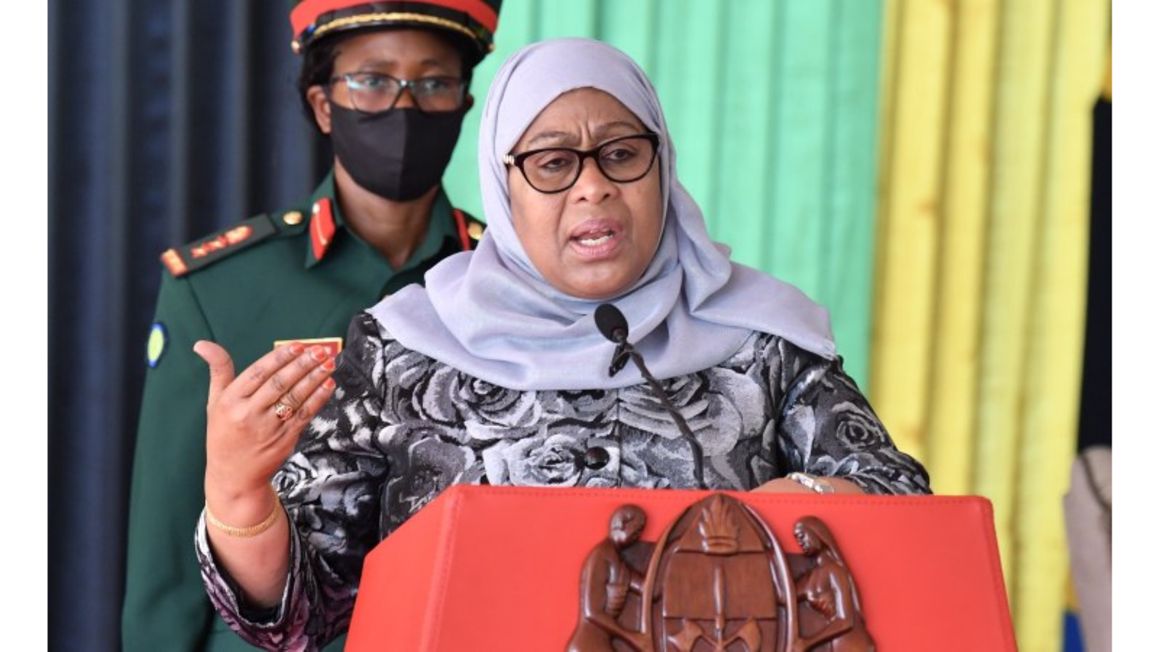
Education hopes got revived in Samia's first year in office
-
 Loading...
 - James Juma
- 21 Mar 2022
- 404 Views
- 0 Like
- 0 Comment
Her directives to the Ministry of Education, Science and Technology responded to what had been education stakeholders’ long cry to to enable the country to get the required skilled work force, particularly at the time the country was approaching the deadline for its industrial vision in the year 2025.
“Let’s all make self-evaluation as Tanzanians to find the curricula that will help our youth and make them contribute effectively to the development of our nation,” said President Hassan.
She cited one of the arguments of renowned Kahama Urban MP Jumanne Kishimba who had asked a question in Parliament (2019) as to why a student should study first grade to university level and then go back home to continue being a burden to his or her parents.
“When he gave these remarks, some laughed and maybe others wondered what kind of MP is he, but he said the truth… Now let’s take a look at ourselves and our education system,” she ordered.
President Hassan, the first female Head of State in the history of Tanzania, questioned how a child who had completed Form Four was going to help himself.
“Let’s all make self-evaluation as Tanzanians to find the curricula that will help our youth and develop our nation academically,” she said.
Stakeholders had longed to see a new education system created to help students do what they were capable of instead of having to follow the rigid curricula or system established decades ago.
Currently, the country’s education system is a four tier structure modelled along a 7-4-2-3 year progression pattern: seven years of primary education, followed by four of secondary level, two of upper secondary or high school level and three to five of tertiary education.
This model, therefore, shows that a Tanzanian student spends an average of 16 years in the education system until they graduate. But, the number of years a student spends in school could be much longer with the advent of early childhood education programmes.
As per the directives, the Ministry of Education has already launched various forums and meetings involving education stakeholders and experts in finding the best way to strengthen the education sector.
“This is a work in progress and at every step we will engage stakeholders. There is already a team of experts looking at the 2014 Education and Training Policy to see where we got stuck and advise us on how to move forward,” says Prof Adolf Mkenda, education minister.
“The President has always been asking about the progress because she wants to see a major revolution in the education sector, and already for one year of her leadership, she has already made a mark in this sector,” adds Prof Mkenda.
One year in higher education loans
It is within a year of her presidency that the number of beneficiaries of higher education loans increased. In the academic year 2021/22, the government announced an increase of the loan budget from Sh464 billion in 2020/21 to Sh570 billion in 2021/2022 to cater for more than 160,000 students.
This was one of the developments that broke Higher Education Students’ Loans Board’s 16-year record as the government sought to widen the scope of loan beneficiaries, especially students from poor households.
As a result, in the academic year 2021/22, more than 62,000 first-year students and 98,000 continuing students are accessing the loan. Even those who had missed out on such loans in the first years of their studies, were able to receive. Read More…