English tutoring program reaches rural students in Colombia
-
 Loading...
 - Acacia Cavalcanti
- 08 Sep 2022
- 79 Views
- 0 Like
- 0 Comment
When recent UB graduate Winston Franklin signed up last spring to teach English to rural high school students in Colombia, he saw a broader opportunity. Why not make the remote program a “cultural exchange” and go beyond the conventional tutor-student relationship?
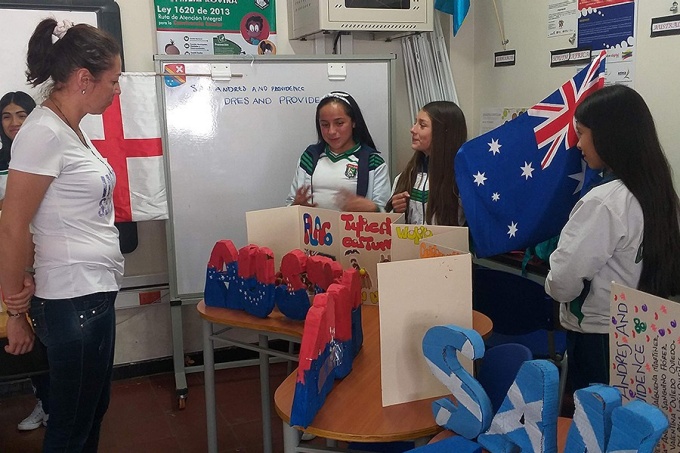
“Tutoring remotely was challenging due to connectivity issues and being limited by screens,” says Franklin who will start an ESOL EdM graduate program this fall. “However, I managed the remote aspect of it by utilizing presentation slides, other media and games. The goal was to adapt and create a fun and interactive time of learning for the students.”
Going outside the tutor-student-relationship box worked. It opened Franklin’s eyes to the education and technology enjoyed by students in the U.S., privileges missing from a rural Colombian education. It also expanded his own awareness toward a more global perspective.
“It was a pleasure to be a small stepping stone in helping the students learn English,” Franklin says.
That enhanced remote model continues this fall when UB’s Experiential Learning Network (ELN) again offers its “Colombia: Tutoring English in a Rural High School” program, working with students at Colegio Custodio García Rovira high school in Malaga Santander, Colombia. Founded in 1925, the school has made a fundamental commitment to the right of education for children, youth and adults in the region. Its administrators stress ethical, moral and social values, along with a commitment to inclusion for those with special needs. The school provides humanitarian services and trains its students to make their own humanitarian contributions.
But Colegio Custodio García Rovira had needs of its own.
“Despite these great attributes, our school struggles with challenges associated with limited resources and high poverty experienced by the families of our students,” school officials say.
“While education represents an important pathway for success and achievement, our students are limited in their exposure to English instruction, which in turn affects their performance on important educational exams and future opportunities.”
Enter ELN and the small, but mighty team of four students who signed up last spring to fill that void. They managed the obstacles of remote learning and went beyond basics to embrace Franklin’s “cultural exchange” idea, transcending a distant face on a screen teaching a language in a rote, impersonal way. Read More...