Environment award stokes urge to save Indonesia's karst landscape
-
 Loading...
 - Donghai Huang
- 02 Aug 2022
- 95 Views
- 0 Like
- 0 Comment
“Recover Citatah Karst, Make People Prosper.” That’s the call printed in red letters on a huge white banner pinned on a limestone cliff in Indonesia’s West Java province.
“We put up the banner so that anyone could read it — citizens, cliff climbers, the government — as a means of our campaign,” says Deden Syarif Hidayat, founder and head of the Citatah Karst Care Youth Forum.
The environmental advocacy group operates to conserve a limestone-based karst landscape in four villages in Padalarang subdistrict, West Bandung district. Citatah is one of the four villages.
What sparked Deden to start his conservation drive was the unsightly environmental damage in the area: mountain destruction, groundwater depletion, air and noise pollution, land erosion, animal extinction, and farmland loss. The vicinity was under threat from unsupervised mining and a confusing proliferation of permits.

Much of the mining activity is illegal and ignores the impact to the environment, says Deden, 37, who works as an Islamic studies instructor at Bandung State Polytechnic, a local higher education institute.
Last year, the group received a special recognition for its efforts: the Kalpataru Award, given by Indonesia’s Ministry of Environment and Forestry to honor individuals or groups for service in conservation.
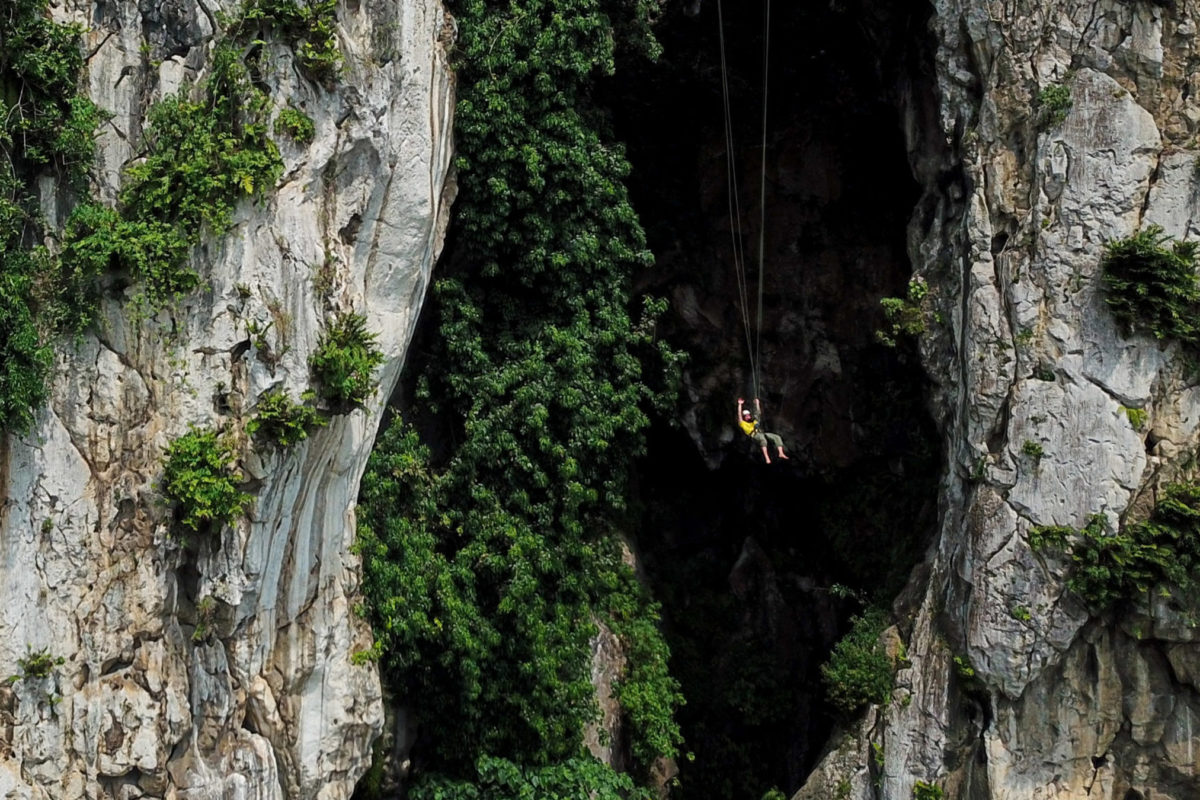
Karst is a limestone landscape easily dissolved by rainwater, often making formations of ridges, towers, fissures, caves and sinkholes. This geological phenomenon attracts speleologists — people who study caves — and is great for cave tourism. Karst also serves as a reservoir of clean water from rainwater percolating through the limestone. Another plus lies in its ability to mitigate climate change: karsts are massive carbon absorbers. Read More...