Ethiopia to release all political prisoners, says prime minister
-
 Loading...
 - Ivana Lucija
- 03 Jan 2021
- 1317 Views
- 0 Like
- 0 Comment
In a surprise move, Ethiopia's prime minister has announced the release of all political prisoners and the closure of a notorious detention centre, allegedly used as a torture chamber.
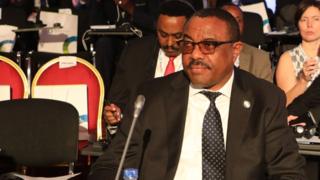
Hailemariam Desalegn told a press conference the move was designed to allow political dialogue.
But it is unclear exactly who will be released - or when it will take place.
Ethiopia, a staunch ally of the West, is accused by rights groups of using mass arrests to stifle opposition.
Amnesty International welcomed Mr Hailemariam's announcement, saying it could signal "the end of an era of bloody repression in Ethiopia" - although warned the closure of Maekelawi detention centre should not be used to "whitewash" the "horrifying" events which took place under its roof.
This is a landmark moment for the country - not least because it is the first time the government has even admitted to having any political prisoners, previously describing them as "criminals", BBC Ethiopia correspondent Emmanuel Igunza says.
Rights groups have accused the government of using anti-terrorism laws to jail its critics.
Who are the political prisoners?
Those held in jails across the country include opposition activists from the Amhara and Oromia regions, which were at the centre of anti-government protests in 2015 and 2016, as well as the Southern Nations and Nationalities Peoples Region, and journalists who have criticised the government.
It is difficult to know exactly how many "political prisoners" there are, but our correspondent estimates there are about 1,000 held under the country's anti-terrorism proclamation, including high profile leaders from the opposition.
However, there are another 5,000 cases still pending, made up of those arrested after a state of emergency was declared in October 2016, he adds.
Will they actually be released?
The government has given no timeline on the release of the prisoners - including those still awaiting trial - or explained exactly who is considered "political" and who is not.
Our reporter notes a number of cases have political backgrounds, but are also linked to groups the government considers to be terrorists. Nineteen people linked to Ginbot 7 - deemed a terror group - were sentenced to prison terms just this week.
Whether they will all be released remains to be seen.
Any dialogue would have to include legitimate opposition groups like the Oromo Federalist Congress, whose leaders would have to be freed to fully participate in the process, our correspondent says.
What about the detention centre?
As well as releasing the prisoners, Mr Hailemariam announced the closure of Maekelawi - a detention facility in the capital, Addis Ababa, which Amnesty International described as a "torture chamber used by the Ethiopian authorities to brutally interrogate anybody who dares to dissent, including peaceful protesters, journalists and opposition figures".
"A new chapter for human rights will only be possible if all allegations of torture and other ill-treatment are effectively investigated and those responsible brought to justice," Amnesty International added.
The government strongly denies the torture allegations, but it has now decided the prison will become a "modern museum" - a move the privately-owned Addis Standard newspaper called for in an editorial in 2016.
A new detention centre will be opened, Mr Hailemariam said, which would comply with international standards.
Why now?
Our correspondent says the detention of political prisoners has always been a major concern. In December, social media users staged a day of action to remember those held behind bars.
But this decision comes hot on the heels of a meeting between the parties which make up the ruling Ethiopian People's Revolutionary Democratic Front (EPRDF) coalition.
Over the past months, infighting within the coalition, which has been in power for more than 25 years, has led the prime minister to acknowledge the need for change.
The Oromo Peoples' Democratic Organization and the Amhara National Democratic Movement, which are part of the coalition, have been pushing for increased political space and the "respect of their people" following the massive anti-government demonstrations that have been witnessed in the country.
Who is Hailemariam Desalegn?
A trained engineer, Mr Hailemariam took the reins of power in 2012, after the death of Meles Zenawi, who had ruled since 1991.
However, while the former deputy prime minister was a close ally of Mr Meles, he struggled to gain approval of the other EPRDF leaders in order to assume his new role.
He is not known for tolerating dissent well, despite statements to the contrary, his critics say.
In 2016, he blamed "anti-peace forces" for the violence in the Oromia region, a year after he told the BBC that bloggers and reporters arrested were not real journalists and had terror links.