Ethiopia: Worst drought in decades devastating nomadic communities
-
 Loading...
 - Adam Maxwell
- 05 May 2022
- 328 Views
- 0 Like
- 0 Comment
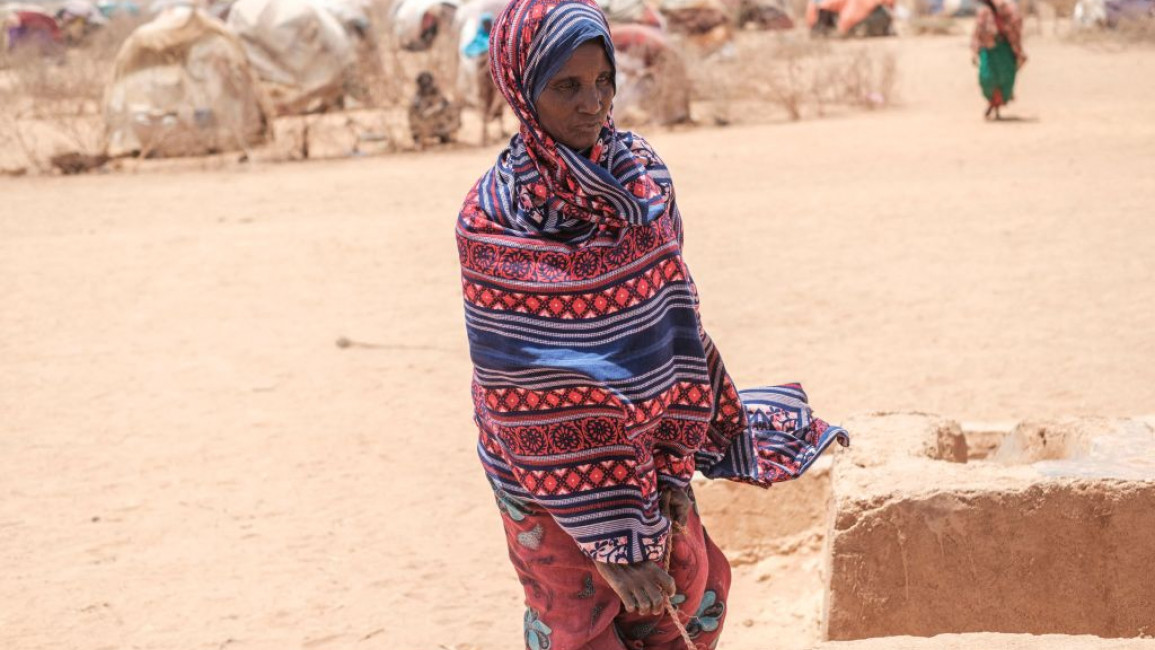
There has hardly been a drop of rain in Hargududo in 18 months. Dried-up carcasses of goats, cows and donkeys litter the ground near the modest thatched huts in this small village in the Somali region of southeastern Ethiopia.
The worst drought to hit the Horn of Africa in decades is pushing 20 million people towards starvation, according to the UN, destroying an age-old way of life and leaving many children suffering from severe malnutrition as it rips families apart.
April is meant to be one of the wettest months of the year in this region. But the air in Hargududo is hot and dry and the earth dusty and barren.
Many of the animals belonging to the 200 semi-nomadic herder families in the village have perished.
Those who had "300 goats before the drought have only 50 to 60 left. For some people... none have survived," 52-year-old villager Hussein Habil told AFP.
The tragic story is playing out across whole swathes of southern Ethiopia and in neighbouring Kenya and Somalia.
In Ethiopia, the eyes of the world have largely focused on the humanitarian crisis in the north caused by the war between government forces and the Tigray People's Liberation Front (TPLF) that has left nine million people in need of emergency food aid.
But the UN Office for the Coordination of Humanitarian Affairs (OCHA) estimates that up to 6.5 million people in Ethiopia - more than six percent of the population - are also severely food insecure because of drought.
Lack of rain has killed nearly 1.5 million head of livestock, around two-thirds of them in the Somali region, said OCHA, showing "how alarming the situation has become".
Herds provide the nomadic or semi-nomadic populations of this arid and hostile region with food and income as well as their savings.
But the surviving animals have deteriorated so much that their value has plummeted, reducing the buying power of the increasingly vulnerable households, OCHA warned.
"We were pure nomads before this drought, depending on the animals for meat, milk" and money, said 50-year-old Tarik Muhamad, a herder from Hargududo, 50 kilometres (30 miles) from Gode, the main town in the Shabelle administrative zone.
"But nowadays most of us are settling down in villages... There is no longer a future in pastoralism because there are no animals to be herded."
An entire society is disintegrating as the loss of livestock threatens the herders' very way of life: villagers are forced to leave their homes to find work in the city, families are divided, children are neglected as their parents focus on trying to save their animals, essential for their survival.
"Our nomadic life is over," Muhamad said bitterly.
The alternating dry and rainy seasons - a short one in March-April followed by a longer period between June and August - have always set the rhythm of herders' lives.
"Before this catastrophic drought, we used to survive difficult times thanks to the grasses from earlier rains," the herder said.
But none of the last three rainy seasons has come. And the fourth one, expected since March, is likely to fail too.
"We usually have droughts, it's a cyclical thing... previously it used to be every 10 years but now it's coming more frequently than before," said Ali Nur Mohamed, 38, from British charity Save the Children.
In East Africa, the frequency of drought has doubled from once every six years to once every three since 2005, according to the latest UN Intergovernmental Panel on Climate Change (IPCC) report.
"Several prolonged droughts have occurred predominantly within the arid and semi-arid parts of the region over the past three decades."
As early as 2012, a study by the US development agency USAID found that southern regions of Ethiopia were receiving 15 to 20 percent less rainfall than in the 1970s. It found that areas that did get the 500 millimetres of annual rainfall needed for viable agriculture and livestock farming were shrinking.
Drought will be high on the agenda of the UN Convention to Combat Desertification (UNCCD), which begins in Abidjan on Monday.
Herders trying to recover from drought are being "hit by a second drought", said Save the Children's Mohamed. Read More...