Everything foreigners need to know about Danish trade unions
-
 Loading...
 - Clara Andersen
- 20 Apr 2022
- 306 Views
- 0 Like
- 0 Comment
Work life balance, high salaries, and ample vacation time are but a few benefits with which foreigners working in Denmark are familiar.
And yet, many would be surprised to learn that these benefits aren’t protected by Danish law. Instead, they are the result of collective bargaining between Denmark’s trade unions and employers/employer organisations.
“There aren’t many laws regulating the Danish labour market,” Mads Storgaard Pedersen, consultant and assistant attorney at the Confederation of Danish Industry (DI), told The Local. Instead, trade unions negotiate with employers’ organisations like DI every few years to develop collective agreements regulating many aspects of Denmark’s labour market, from minimum wage to paid parental leave.
According to the Organisation for Economic Cooperation and Development (OECD), Denmark has among the highest union density; two-thirds of Denmark’s workforce belongs to a union, compared to an EU average of just 23%.
However, union density in Denmark has fallen from 79 percent of all employees in 2010 to 69 percent in 2020, according to Statistics Denmark.
One strategy to increase union membership taken by the Danish Society of Engineers (IDA), a trade union for engineering, science, and IT professionals, is to enrol more foreign workers in Denmark.
“We experience a lot of internationals coming to Denmark who don’t know the system and are scared to join a union because they don’t know how it will be looked upon by their employer,” Stine Lund, senior legal consultant at IDA, told The Local. “They need to understand that union membership isn’t viewed as a bad thing by employers.”
Lund stressed that every worker in Denmark is entitled to organisation in a union and that employers cannot discriminate against employees for union membership. “Furthermore,” she added, “union membership is both common and often necessary in Denmark, from blue collar workers to top management.”
Given enough time working in Denmark, it’s likely that a union may reach out to you about membership. Alternatively, you may decide that it’s beneficial to join a union on your own.
Either way, here are 10 things foreigners should know about trade unions in Denmark.
1) Employees covered by collective agreements won’t have to negotiate general employment terms, whether or not they are union members.
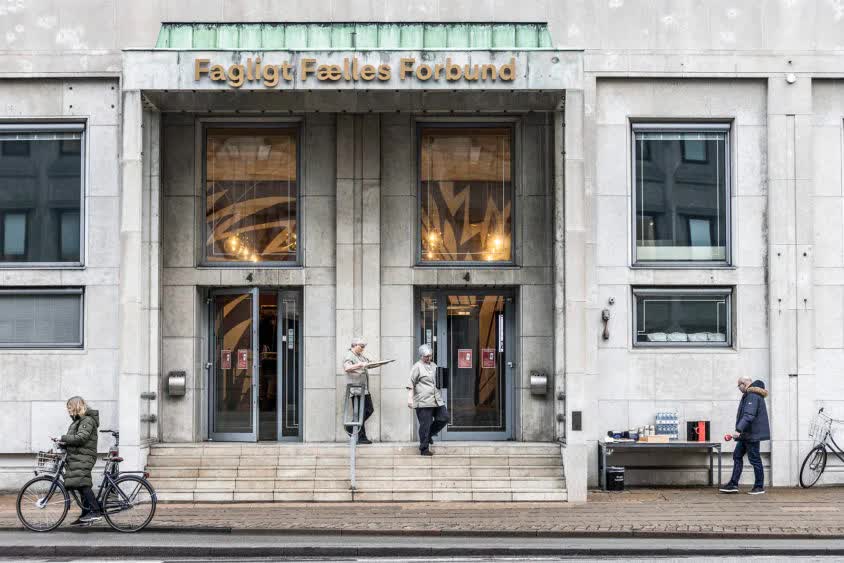
“Although two-thirds of Denmark’s workers are union members, 82 percent are covered by collective agreements,” said Peter Waldorff, international consultant at FH, Denmark’s largest trade union confederation. “As long as a workplace has a collective agreement, it covers both members and non-members.”
Waldorff said there are large central agreements in both the public and private sectors. Employees whose contracts are regulated by a collective agreement won’t individually have to negotiate general terms of employment, like working hours or minimum salary.
The particular collective agreement upon which your contract is based may be mentioned in your contract, and if it isn’t, Waldorff said it’s perfectly fine to ask your employer.
“There is not the same level of union busting in Denmark as there are in some other countries,” he said.
2) Employees not covered by collective agreements negotiate their own contract terms.
Not all jobs in Denmark are included in collective agreements. This includes a relatively large number of white collar private sector employees, Waldorff said, who instead negotiate their own contract terms directly with their employer (often with help from their trade union).
Lund, at IDA, said employees not covered by collective agreements still benefit from Denmark’s major collective agreements. “The Danish labour market has a very low unemployment rate and high demand for skilled labour at a high market value,” she said. The benefits secured in collective agreements often influence the working conditions private employers not subject to those agreements must offer in order to be competitive, Lund added.
3) Union membership may be a way to safeguard the continuation of this system.
All workers in Denmark are free to join a trade union, writes employment service for international talent Work In Denmark: “Without members of trade unions, there would be no legitimacy for social partners to regulate via collective agreement or to enforce the rules of the labour market.”
“The broader perspective on why to join a union in Denmark may be the need to contribute to this great system,” Lund said. However, she added, “Even internationals who only plan to stay in Denmark for a year or two and may not be motivated to contribute to that system can benefit from union membership on an individual basis, from better understanding the labour market they are entering, their market value in Denmark, and what employment conditions they can expect.”
4) Outside of collective agreements, trade unions can still help members negotiate a fair and attractive contract.
One of the most common ways IDA helps its members not covered by collective agreements is with salary negotiations.
“If you’re going to negotiate your own salary, it’s important to know your market value in Denmark,” Lund said. “People should know that salaries in Denmark are high, but so are taxes and living expenses. It’s easier to know what you can reasonably ask for when you have the statistics.”
Counselling on salary and negotiating tactics is available to all IDA members, but the union will also inform internationals considering their first job offer in Denmark of suitable salary levels “to protect the person from accepting an offer with a salary that does not correspond to their market value,” Lund said.
IDA said it also reviews members’ contracts and can help members negotiate for more holiday time or different parental leave conditions. It also makes sure contracts align with Danish legislation and helps identify and explain potential issues.
5) Trade unions can help foreign workers navigate the Danish workplace.
Trade unions also answer member questions and help if issues arise with one’s employer, through counselling, moderation, and legal aid if need be. For example, IDA has faced many questions – particularly from foreign members – about working remotely from their home countries for extended periods of time.
Another common area in which IDA gets involved is unjust terminations. “Even though it’s easy to hire and fire in Denmark, there is still protective legislation for employees,” Lund said. For example, IDA has assisted with countless cases in which an employee fired for performance issues wasn’t given a written warning prior to termination.
“We can step in and have that conversation with the employer to get our member the compensation they’re entitled to,” Lund said, or file a lawsuit in the rare instances where the issue cannot be resolved outside of court.
In the event of a termination, a union representative will be there alongside the employee, employer, and witness, and can help members receive the best possible departure package.
They also play a significant role in workplace safety and health.
6) Trade unions also offer continuing education, networking opportunities, and discounts, and many offer unemployment insurance.
Unions can also be an opportunity for continuing professional education and networking, the latter of which Lund said may be particularly useful to internationals who may be building a professional network in Denmark from the ground up.
Many unions also have their own unemployment insurance funds (A-kasse), but you are not obligated to join. Additionally, trade unions offer discounts on some products and services, like insurance.
Lund said foreigners working in Denmark shouldn’t have any issue utilising any union benefits available to Danes, so long as they have a CPR (personal registration) number. The only challenge may be that some resources and events will not be available in English, though most unions’ websites are available in Danish, English, and some other languages.
7) Union members may be required to participate in collective action, such as strikes.
Another aspect of union membership is that members may be required to participate in industrial action, such as strikes, blockades, or solidarity actions.
For example, the 2021 Danish nurses strike organised by the Danish Nurses’ Organisation (DSR), which represents 95% of nurses in Denmark. “The nurses’ strike is an example of the results of unsuccessful negotiations on the renewal of their collective agreement,” Waldorff said.
In this case, he continued, DSR called the strike and decided which members would be required to withdraw from work to join the strike. As the strike continued from June to August 2021 (one of the longest strikes in recent Danish history), an increasing number of union members were called to strike until the dispute was resolved.
However, Waldorff added, “In Denmark, strikes are relatively rare.”
Lund said collective agreement conflicts almost never happen in the academic labour market. “We haven’t been in a situation where that measure has been taken for many, many years,” she said.
However, if that were to happen, foreign employees who are union members would participate in the strike just as Danish members would. Although the employees involved in the strike would stop receiving their salaries, Lund continued, they would instead receive conflict aid from the union, “meaning the person would not need to receive dagpenge or other social aid,” an important distinction for internationals working in Denmark. The employer would also be required to re-employ all employees once the conflict is resolved, she added.
According to FH’s legal department, Waldorff said, participation in legally-called industrial action should not affect work permits.
The Danish Agency for International Recruitment and Integration (SIRI) confirmed this to be the case, issuing the following statement to The Local: “Third-country citizens will not have their residence permit revoked on the basis of employment, if they don’t work at their employer due to the reason that they participate in a legal labour dispute during their employment. EU/EEA citizens residing in Denmark will not lose their right to reside in Denmark on the basis of participating in a legal labour dispute.”
8) Foreigners working in management roles should be familiar with the ways unions work here.
Lund recommends foreigners in management roles in Denmark establish a positive relationship with the shop steward (a worker who’s been elected by his or her colleagues to represent them in discussions with management).
“Most labour disputes are resolved through negotiations within the company,” she said, “so the shop steward is one of the most important friends you can have as a manager.” Read More...