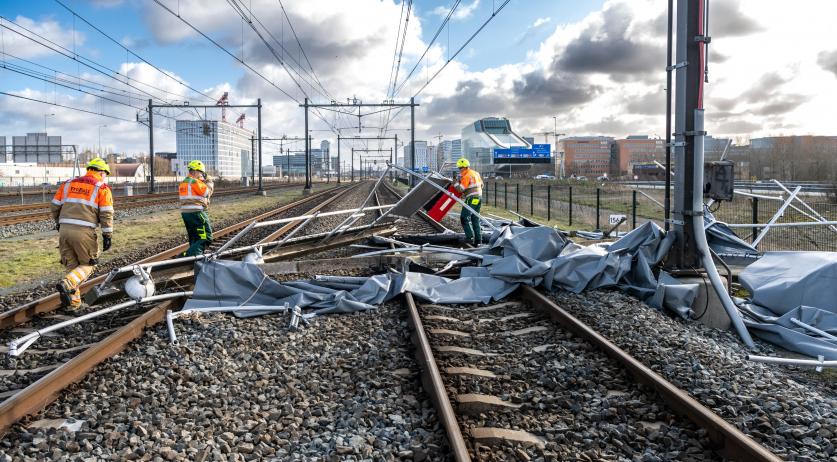
Extreme weather caused record amount of damage last year: Insurers
-
 Loading...
 - Perez Manuel
- 12 May 2023
- 69 Views
- 0 Like
- 0 Comment
Last year, the Netherlands suffered an unprecedented amount of damage caused by extreme weather, totaling over 886 million euros, as per the Climate Damage Monitor released by the Dutch Association of Insurers (VvV) on Thursday. The majority of the destruction, which was significantly higher than the estimated 500 million euros, was caused by the tree storms that ravaged the country in February 2022, namely Eunice, Dudley, and Franklin, resulting in damages amounting to 714 million euros.
The previous highest record was set in 2016 when insurers received claims worth 770 million euros related to extreme weather, mostly caused by hail. These figures are traceable back to 2007. The impact of climate change is becoming more and more evident, with extreme precipitation and storms costing society a significant amount of money. Therefore, the VvV General Director, Richard Weurding, has urged that everything possible be done to make the Netherlands climate-proof.
Although climate experts from the KNMI stated that global warming did not play a significant role in winter storms last year, there remains ongoing debate about its influence on them. The KNMI said that the influence of climate change on the formation of winter storms is relatively small, but that the amount of precipitation associated with these storms will increase in a warmer climate.
Scientists have established that natural disasters such as extreme rainfall in Western Europe, which caused severe flooding in parts of Zuid-Limburg, Germany, and Belgium in the summer of 2021, are increasingly likely to happen due to global warming. Fall winds that hit Leersum in Utrecht hard in the same year are also more likely to occur because of the warming climate.
The VvV general director believes that more awareness is necessary to prevent weather damage, and building safely and adapting to changing weather conditions are essential. The insurance sector is working closely with the KNMI to achieve this. The institute is developing an Early Warning Center to provide timely warnings of incoming weather conditions so that damages can be limited by better risk assessment.