Fake 'Fact-Checks' Seek to Obscure Russian Role in War
-
 Loading...
 - Fyodor Yelchin
- 22 Feb 2023
- 55 Views
- 0 Like
- 0 Comment
A Russian missile smashed a Ukrainian apartment complex, killing dozens. Pro-Russian propagandists offered a slick counter-narrative that shifted the blame away from Moscow — using pseudo-fact-checking as a tool of disinformation.
Since the start of its invasion one year ago, Russia and its supporters have sought to aggressively distort Moscow's role in Ukraine with what experts call a highly potent weapon in its arsenal — disinformation campaigns.
Global fact-checkers have debunked a blizzard of falsehoods that seek to deflect attention from Russia's potential war crimes or malign its opponent, a task made more complex by fictitious "fact-checks" that risk undermining trust in their own work.
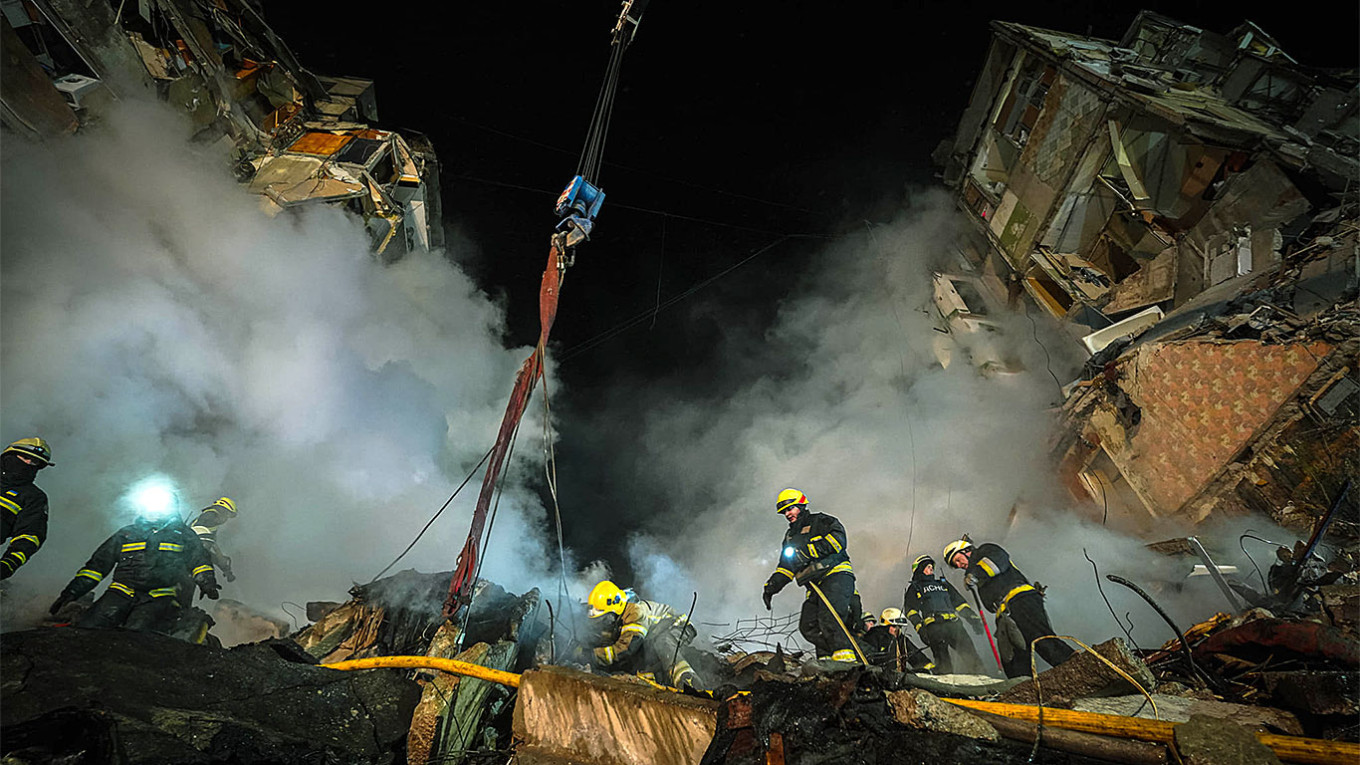
Last month, at least 46 people were killed when a residential building in the city of Dnipro was struck by what Ukrainian officials and experts including the U.S.-based Center for Strategic and International Studies said was a Russian Kh-22 cruise missile.
The battered nine-story building came to epitomize one of the deadliest single attacks in Ukraine since the Russian invasion.
But a website called "War on Fakes" — which disseminates what experts identify as Russian propaganda — claimed in an "exclusive" that the building had been destroyed by a Ukrainian air defense missile.
Akin to professional fact-checkers, it used visuals with the word "fake" stamped across them in bold red letters, alongside open-source material including a dashcam video and a graphic that used complex trigonometry to make its case.
"Since Russia's invasion, the 'War On Fakes' initiative has become a powerhouse of spreading false debunks," Roman Osadchuk, from the Atlantic Council's Digital Forensic Research Lab, told AFP.
'Effective tool'
"War On Fakes," whose Telegram channel has hundreds of thousands of subscribers, calls itself "objective" and "unbiased" and claims to combat the "information war launched against Russia."
It does not name its writers and it remains unclear who was behind the project, launched last year soon after the invasion, but among its amplifiers are pro-Kremlin actors including Russian ministries and embassies.
"It is an effective tool of state propaganda and disinformation," said Osadchuk.
"It works primarily because fact-checking usually serves for readers as an 'authoritative' source to seek 'objective information'."
Similar pseudo-fact-checking campaigns have appeared on Russian state television, which runs a segment called "AntiFake," as well as a pro-Moscow Telegram channel called "Fake Cemetery."
They and other pro-Russian agitators have used pseudo-fact-checks to discredit reports by Western media, including AFP, of multiple incidents in the conflict. Read More…