Fears for women's rights as Iraqi bill resurfaces
-
 Loading...
 - Lydia Zeno
- 08 Aug 2024
- 50 Views
- 0 Like
- 0 Comment
A controversial bill in Iraq has resurfaced, sparking fears among activists and human rights groups that it could severely undermine women's rights in the country. The proposed legislation would allow citizens to choose whether religious authorities or the civil judiciary should decide on family matters, including inheritance, divorce, and child custody. Critics argue that this could lead to a significant reduction in women's rights, particularly concerning the legal age for marriage, which is currently set at 18 under the 1959 Personal Status Law.
The United Nations Children's Agency (UNICEF) reports that 28% of girls in Iraq are already married before the age of 18. Human rights organizations fear that the new bill could exacerbate this issue by effectively removing the minimum age for marriage, a concern that lawmakers supporting the bill have denied.
Human Rights Watch (HRW) researcher Sarah Sanbar warned that passing this law would represent a step backward for Iraq. Amal Kabashi from the Iraq Women's Network echoed these concerns, stating that the amendment would provide more power for male dominance over family issues in an already conservative society.
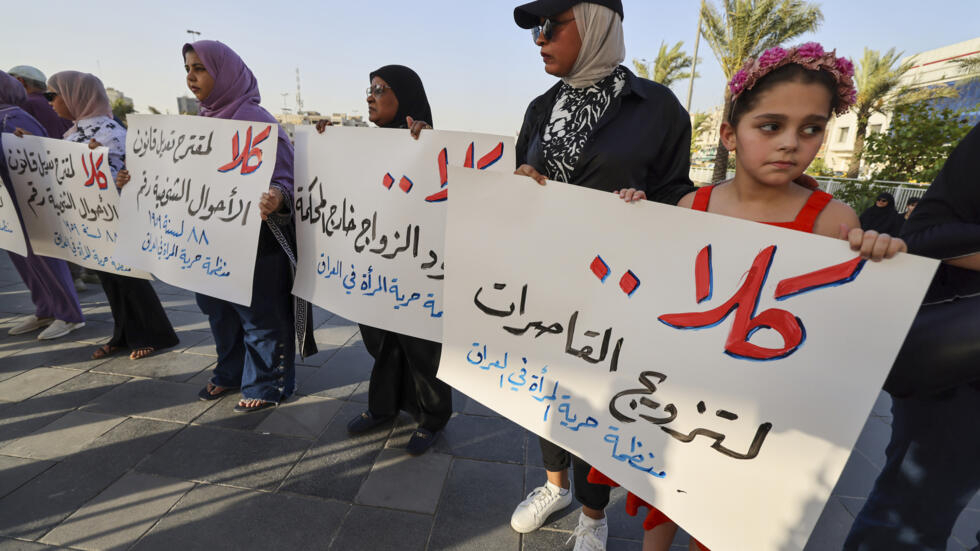
Activists have been protesting against the proposed changes and plan to continue their demonstrations in Baghdad. The 1959 Personal Status Law, passed shortly after the fall of the Iraqi monarchy, was seen as a progressive move, transferring the power to decide on family matters from religious authorities to the state judiciary. The current bill, supported by conservative Shiite Muslim deputies, seeks to weaken this law by allowing the enforcement of religious rules, particularly for Shiite and Sunni Muslims, without mentioning other religions or sects in Iraq’s diverse population.
After facing objections from many lawmakers, the bill was initially withdrawn in late July, but it resurfaced in early August with the backing of powerful Shiite blocs in parliament. While it remains unclear whether this attempt to change the law will succeed, activists like Kabashi vow to continue their fight against it.
Amnesty International has called for the proposed changes to be stopped immediately, warning that the bill could severely endanger women and children. The bill would allow "Muslims of age" to choose between the 1959 law or Sharia Islamic rules for family matters, and married couples could also switch from civil law to religious regulations.
Constitutional expert Zaid al-Ali explained that the 1959 law borrowed progressive rules from different sects, causing frustration among Islamic authorities. By offering a choice between the civil law and religious rules, the bill could give men more power over women, including control over wealth and children.
The new bill requires Shiite and Sunni institutions to present a set of religious rules to parliament for approval within six months. This could legalize the marriage of girls as young as nine years old, a practice justified by some religious leaders who cite historical precedents. However, human rights groups argue that child marriages violate human rights, deprive girls of education and employment, and expose them to violence.
Lawmaker Raed al-Maliki, who introduced the amendment and previously backed an anti-LGBTQ bill, denied that the revisions would allow the marriage of minors. He claimed that objections to the law stem from a "malicious agenda" aimed at denying a significant portion of the Iraqi population the right to have their personal status determined by their beliefs.
However, Amnesty International’s Razaw Salihy warned that the vague language of the bill could strip women and girls of their rights and safety, enshrining religious freedom in a way that undermines equality and protections for vulnerable groups.