Feminist tango collectives take center stage in Argentina

Patricia Malanca always dreamed of writing a tango album full of feminist songs — a rarity in the tango world.
“My intention is to have my songs heard in places where the traditional sexist tango persists,” she said of her newest album, “Traerán Ríos de Tango las Páginas de un Libro,” or “The Book’s Pages Will Bring Rivers of Tango,” released in November 2021.
Each song in Malanca’s album is an ode to a novel written by a contemporary female Argentine author, touching on topics such as abortion rights and transgender identity.
“Female lyricists and singer-songwriters are writing tango’s new poetry and songbooks,” Malanca said. “We’re paving the way for the 21st century, full of songs about equality.”
Malanca said classical tango songs often normalized gender violence or devalued women. Even Carlos Gardel, considered the most prominent figure in tango history, has songs like “Tortazo,” roughly translated as “The Slap,” where he threatens a woman with physical violence in order to “keep her in her place.”
To this day, it’s common to hear songs from the early tango days played in recitals or milongas, special venues where tango is danced to live music.
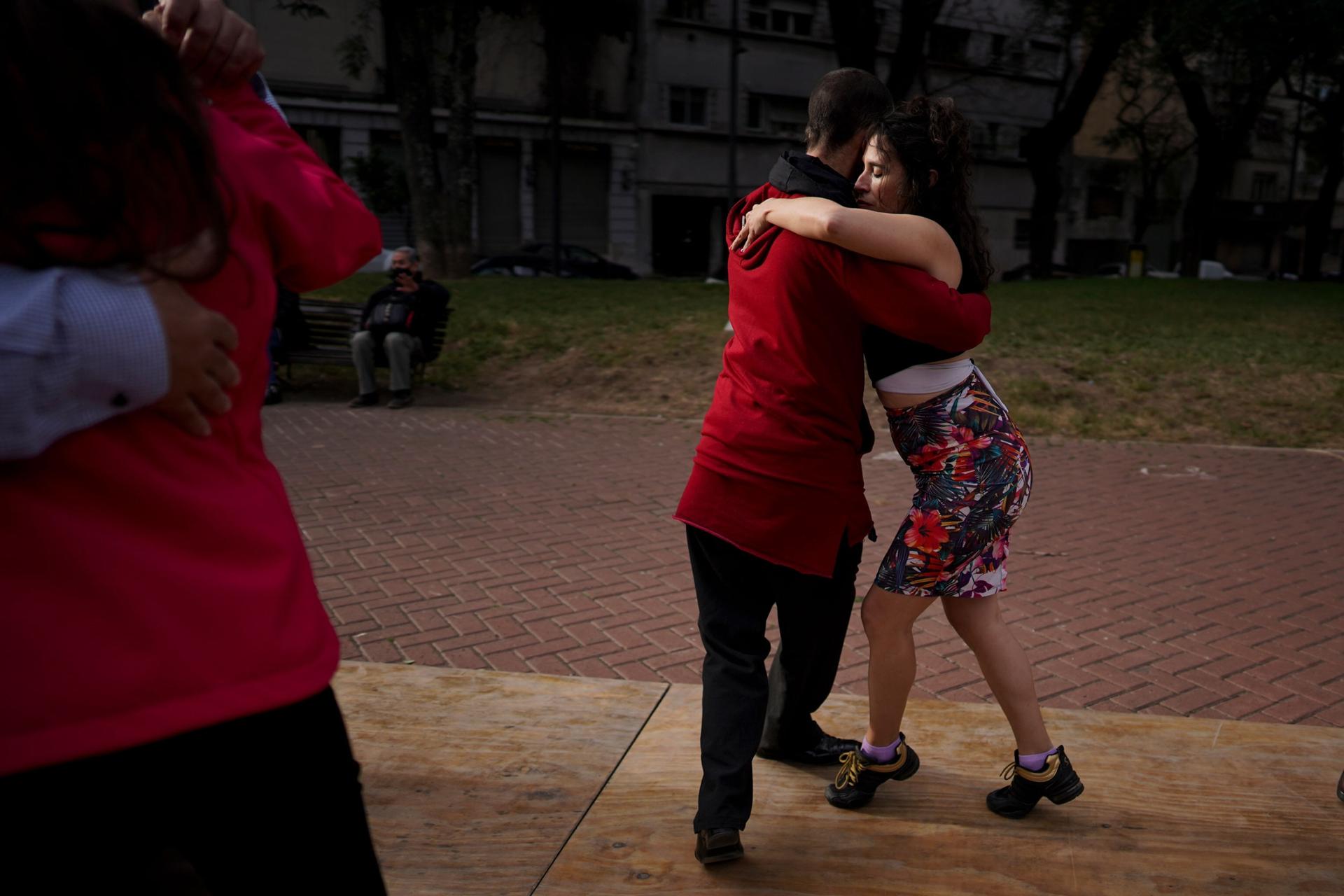
The roots of tango date back to the late 19th century, when Argentina’s capital of Buenos Aires was a cultural mix of Indigenous people, formerly enslaved Afro-Argentines and recently arrived migrants predominantly from Italy and Spain.
“It was a very patriarchal world,” tango historian Francisco Palumbo said. “Buenos Aires’ population was around 70% male, mainly because of all the migrants, and that was reflective in tango songs.”
But by the early 20th century, Palumbo said, some women had worked their way into the spotlight. Paquita Bernardo played the bandoneon — a small type of accordion typical in tango. She died young in 1925, leaving behind no recordings. Rosita Quiroga was a guitarist who sang in the first tango ever recorded in Argentina in 1926: “La musa mistonga,” a song using slang particular to Buenos Aires in the early 20th century, and which roughly means “The worthless muse.” Read More…