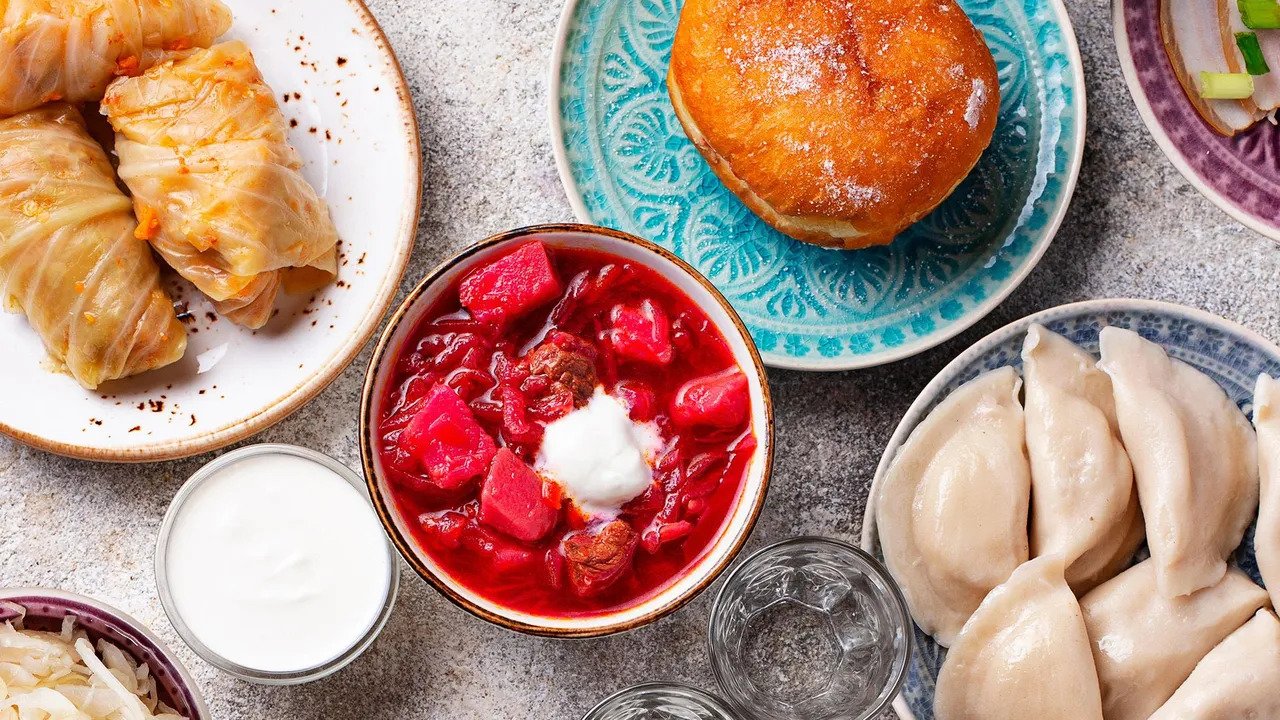
Five comfort foods that define Ukraine
-
 Loading...
 - Katrien Vliet
- 11 Apr 2023
- 67 Views
- 0 Like
- 0 Comment
In response to Russia's full-scale invasion over the past year, Ukrainians have not only fought for their country but also to keep their culinary traditions alive.
While Ukraine and its people have been forever changed by Russia's full-scale invasion over the past year, one thing that has remained constant is Ukrainians' drive to not only fight for their country but also for their culture and identity. One way they are preserving their heritage is through their cuisine.
As chef Ievgen Klopotenko from 100 Rokiv Tomu Vpered restaurant in Kyiv said, "I'm not on the front line, I'm on the food line. That's why I have to fight here."
Part of this fight is to make sure that Ukrainians – including those on the front line as well as refugees who have become displaced – are fed and nourished with a taste of home. Another part is to ensure that Ukraine's culinary traditions live on within the country and beyond. And the reasons for doing this go back even further than the invasion on 24 February 2022.
During the Cold War, the Soviet regime standardised what countries in the Communist Bloc ate, creating a uniform "Soviet cuisine" and effectively diminishing the nations' culinary distinctiveness – and in some cases, causing people to forget their own cuisine.
"Nearly all the restaurants in the USSR were replaced by identical government-run canteens (stolovyye) that served indistinguishable menus prepared from limited and often scarce produce, meats and other ingredients," said author Anna Voloshyna, whose recent cookbook BUDMO! (meaning "let us be", or the Ukrainian equivalent of "cheers") highlights the joy and celebratory nature of Ukrainian home cooking. "The rise of the stolovyye was a dark time in the region's culinary history, and many national cuisines are still recovering."
For the newly independent nations following the USSR's collapse, rediscovering their cuisines became an important part of reclaiming their identity. As Voloshyna writes, "With the end of Soviet rule in late 1991, many of the countries that have made up the so-called Eastern Bloc tried to disassociate themselves from their former alliance." For Voloshyna and many Ukrainian women at the time, that meant turning to the ingredients that came from the garden or famers' markets and cooking them at home. Read More…