Food in Nigeria: 25 Traditional Dishes to Look Out For

Nigerian food, like many cuisines in West Africa, is known for being spicy and aromatic. Jollof rice is perhaps the most famous Nigerian dish but the cuisine has so much more to offer, especially with its abundance of richly flavored soups and stews and equally plentiful “swallow” foods.
Unfortunately, Nigerian food isn’t as well-known globally as other cuisines but thanks to the Nigerian diaspora, that may be changing. Nigerian recipe bloggers, many of whom have moved to different parts of the world, continue to champion Nigerian cuisine and help bring it into the global consciousness. Go through their comments sections and you’ll find no shortage of foreigners happy to try Nigerian dishes that were previously unknown to them!
Thanks to the internet, Nigerian cuisine is becoming more internationally well-known. More and more people are becoming curious about Nigerian food. If you’re one of those people, then this list of 25 must-try Nigerian dishes will whet your appetite even more.
WHAT IS NIGERIAN FOOD?
Nigerian food represents the cuisines of the more than 250 ethnic groups that comprise Nigeria. It shares many similarities with the cuisines of its West African and Central African neighbors like Ghana, Benin, and Cameroon.
Starchy foods like yam, cassava, plantains, rice, and beans figure prominently in the Nigerian diet. They’re often consumed with a wide array of hearty soups and stews made with different types of meat and vegetables. Nigerians are fond of vegetable stews and typically consume it several times a week.
Nigerian cuisine practices snout-to-tail dining so very little of the animal goes to waste. Popular meats include beef, goat, lamb, chicken, and turkey while some of the most widely consumed vegetables are Lagos spinach, African spinach, water leaves, pumpkin leaves, and jute leaves.
Go through the ingredient list of many Nigerian recipes and you’ll find that ground African crayfish, dry ground pepper, and Maggi cubes are common seasonings. Palm and groundnut oil are also widely used.
MUST-TRY NIGERIAN DISHES
A list of 25 dishes can be a lot to get through so this Nigerian food guide has been organized by category to make it easier to digest. Click on a link to jump to any section of the guide.
1. Staple Food
2. Soups / Stews
3. Salad / Side Dishes
4. Meat
5. Street Food / Snacks
STAPLE FOOD
1. Fufu
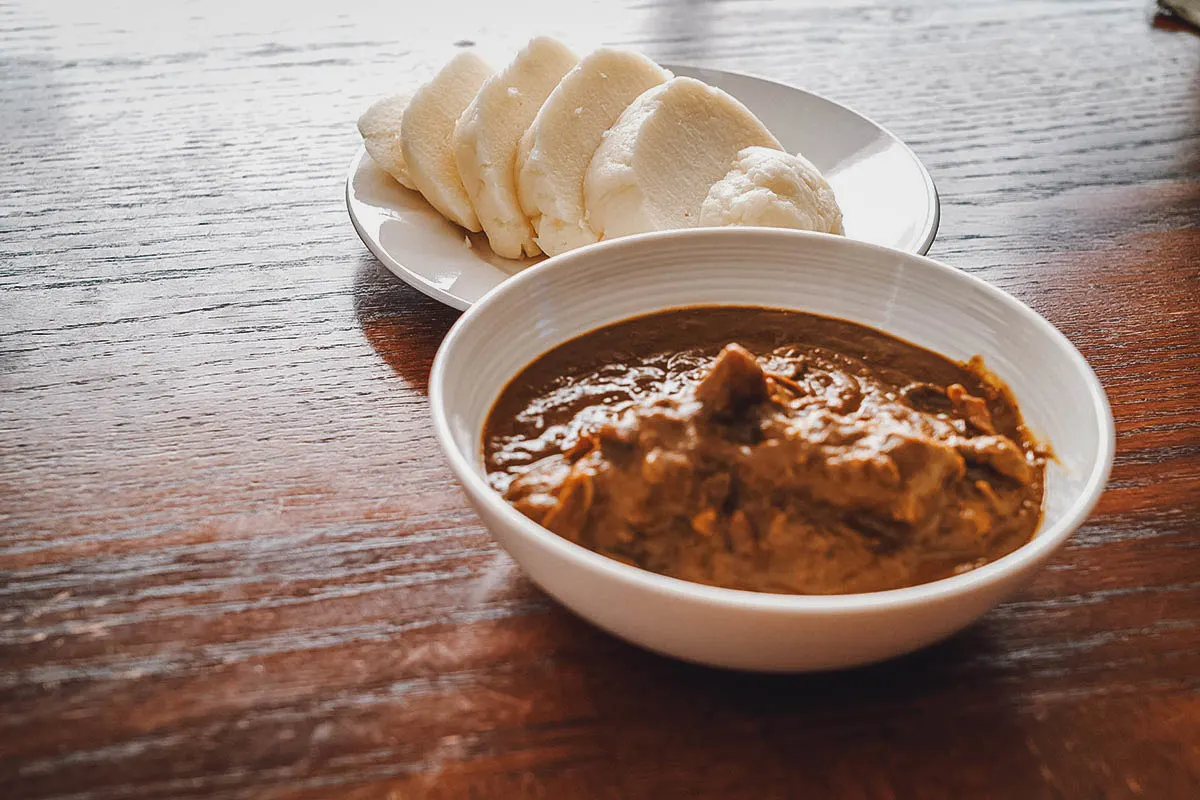
Fufu (or foofoo, foufou) is one of the most commonly eaten Nigerian foods. It refers to a staple food made from cassava (fermented or unfermented) that’s been boiled, pounded, and then formed into balls.
Traditionally, fufu refers to a staple Nigerian food made with cassava. However, the definition has expanded over the years to include other staple foods made from similarly starchy ingredients like yam, plantains, maize, wheat, rice, and semo. The term fufu refers to a specific dish but it can also be used as an umbrella term to describe a family of starchy staple foods commonly eaten in Nigeria, Ghana, and other parts of Africa.
To make fufu, boiled cassava is peeled and then cut into small cubes before pounding. Traditionally, a large wooden mortar and pestle is used. The cassava is pounded into a smooth and sticky mixture before being shaped into balls and served. It’s popular throughout western and central Africa and is typically eaten with different types of soups and stews.
Fufu – like pounded yam, amala, and eba – is a type of Nigerian swallow food. Swallow foods are starchy doughy dishes that are soft and pliable enough to swallow without chewing. To eat, a small portion is torn off and used as a scoop for soups and stews. Like many staple foods, it has a mild taste, similar to potatoes.
2. Eba
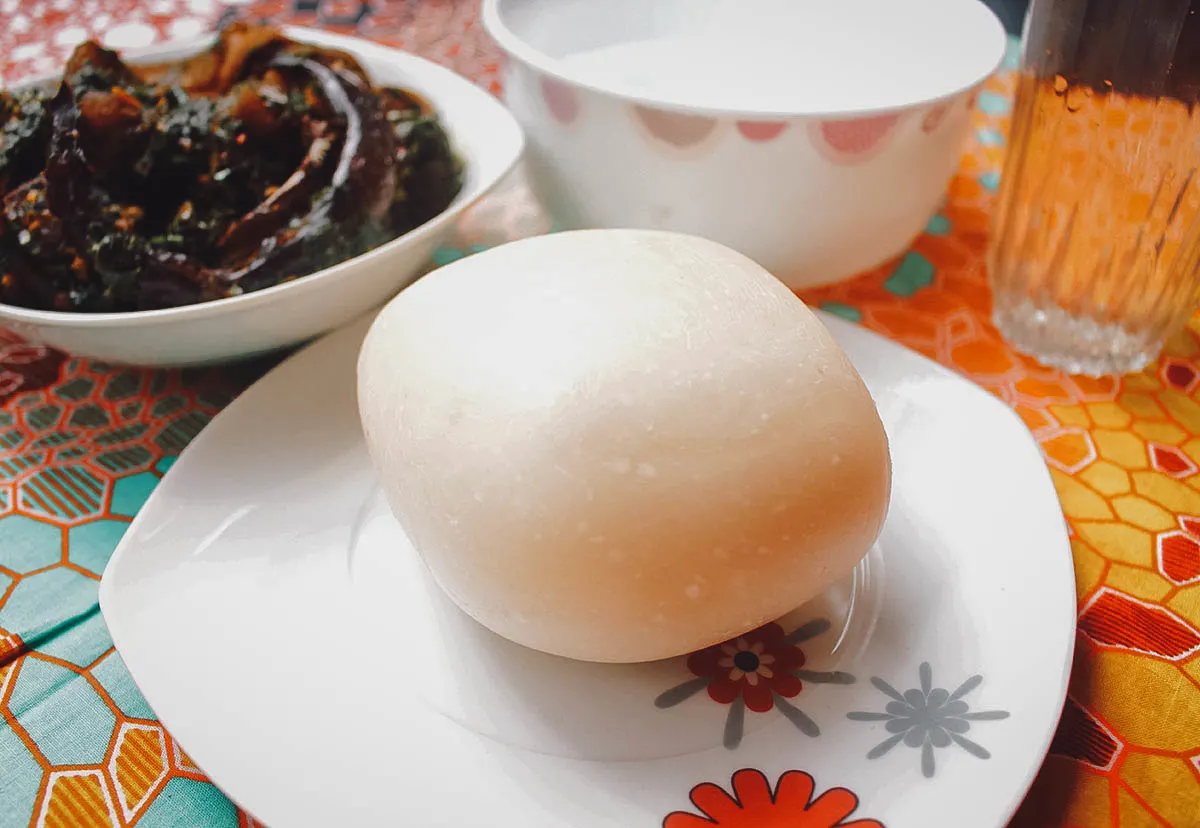
Eba is a popular Nigerian swallow food made with dried and fried cassava flour called garri. It’s eaten like fufu and often served alongside many Nigerian soups and stews.
To prepare, cassava tubers are peeled and crushed into a mash before being pressed, dried, and fried to produce a dry granular flour called garri. The garri is then mixed with boiling water to form a smooth stiff dough that’s shaped into balls and consumed.
Eba can be either off-white or yellowish in color. Yellow eba is made with garri that’s been fried in palm oil.
3. Tuwo Shinkafa
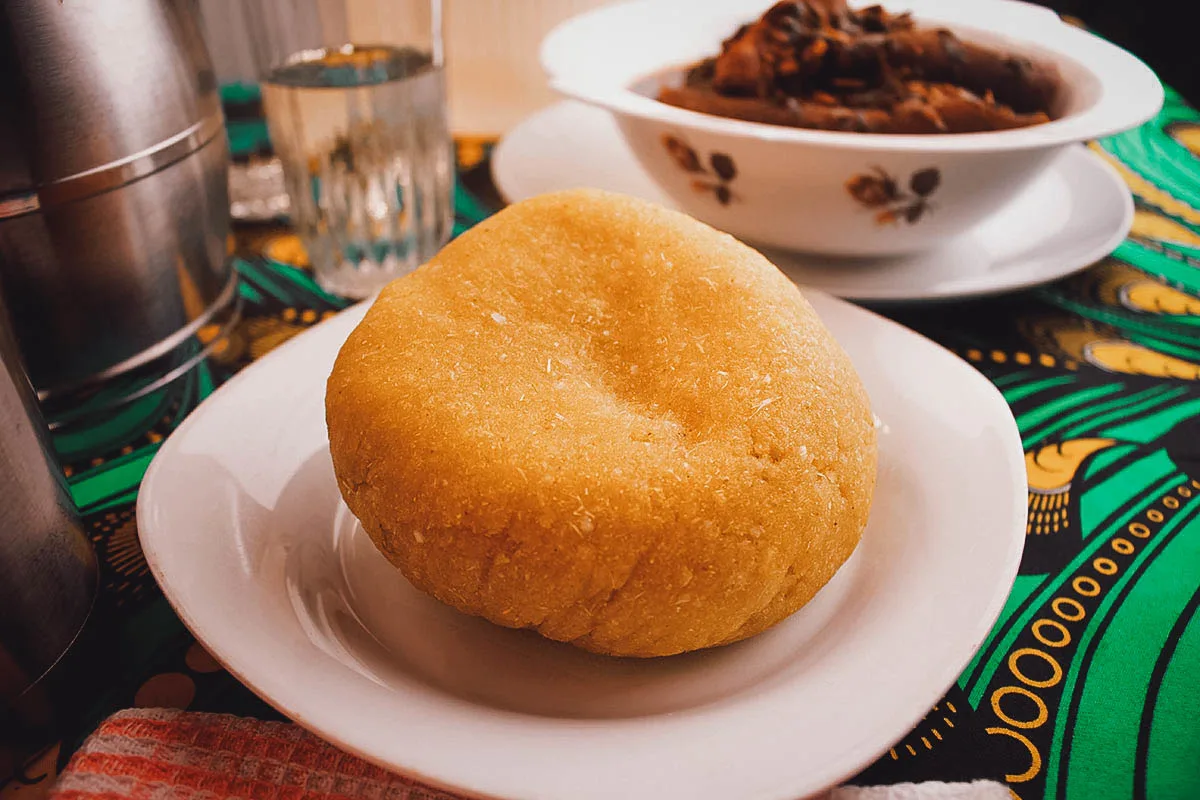
Tuwo Shinkafa is a type of Nigerian swallow food associated with the Hausa people of northern Nigeria. It’s traditionally made with short-grain rice but it can be made with rice flour as well.
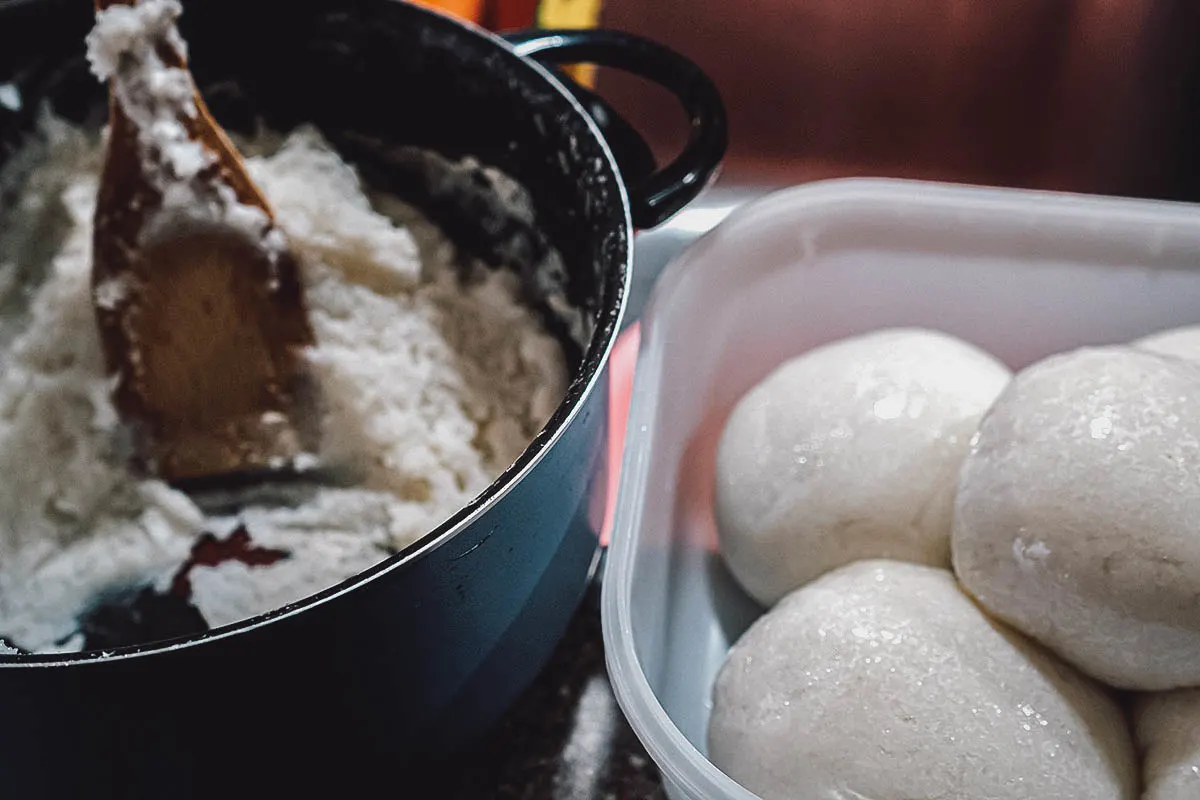
To prepare, the rice is boiled until it absorbs the water and becomes soft and sticky. It’s then mashed into a soft dough, shaped into the container that it’s introduced to, and formed into balls before being served as an accompaniment to Nigerian soups like miyan kuka and miyan kardashi.
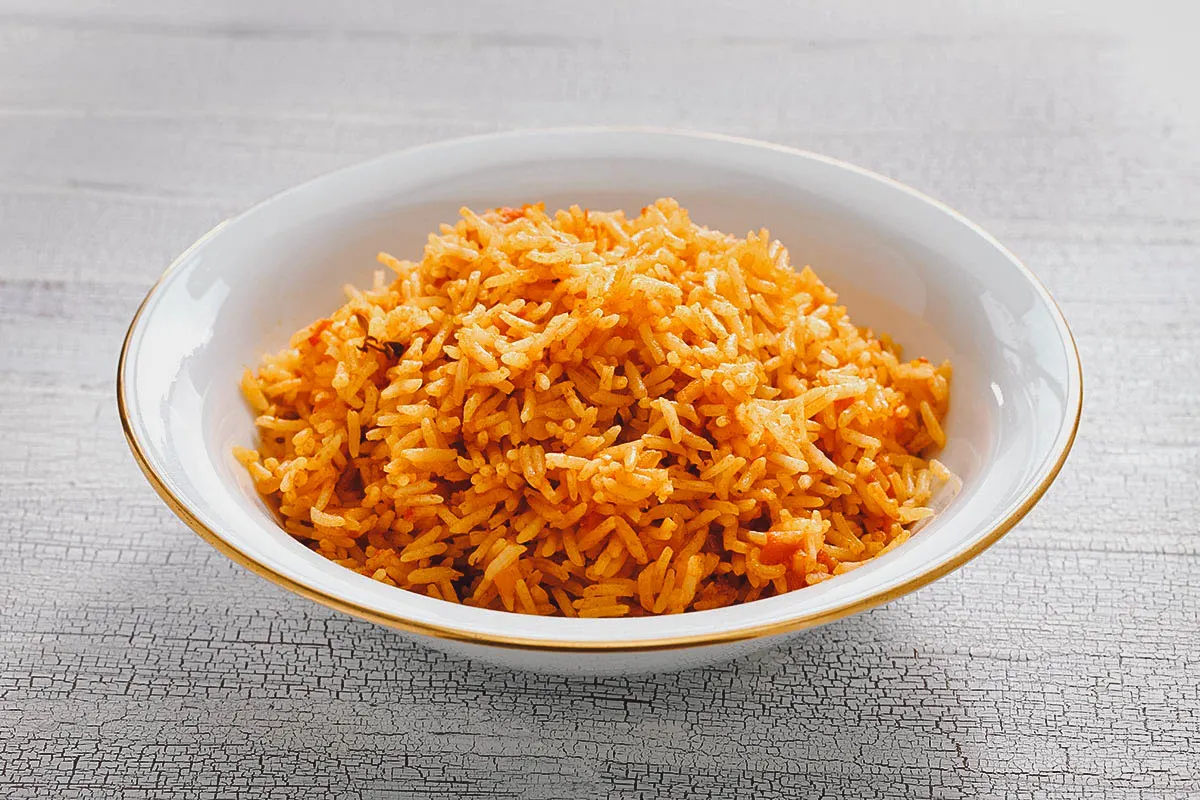
4. Jollof Rice
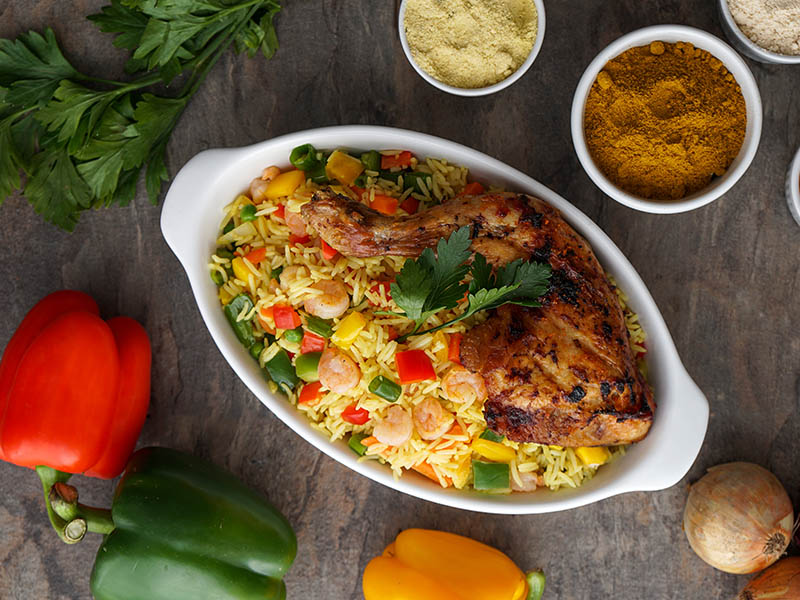
Jollof rice is a one-pot rice dish that’s popular in many West African countries like Nigeria, Ghana, Sierra Leone, Senegal, Togo, and Gambia. It’s made with rice, tomatoes, tomato paste, onions, pimento peppers, scotch bonnet peppers, salt, and other spices.
Jollof rice is one of the most widely consumed dishes in West Africa. It’s regarded as a national dish in Nigeria and often served with some type of meat like chicken, turkey, beef, or fish. Many variations of jollof rice exist in West Africa with two of the most well-known being the Nigerian and Ghanian versions.
Nigerians and Ghanians are so passionate about this dish that it’s sparked the “Jollof wars” – a heated but friendly debate on which nation makes the best version of this beloved dish. The two versions are fairly similar with the one main difference being that Nigerian jollof rice is made with long-grain rice while the Ghanian version is made with more aromatic basmati.
SOUPS / STEWS
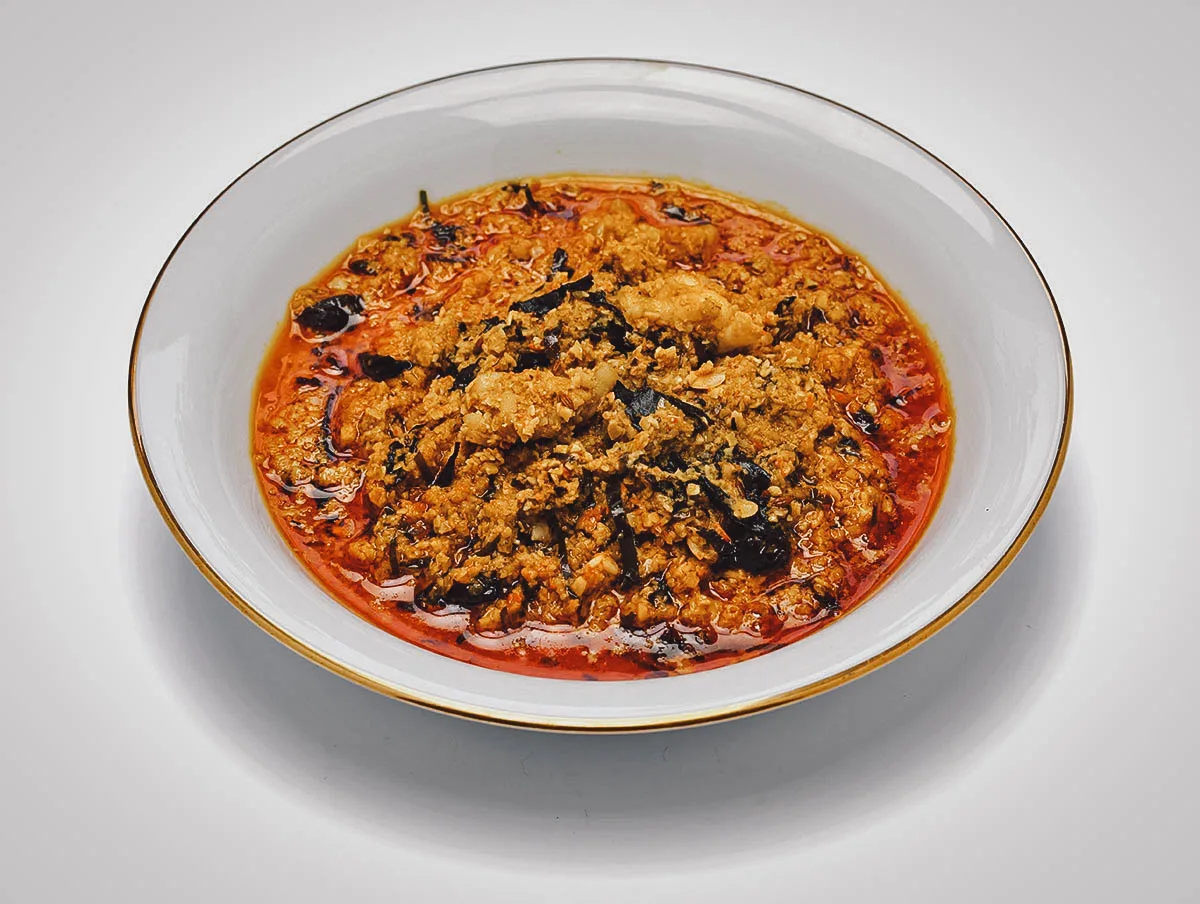
5. Egusi Soup
Egusi soup with fufu is considered by many to be a Nigerian national dish. Egusi refers to the protein-rich seeds of plants like squash, melon, and gourd that when dried and ground become a staple ingredient in many West African and Nigerian foods. One of those dishes is egusi soup.
Egusi soup is a one-pot meal typically made with ground egusi, palm oil, onions, hot peppers, locust beans (iru), African crayfish, stockfish, some type of meat, fish, and leafy vegetables. Other than fufu, it can served with other Nigerian swallow foods like eba, amala, or pounded yam.
6. Amala and Ewedu Soup
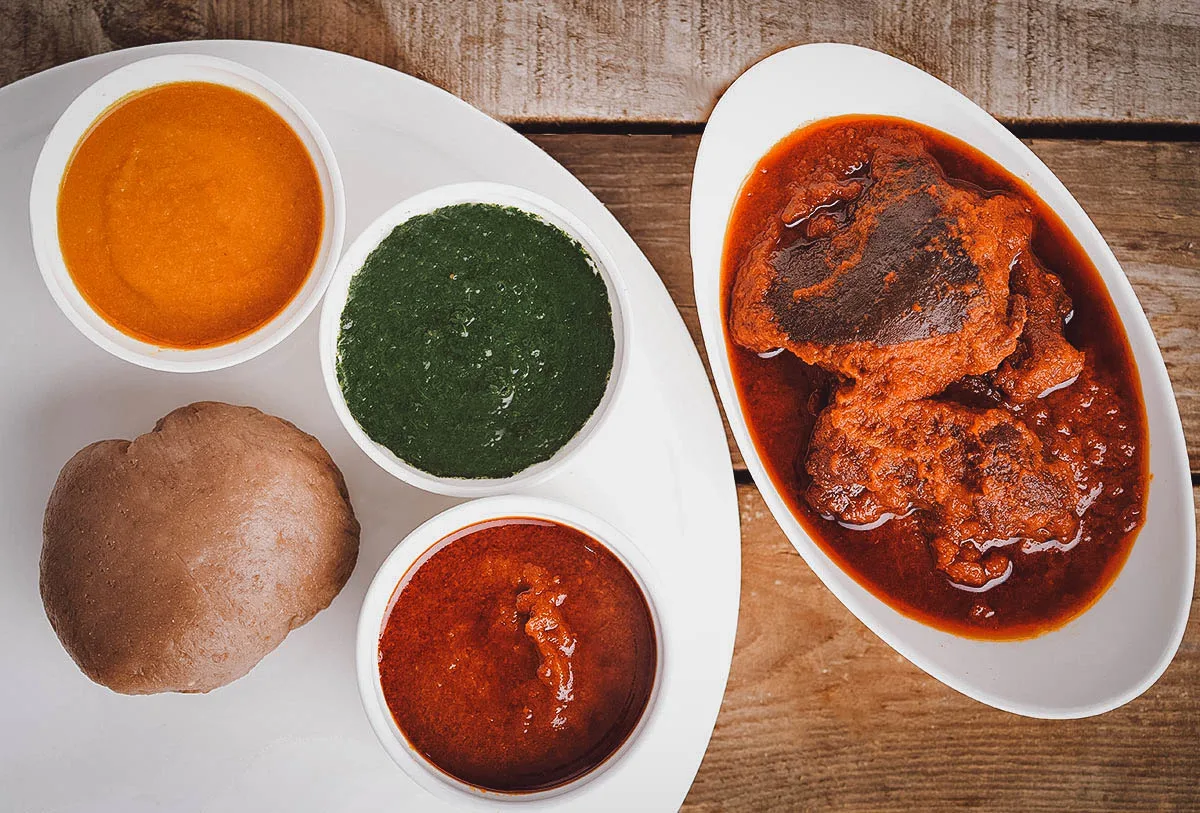
Ewedu soup is a Nigerian soup made with jute leaves, a type of leafy vegetable common in tropical and subtropical parts of the world. It’s native to the Yoruba people of western Nigeria but it’s common in other parts of West Africa, East Africa, and North Africa as well.
To prepare, jute leaves are mashed, often with a short broomstick called ijabe, and then cooked with ground African crayfish, bouillon powder, salt, and locust beans. When cooked, the leaves develop a somewhat slimy viscosity similar to okra.
Ewedu soup is commonly paired with amala but it can be eaten with other types of Nigerian swallow food like fufu, eba, or pounded yam. Amala is typically made with dried yam (amala isu) which gives it a brown color, but it can be made with cassava (amala lafun) or plantain (amala ogede) as well.
Ewedu soup can be served on its own with amala, but it isn’t uncommon to find it served with other types of Nigerian stew as well like buka stew and/or gbegiri soup. As you can probably guess, the bowl of green soup below is ewedu soup.
7. Pepper Soup
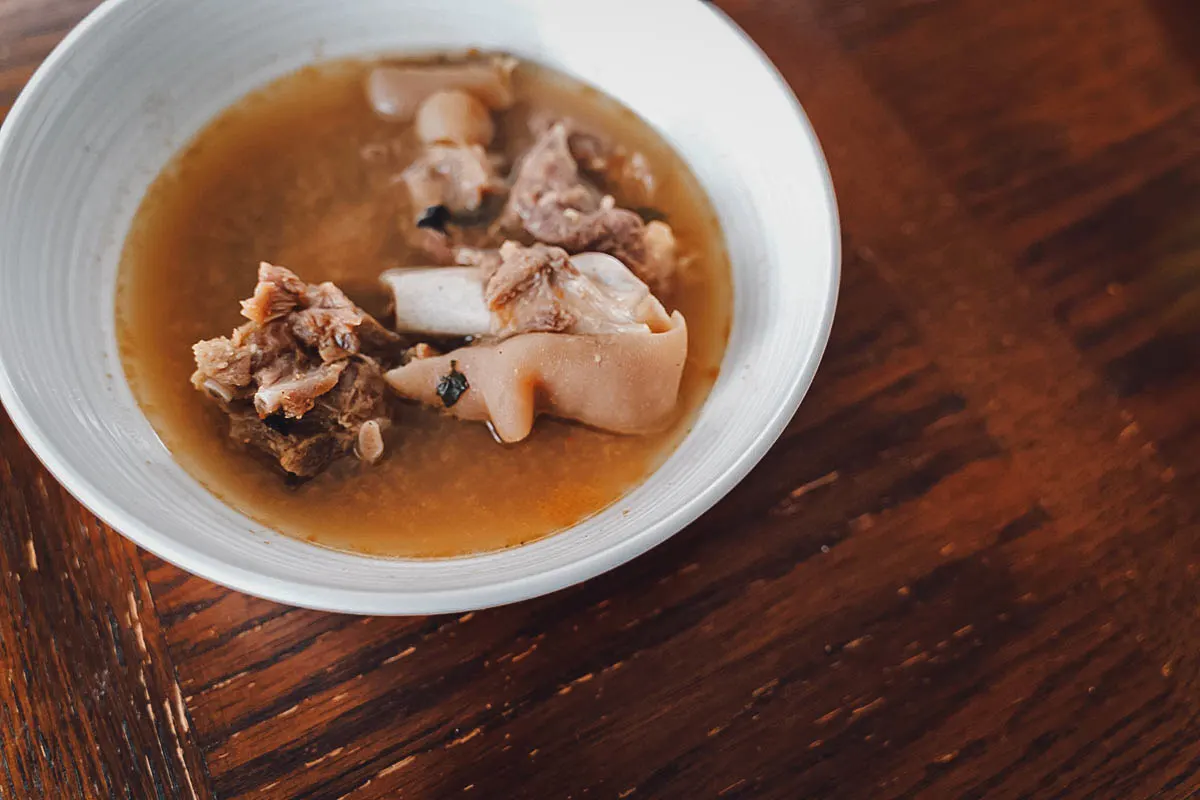
Pepper soup is one of the most popular types of soup in Africa. It’s a spicy and watery soup made with peppers and an assortment of meat like goat, chicken, oxtail, or fish. It’s a comforting Nigerian dish that’s often enjoyed with beer and consumed in many variations in Ghana, Liberia, and in most other parts of western Africa.
Pepper soup made with chicken is said to have medicinal qualities while versions made with yam are especially popular with new mothers. It’s believed that consuming yam pepper soup shortly after giving birth has a cleansing effect on the uterus and aids in milk production.
8. Ogbono Soup
Ogbono soup is a type of Nigerian stew made with different types of vegetables, meat, and fish cooked in a broth thickened with ground dry ogbono seeds (wild mango seeds).
Ogbono refers to a species of African tree that bears edible mango-like fruit. They’re especially prized for their fat- and protein-rich seeds that are often ground and used as a thickening or flavoring agent in Nigerian soups. They have a distinct aroma and develop a slimy viscosity when cooked, similar to okra or jute leaves in ewedu soup.
Like many Nigerian soups and stews, ogbono soup is typically eaten with swallow foods like fufu or pounded yam.
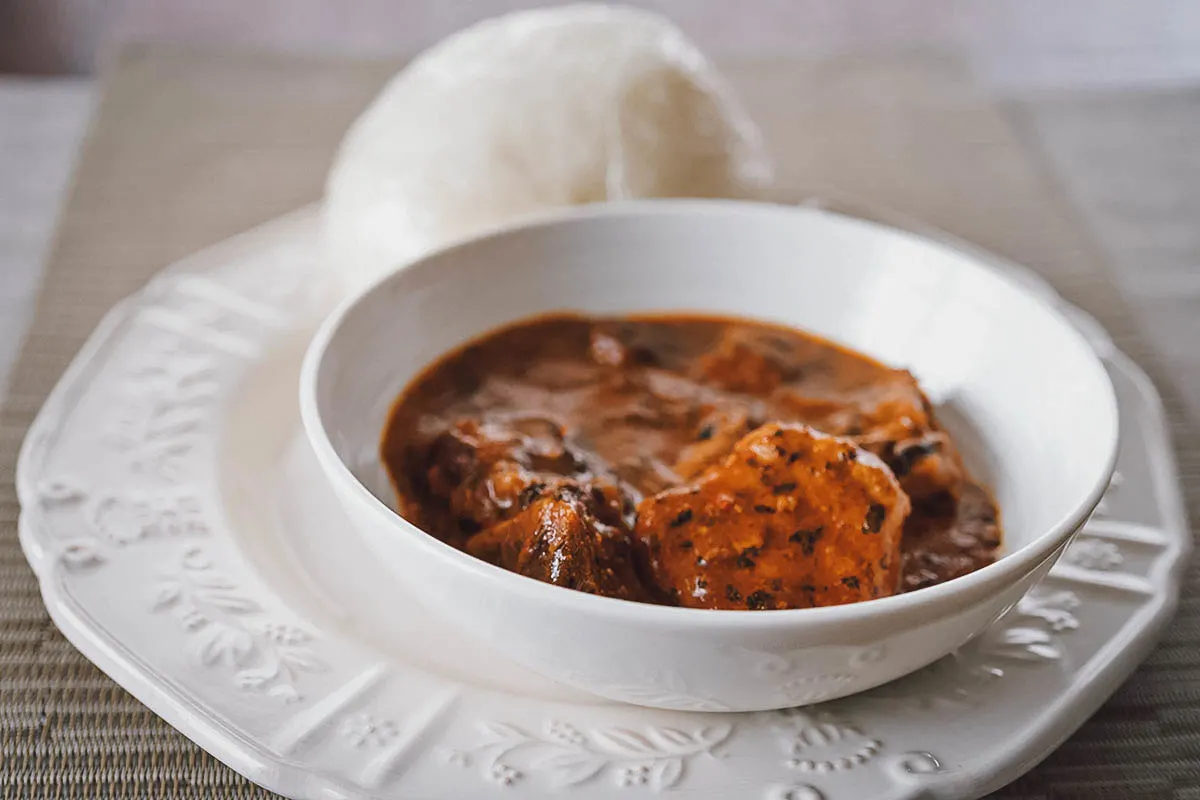
9. Banga Soup
Banga soup refers to a hearty Niger-Delta style soup made with palm nut. It’s native to the Urhobo people in Nigeria’s Delta State but it’s become a continental soup that’s widely consumed throughout Africa.
Depending on where it’s from, banga soup can be prepared in different ways but it’s usually made with fresh palm fruit and a variety of meat, fish (mostly catfish), and seafood flavored with spices like beletete leaves (bush apple), oburunbebe stick (licorice), banga spice leaves, scotch bonnet peppers, and onions.
Like most of the soups in this Nigerian food guide, banga soup is often served with swallow foods like pounded yam or eba.