Ecuadorian Food: 25 Traditional Dishes to Look For in Quito
-
 Loading...
 - Randy Watson
- 07 Jan 2022
- 779 Views
- 0 Like
- 0 Comment
Ecuador’s varied topography and wildly different climates make it an exciting place to visit for adventure seekers. But also for Traveleaters looking for interesting food.
As you’ll find in this guide on traditional Ecuadorian food, much of this equatorial country’s diversity carries over into its rich and delicious cuisine.
WHAT IS TRADITIONAL ECUADORIAN FOOD?
For a small country, the food in Ecuador is diverse and can vary greatly by region and altitude.
In the coastal regions, a variety of seafood, grilled steak, and chicken dishes are popular and commonly served with carbohydrate-rich foods like rice, lentils, and fried plantains. In the mountainous regions, hornado (roasted pork), chicken, beef, and cuy asado (roasted guinea pig) are more common and typically consumed with rice, potatoes, and corn.
Like many tropical countries, Ecuador is rich in fruits. Common Ecuadorian fruits include passionfruit, naranjilla, pitaya (dragon fruit), tree tomato, bananas, and green plantains. It was interesting to learn that Ecuador is the world’s biggest exporter of bananas, accounting for about a third of all global shipments.
Green plantains are an important part of Ecuadorian cuisine and figure prominently in many breakfast dishes, soups, sides, snacks, and street food dishes.
THE BEST OF ECUADORIAN CUISINE
This article on traditional Ecuadorian food has been organized by category to make it easier to digest.
STARTERS / SNACKS / SIDES
1. Empanadas de Viento
The empanada is a staple snack enjoyed in many countries throughout Latin America. Originally from Spain, its name stems from the Galician word empanar, which means “to bread” or “to wrap in bread”. It’s become a very popular dish in many former Spanish colonies like Ecuador, Chile, Venezuela, Argentina, Bolivia, and the Philippines.
An empanada is a baked or fried turnover pastry made with dough folded over a filling. Depending on where it’s from, it can be filled with various ingredients like ground meat, potato, cheese, tomato, hard-boiled egg, raisins, and corn. In Ecuador, you’ll find several variations of this traditional food but the most common is empanada de viento.
Empanada de viento refers to an Ecuadorian-style fried empanada filled with cheese (and sometimes onions). A popular breakfast dish or street food, it doesn’t sound as interesting as the more elaborate empanadas but what makes it unique is the granulated sugar that’s sprinkled on top after deep-frying in oil. The combination of stringy cheese, onions, and sugar with the crispy fried pastry shell is absolutely delicious.
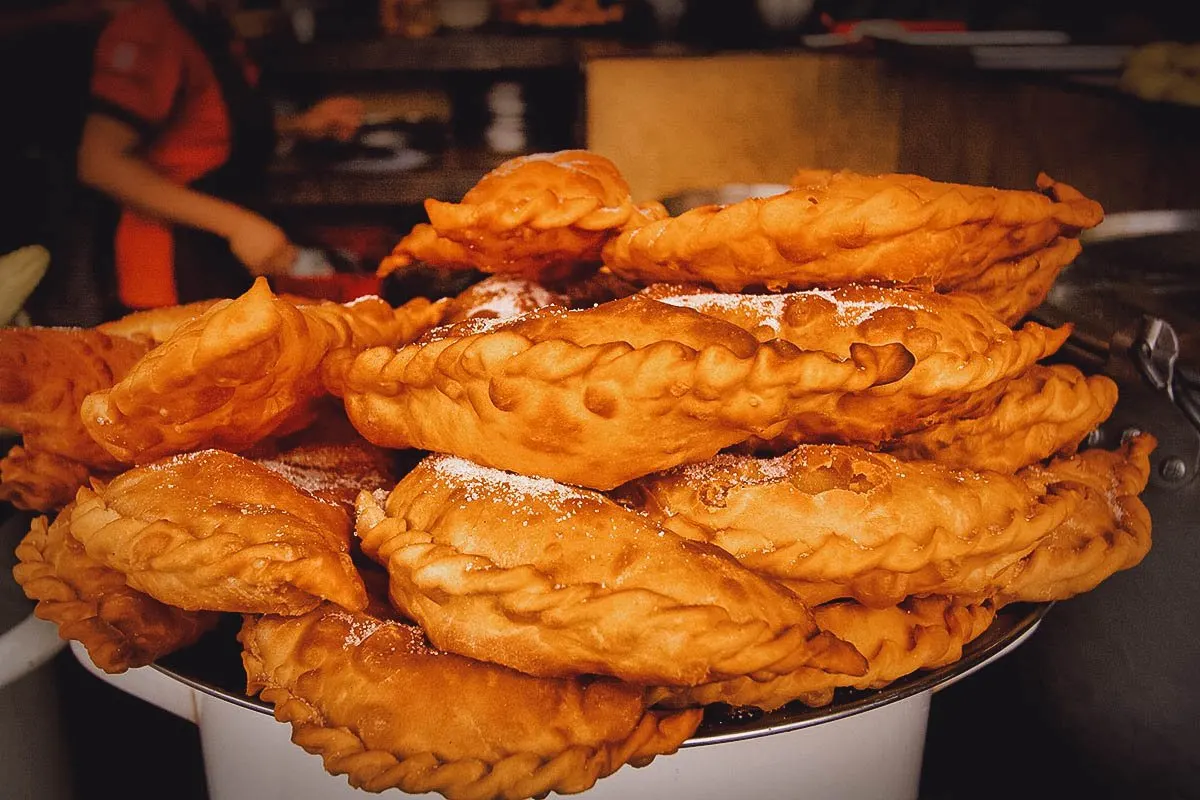
For people who understand Spanish, you may be wondering how this Ecuadorian-style empanada got its name. Empanadao de viento literally means “wind empanada” and refers to how these fried pastries are filled mostly with air. Apparently, the empanada puffs up with air no matter how much cheese you put in them so don’t blame your street vendor if yours seems to have more air than cheese!
Empanada de viento is the most common but you can try other types of empanada in Ecuador like empanada de morocho (made with corn flour), empanada de verde (made with green plantains), and empanada de mejido (made with sweet custard, cheese, and raisins).
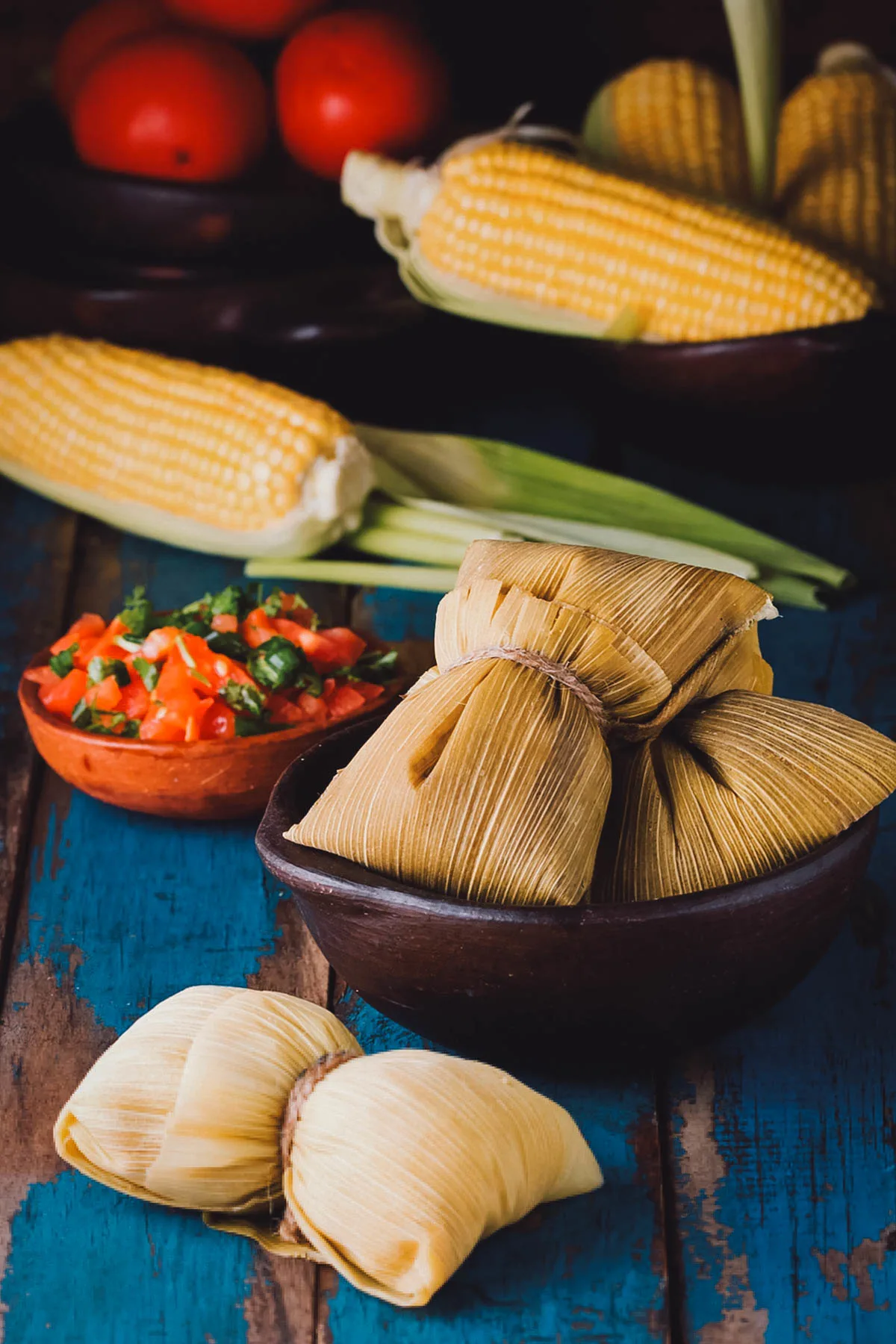
2. Humitas
The humita is a traditional dish from South America that pre-dates the Hispanic period. It’s an ancient dish made with fresh choclo that’s pounded into a paste and then wrapped in corn husk before being steamed or boiled in water. It can be found in countries throughout the Andean region like Ecuador, Peru, Bolivia, Chile, and northwest Argentina.
In Ecuador, humitas are typically made with freshly ground corn, onions, garlic, cheese, eggs, and heavy cream. They’re similar to tamales except humitas are made with fresh corn instead of masa. They’re popular in the Ecuadorian Highlands where they’re typically eaten for breakfast or as a mid-day snack with coffee.
3. Salchipapas
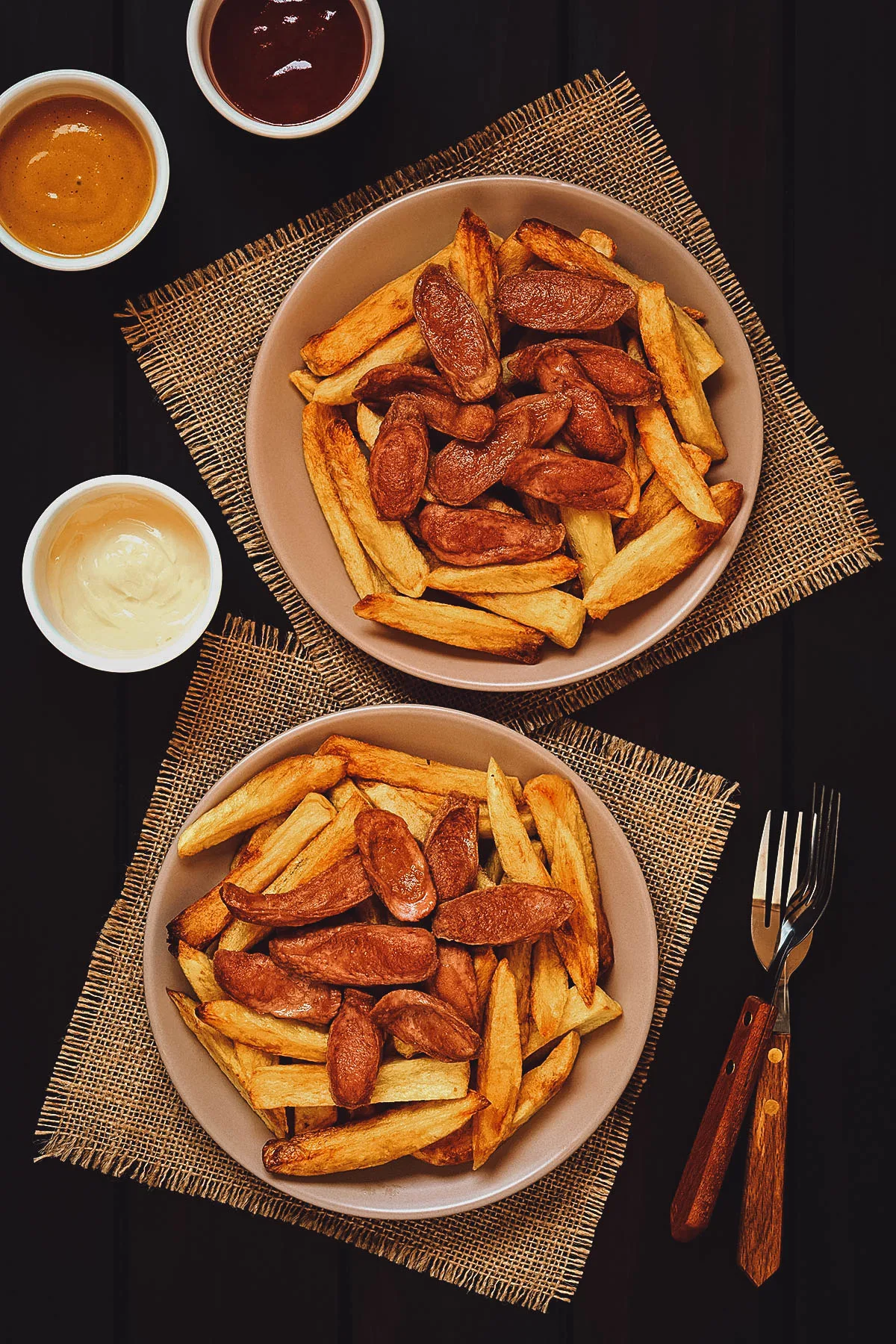
Salchipapas refers to a widely consumed street food dish made with thinly sliced pan-fried beef sausages served with a mound of french fries. Originally from Lima in Peru, it’s become a popular street food snack in many countries throughout Latin America like Ecuador, Colombia, Bolivia, Chile, and Argentina.
Salchipapas is a portmanteau word for salchicha (sausage) and papa (potatoes). It can be toped with various condiments like ketchup, mustard, and hot sauce and served with a variety of side dishes like cheese, lettuce, tomatoes, red onions, and a fried egg. It’s a greasy but delicious dish that’s easy to make.
If you’d like to make this street food classic yourself, then check out this recipe from popular Ecuadorian food blog Laylita’s Recipes. Topped with tomato onion curtido salsa and a homemade salsa rosada, it looks absolutely delicious!
4. Llapingachos
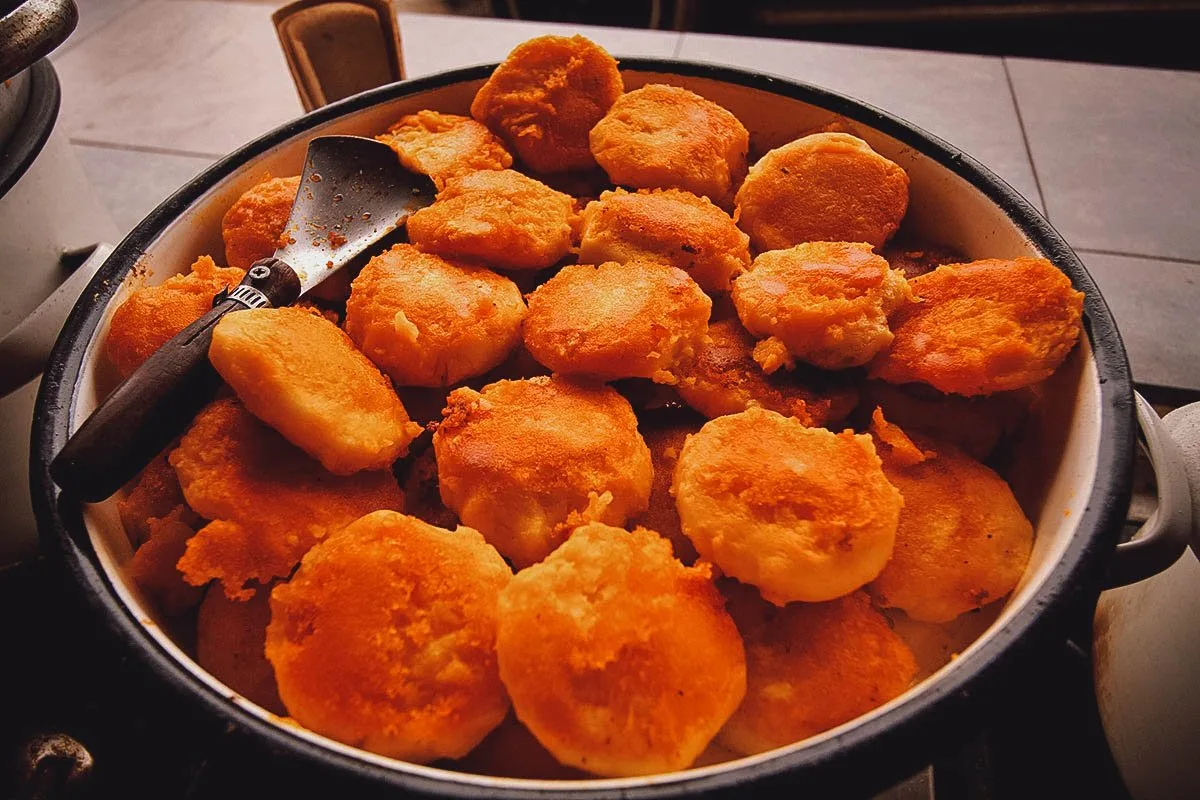
Llapingachos are Ecuadorian fried potato cakes made with boiled and mashed potatoes seasoned with onions and spices and stuffed with cheese. The potato patties are cooked on a griddle till they’re golden brown and crispy on the outside and soft and creamy on the inside.
These delicious fried potato cakes are typically served with salsa de mani (creamy peanut sauce) and eaten for breakfast or lunch with different side dishes like chorizo sausages, avocados, fried eggs, lettuce, and a pickled red onion and tomato salad. If you like some heat in your food, then you can enjoy them with a good drizzle of aji criollo hot sauce.
Like humitas, llapingachos pre-date Hispanic times and are a delicious example of Ecuadorian Highland food. Its name stems from the Kichwa word llapina, meaning “to crush into a soft and mushy consistency”.
5. Bolon de Verde
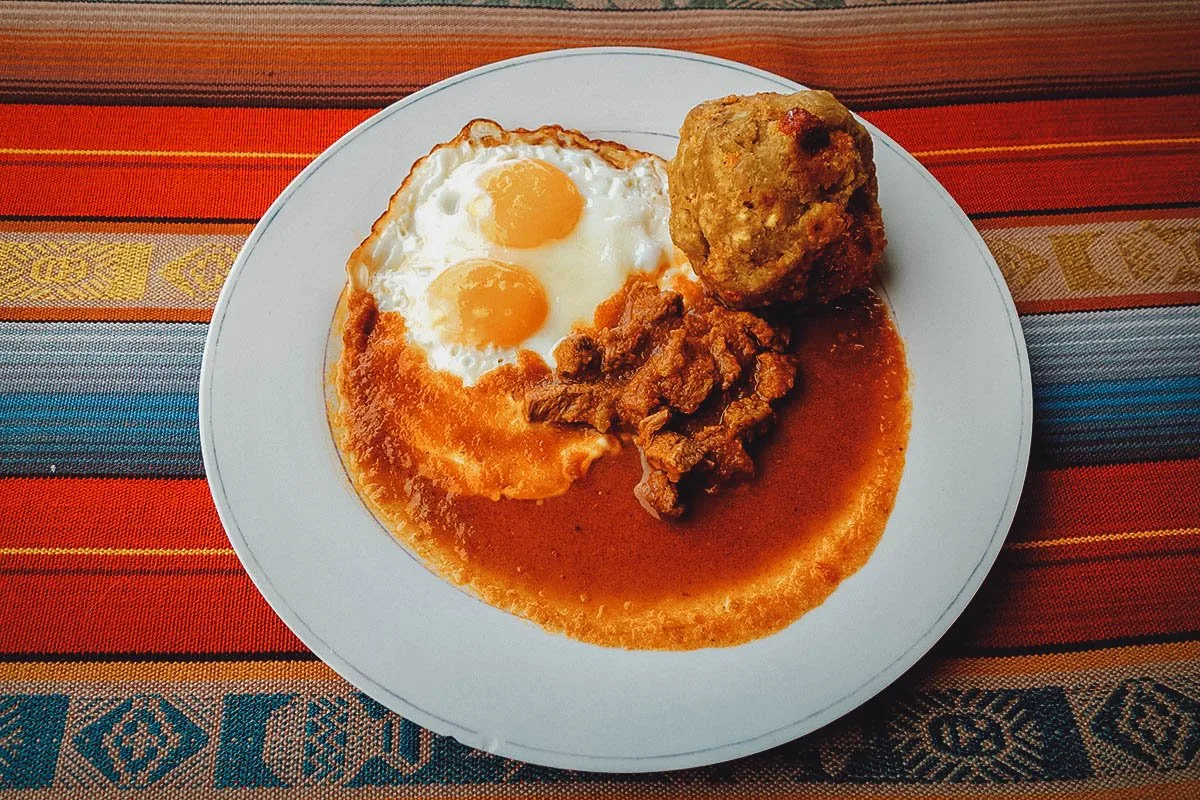
Bolon de verde literally means “big green ball” and refers to a popular traditional food in Ecuador made with mashed cooked green plantains stuffed with cheese and/or chicharrones (Ecuadorian deep-fried fatty pork). Popular in the coastal regions of Ecuador, they’re shaped into fist-sized balls and then deep-fried till crispy.
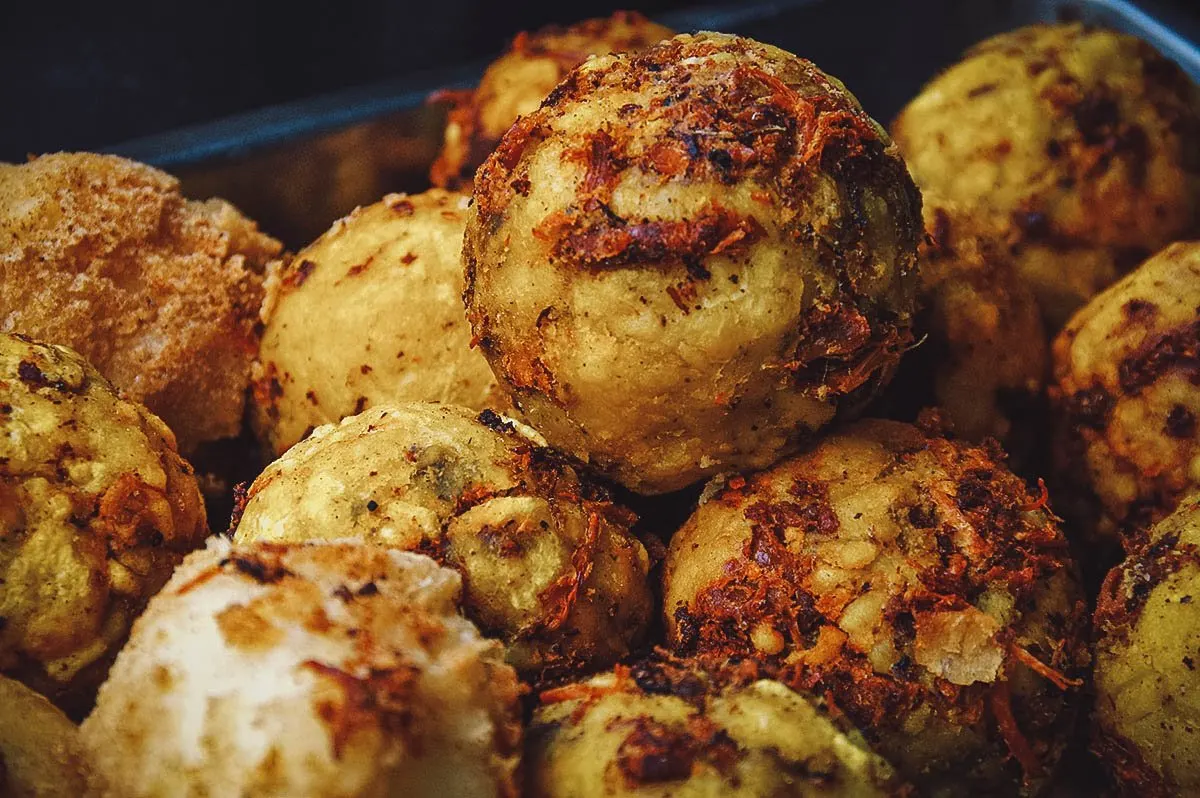
Early risers may be wondering, “What is a typical breakfast in Ecuador?” Well, you’re looking at it.
Bolon de verde is generally served for breakfast or brunch in Ecuador, often with hot sauce, avocado slices, tomatoes, and a fried egg. They also make for a delicious side dish or appetizer.
6. Muchines de Yuca
If bolon de verde looks appealing to you, then you may want to try muchines de yuca as well. It refers to a traditional food in Ecuadorian cuisine consisting of deep-fried cassava balls or spheres filled with cheese. They’re popular in the coastal regions of Ecuador where they’re typically served for breakfast with fried eggs or as an appetizer with hot sauce and a small salad.