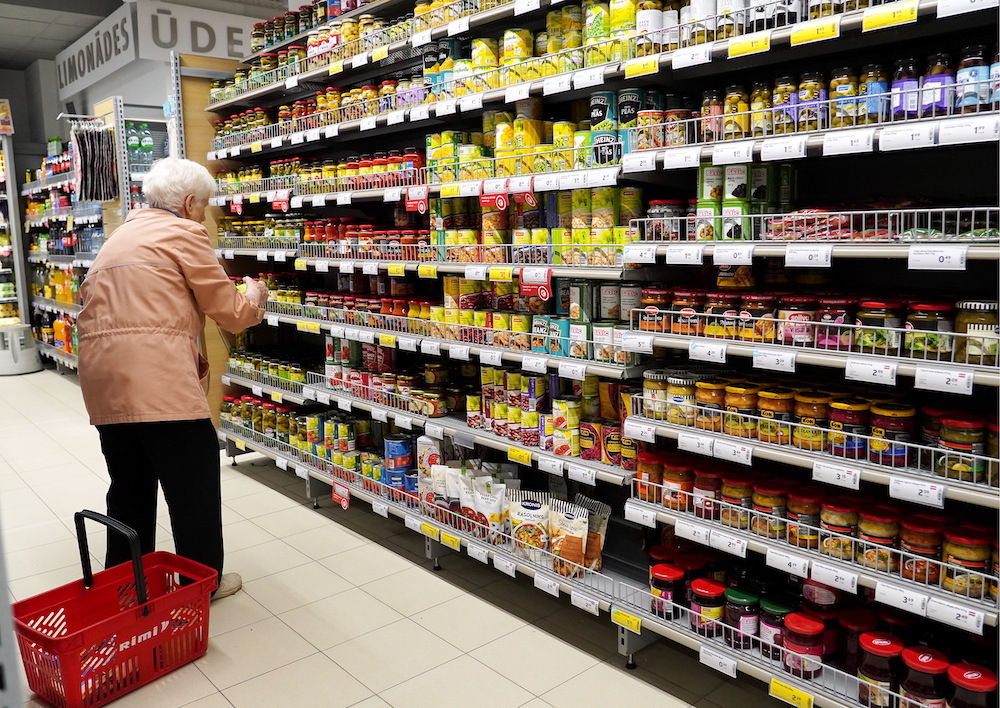
Food Prices Continue to Rise – President of the Bank of Latvia Urges Government to Act More Proactively

The rising cost of food has become a pressing issue in Latvia, prompting the President of the Bank of Latvia, Mārtiņš Kazāks, to call for more proactive government intervention. During recent statements, Kazāks expressed concern over the ongoing increases in food prices, emphasizing the need for the government to engage more actively in fostering competition within the market.
Kazāks highlighted that while some of the price increases can be attributed to global trends, there are also domestic factors at play that are contributing to the inflation of food prices in Latvia. He raised important questions regarding the effectiveness of the Competition Council and potential issues within supply chains that may be exacerbating the situation.
“The rise in food prices is indeed a cause for concern,” Kazāks stated, urging the government to take a closer look at these factors to ensure that consumers are not unduly affected by rising costs. He believes that a more competitive market could help mitigate some of the inflationary pressures.
Despite the challenges, Kazāks noted that if the rate of price growth begins to slow down in the coming months, it could be interpreted as a normal development in the economic cycle. “The most dangerous period of inflation is long behind us, but 3% to 3.5% is still slightly too high,” he acknowledged, indicating that while the worst may be over, vigilance is still necessary.
Recent data from LETA reported that consumer prices in Latvia increased by 0.8% in February 2025 compared to January. Year-on-year, inflation rose by 3.7%, up from 3% in the previous month. This increase reflects ongoing pressures in the economy, particularly in the food sector.
In February 2025, the main contributors to the change in the price level included food and non-alcoholic beverages, which accounted for an increase of 0.3 percentage points. Other significant contributors were housing-related goods and services (+0.2 pp), transport-related goods and services (+0.2 pp), and alcoholic beverages and tobacco (+0.1 pp). Interestingly, clothing and footwear saw a slight decrease of 0.1 percentage points.
Month-on-month, food and non-alcoholic beverage prices rose by 0.9%, while year-on-year, they increased by a notable 5.7%. This trend underscores the urgency for government action to address the rising costs and ensure that consumers are not disproportionately affected.
As the situation develops, it will be crucial for the Latvian government to consider Kazāks' recommendations and explore measures that can enhance market competition and stabilize food prices. The ongoing dialogue between economic leaders and policymakers will be essential in navigating these challenges and fostering a more resilient economic environment for all Latvians.