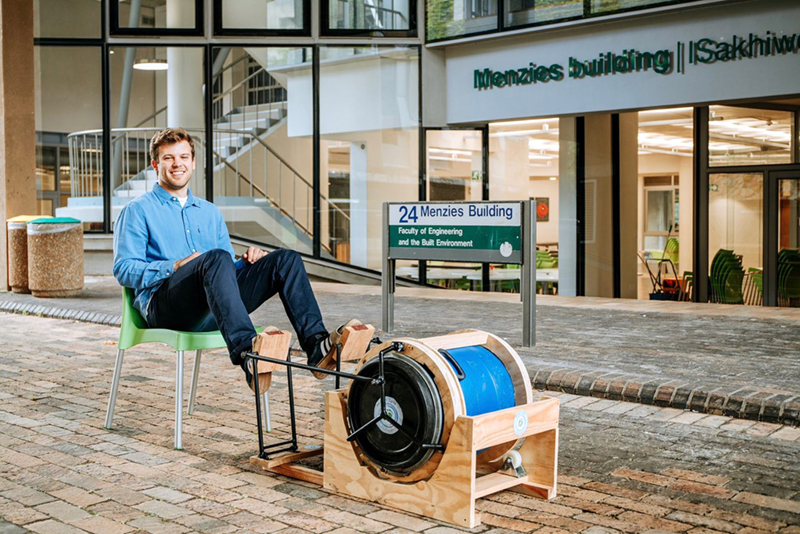
Foot-powered washing machine wins international design challenge
-
 Loading...
 - Munashe Reuben
- 22 Dec 2021
- 417 Views
- 0 Like
- 0 Comment
This is University of Cape Town (UCT) student Kai Goodall’s Pedal n Spin foot-cranked washing machine at work, a design that has won him the RS Components International People.Planet.Product Student Design Challenge, in partnership with the Washing Machine Project and Grass Roots.
A social innovator at heart, Goodall is a master’s student in the Department of Electrical Engineering in the Faculty of Engineering & the Built Environment. He is supervised by Dr David Oyedokun.
Goodall was the sole African candidate among six finalists; three were from universities in the United Kingdom and two were from Singapore. Each pitched their design to a panel of judges at the final on 26 November 2021.
First big win
It’s his first big international win.
“It was a great experience to be involved with other bright students from around the globe as they each brought unique ideas to the table,” he said. “It’s an incredible milestone in my engineering career that I will always cherish.”
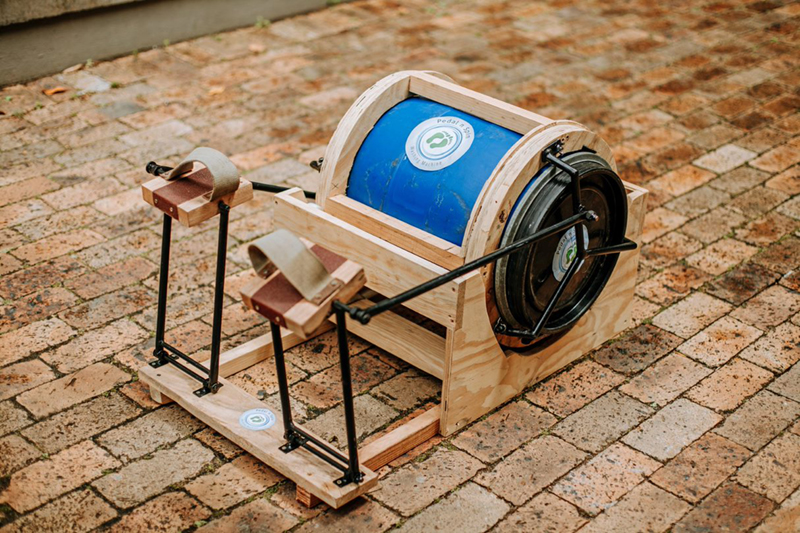
Goodall’s winning Pedal n Spin device refines the design, usability and sustainability of the current hand-cranked Divya washing machine that has been put to work in many different social environments around the globe. But Goodall knew he could improve the ergonomics of the design while ticking the boxes on affordability, portability, maintainability and usability.
Operating the washing machine from a seated position, using the power of stronger leg muscles, provides better ergonomics and options for user posture and efficiency. The power input is based on the well-proven treadle system, he said. Think of the old treadle sewing machines.
“The design started with rapid prototyping and robust engineering testing to achieve the most efficient and reliable final washing machine design,” said Goodall. “The manufacturing process of the final design was streamlined and developed with the hands-on support of Grant Bramwell, one of the directors of Forest Creations, a sustainable local woodwork workshop in Cape Town, South Africa.”
The materials used reflect Goodall’s focus on sustainability and recyclability; the washing machine is made from wood and steel components. It can be easily manufactured and repaired in basic workshops anywhere is the world, he said.
To validate his design, Goodall tested it by corralling people of various ages, sizes and physical strength. His 12-year-old brother, Oliver Bramwell, was roped in to test it, as well as his 85-year-old grandmother, Margaret du Toit, who pronounced, “It’s easier to use than you think.”
Goodall’s Pedal n Spin washing machine uses 25 litres of cold water and does 5 kg of washing at a time. Read More…