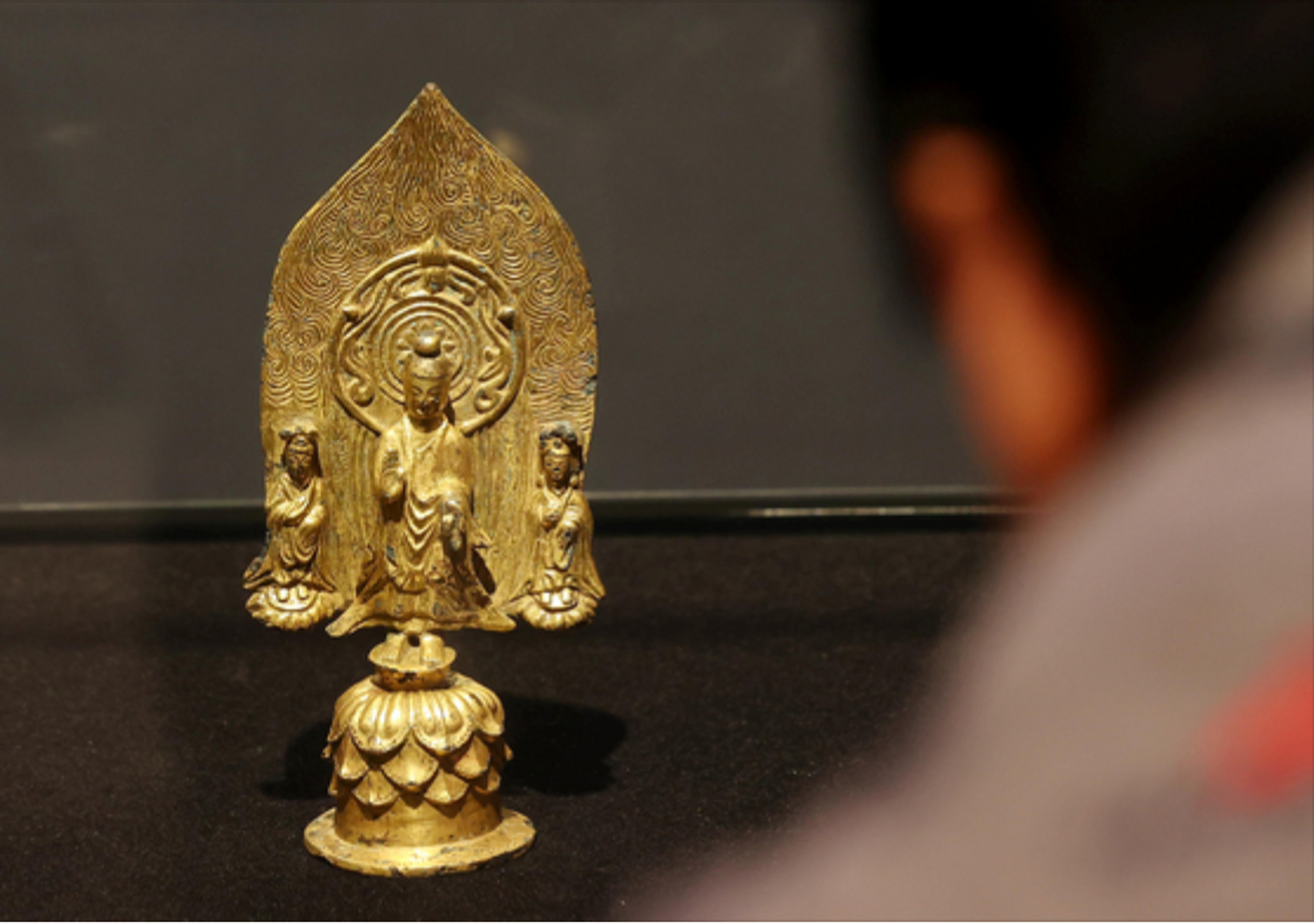
For the first time ever, a Korean museum is selling off 'national treasures' at auction

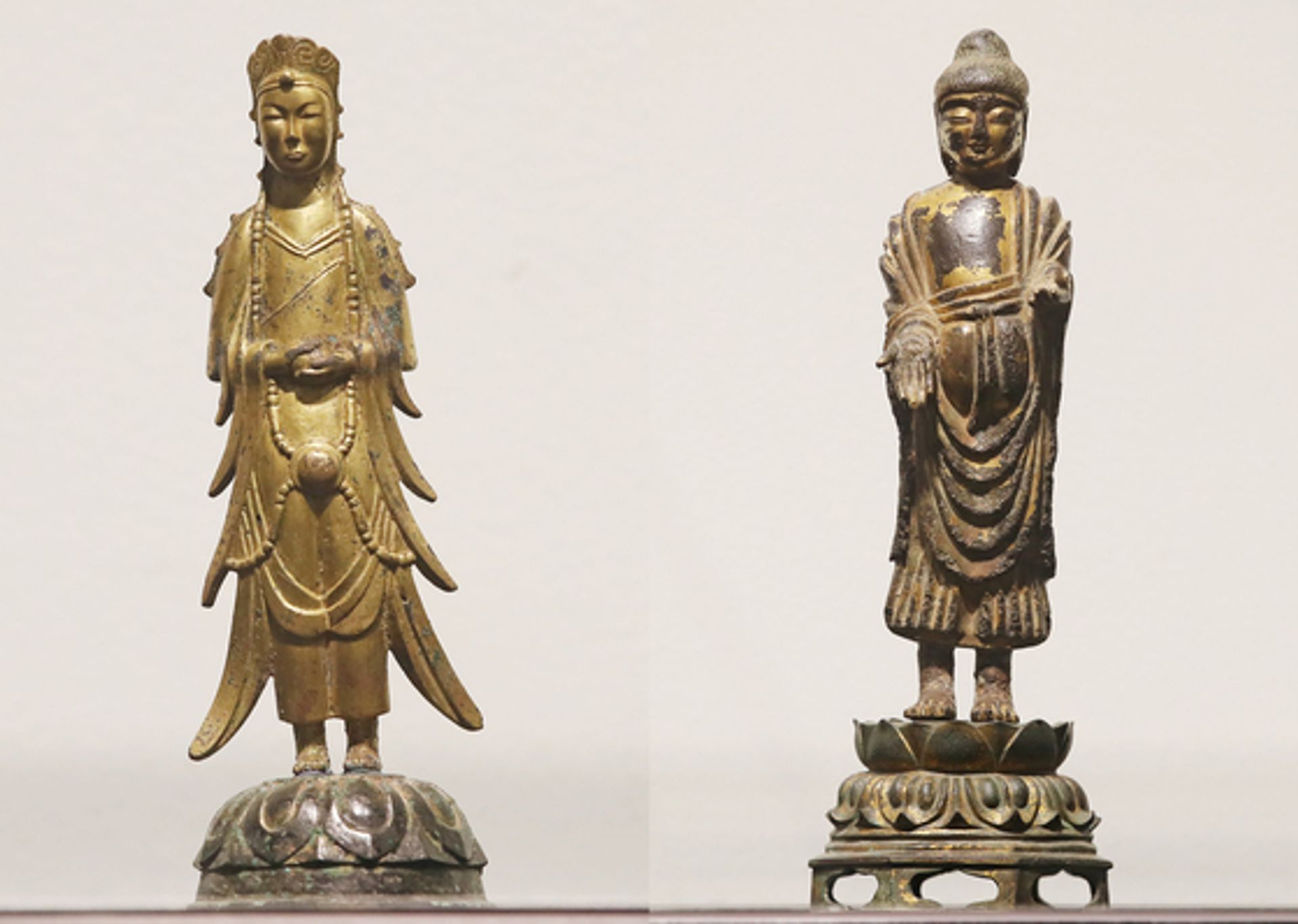
The Kansong Art and Culture Foundation, which runs South Korea's oldest private museum the Kansong Art Museum in Seoul (also known as the Gansong), has consigned two historic sculptures classed as national treasures for auction later this month.
Up for sale: a gilt-bronze portable shrine of a Buddha triad, dated to around the 11th century, carrying an estimate of KRW 28bn to KRW 40bn (£17m to £25m); and a gilt-bronze standing Buddha triad dated to the 6th century, estimated at KRW 3.2bn to KRW 45bn (£20m to £27m). Both are being sold by the Seoul auction house K Auction on 27 January and will form part of a major live sale featuring works by Park Seo-Bo and Yayoi Kusama.
They will likely make records for the highest price achieved by cultural artefacts at auction in Korea, which currently stands at KRW 3.1bn (£1.9m) for a Joseon-dynasty white porcelain jar, sold by Seoul Auction in 2019.
This sale marks the first time in Korean history that "national treasures"—the highest of Korea's eight state-designated heritage classifications—have been deaccessioned by a museum, according to K Auction. There are just over 350 national treasures in Korea; many of these are heritage sites.
In a statement, the Kansong Art and Culture Foundation urged the Korean public “to please understand this was an indispensable decision, and a hard one to make, for the future of Kansong”. By law, state-designated heritage objects cannot leave South Korea or be sold overseas.
A spokesperson for the foundation declined to comment as to whether the funds from the sale will go towards the ongoing renovations of the Kansong Museum, which have kept the building closed to public since 2014. Part of this revamp includes a storage facility being built with KRW 4.4 bn (£3m) in government funding, an unprecedented grant for a private museum, awarded due to the Kansong's contribution to Korean cultural heritage.