From A Scientific Standpoint, Is Darkness Faster Or Slower Than Light?
-
 Loading...
 - Blake Barnes
- 06 Apr 2023
- 80 Views
- 0 Like
- 0 Comment
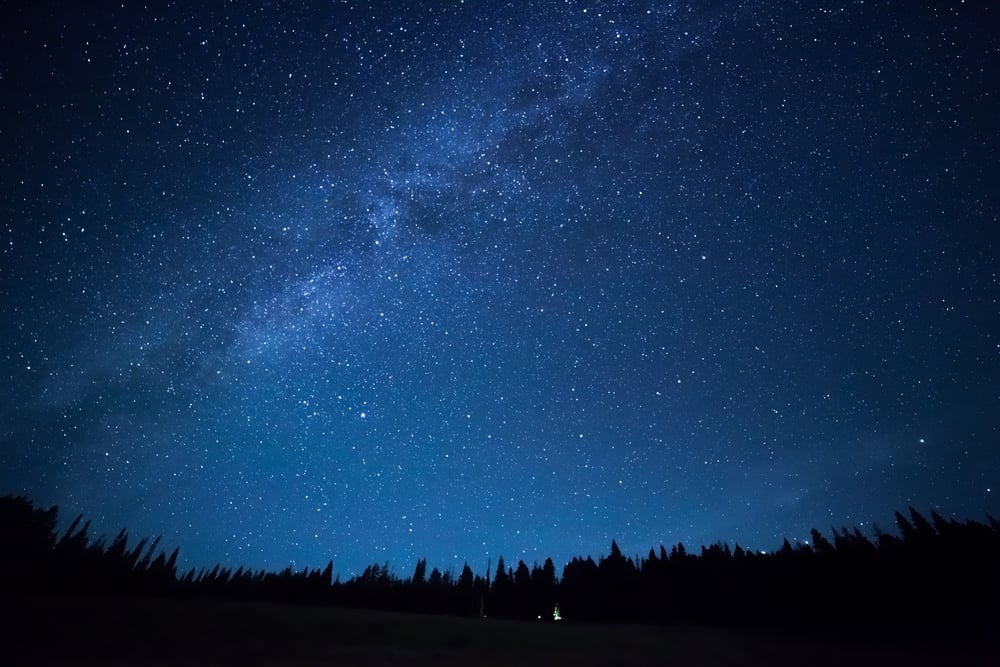
What do you see when you look up at the sky?
Emptiness.
Well, not exactly emptiness, but an expanse so vast that anything it contains seems like a mere speck of dust in the open sky. During the day, this vast expanse seems light blue to anyone on the surface of the Earth. This is due to the scattering of the Sun’s light rays in Earth’s atmosphere. However, when the Sun sets, and there is no external source of light, we see the true colors of the Universe, the true color of the Universe being no color at all. That’s why we refer to it as space. Being an empty, open space leaves it in darkness.
To the human eye, darkness and light are two opposing entities, so from a scientific standpoint, which one of them is faster? Which one would traverse the distance from point A to point B quicker? The short answer to this question is that there is no comparison to be made, as darkness does not possess a speed of its own. However, this short answer isn’t exactly a satisfying answer. For that, we need to understand the relationship between light and darkness.
Are Darkness And Light Two Opposing Entities?
When we look up at the night sky, the shining lights of the stars stand out against the darkness of the Universe. So, if they look like polar opposites to the human eye, and we consider them as opposites in all aspects, be it media, art, good and bad, Yin and Yang, they must actually be opposing entities, right?
Wrong.
Now, light travels at a rough speed of 300,000 kilometers per second in a vacuum (in the absence of a medium). That is, light possesses speed of its own and, therefore, physical properties of its own. Furthermore, we can produce light because light has a source from which it originates. This makes light an independent physical entity.