German Conservatives Extend Lead Over Far Right in Election Poll
-
 Loading...
 - Brigitte Martin
- 07 Feb 2025
- 191 Views
- 0 Like
- 0 Comment
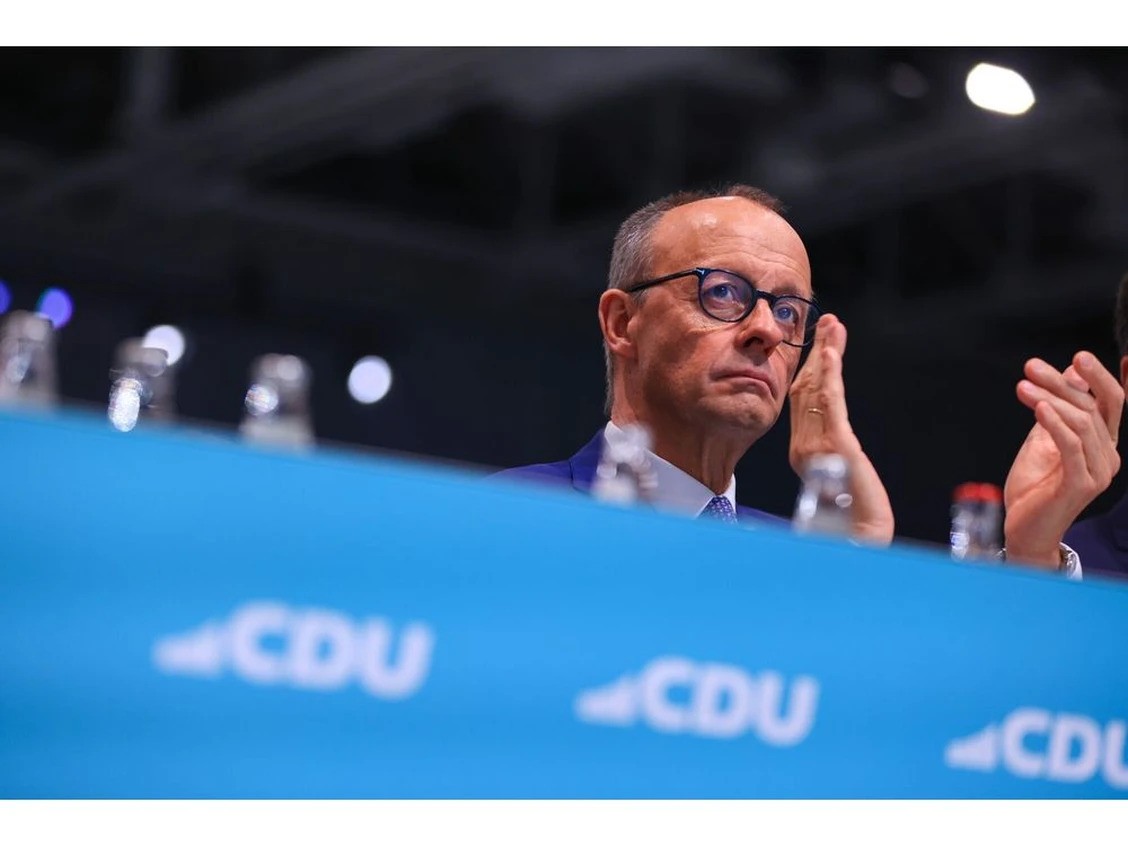
Support for Germany’s conservative opposition has seen a slight increase in a recent poll, indicating that CDU leader Friedrich Merz’s controversial push for tougher migration rules has not negatively impacted his election prospects. According to a Forschungsgruppe Wahlen survey conducted for public broadcaster ZDF, the CDU/CSU alliance gained 1 point, reaching 30%. This poll, conducted from February 4-6, is one of the first major surveys reflecting voter opinions following Merz’s recent parliamentary vote, which was met with criticism.
A separate poll by Infratest dimap also indicated a 1-point gain for the conservative bloc. In contrast, the far-right Alternative for Germany (AfD) lost 1 point, dropping to 20%, while Chancellor Olaf Scholz’s Social Democrats remained steady at 15%, now tied with the Greens.
With just over two weeks remaining before the February 23 election, Merz appears to be on track to potentially become Germany’s next leader. However, he will require at least one coalition partner to secure a majority in parliament. Currently, the Social Democrats and the Greens are the most likely options for coalition partners, although Merz may need a third party to form a three-way alliance. Notably, all of Germany’s main parties have stated they will not partner with the AfD in government.
The political landscape has been complicated by recent events, including a fatal knife attack in Bavaria allegedly committed by a rejected asylum seeker. Following this incident, Merz’s bloc attempted to push through legislation that relied on support from the AfD, which sparked significant political outrage and street protests in several cities.
In the same poll, respondents were asked whom they would vote for if they could directly choose their chancellor. Merz received 32%, an increase of 2 points from the previous survey, placing him ahead of Robert Habeck of the Greens, who remained at 24%. Scholz saw a decline, standing at 18%, down 2 points.
On Thursday, German corporate leaders urged the next government to act swiftly to unlock investment and stimulate growth in Europe’s largest economy. During a panel discussion in Frankfurt, executives from Commerzbank AG, RWE AG, and Bilfinger SE highlighted structural issues such as high energy costs and bureaucratic red tape that need to be addressed post-election.
CEOs from major companies, including Siemens AG, Mercedes-Benz Group AG, and Deutsche Bank AG, also called for measures to revive German economic growth. Mercedes chief Ola Kaellenius emphasized that advancing the economy should not come at the expense of core values, stating, “We unequivocally reject xenophobia and hatred. This is not only desirable but essential for economic success.”
As the election approaches, the dynamics between the conservative bloc and the far-right AfD continue to evolve, with Merz gaining ground in voter preference. However, the need for coalition-building and addressing pressing economic concerns will be critical for the next government as Germany navigates its political and economic future.