German Scientists think they know the origin of the asteroid that wiped out the dinosaurs
-
 Loading...
 - Leopold Becker
- 27 Aug 2024
- 52 Views
- 0 Like
- 0 Comment
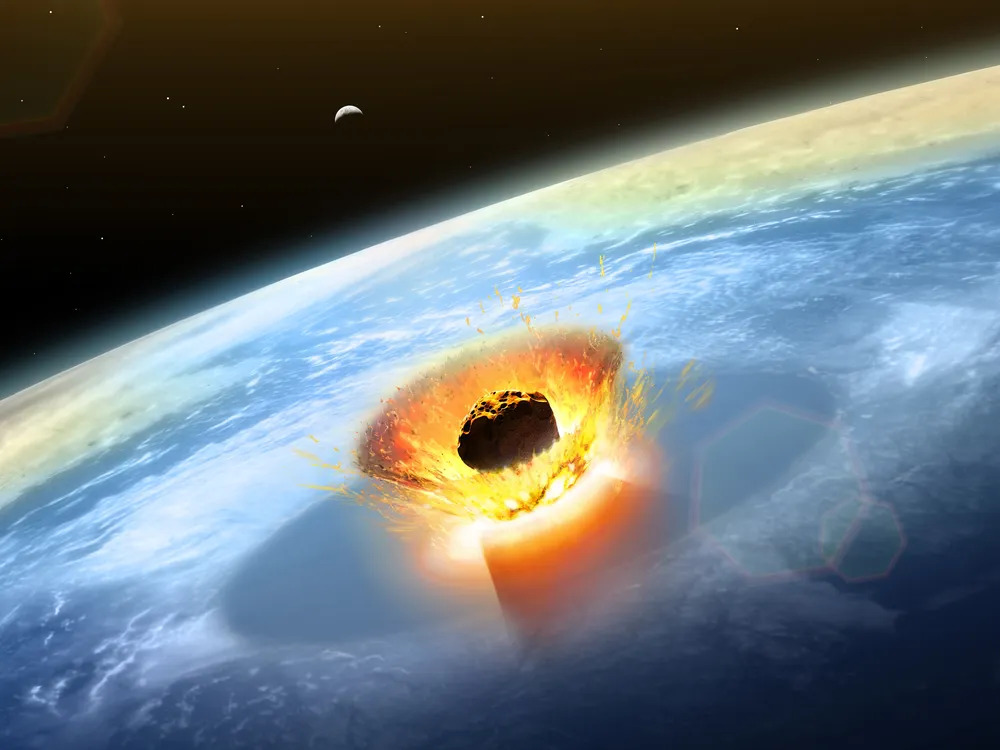
German scientists believe they have uncovered the origin of the asteroid responsible for the mass extinction event that wiped out the dinosaurs 66 million years ago. The Chicxulub impactor, a massive space rock that created the Chicxulub crater in present-day Mexico, is widely accepted as the cause of the catastrophic event that drastically altered Earth's climate and ended the reign of the dinosaurs. However, the origins of this asteroid have long been debated among scientists.
A team of geoscientists from the University of Cologne has found compelling evidence suggesting that the Chicxulub impactor came from the outer reaches of our solar system, beyond the orbit of Jupiter. Their research involved analyzing remnants of the impactor, specifically focusing on the presence of ruthenium, a rare element typically found in asteroids from the outer solar system.
Ruthenium is scarce in Earth's crust but abundant in certain types of asteroids. By studying the isotopes of ruthenium found in the sedimentary layers formed by the impact, the researchers were able to trace the asteroid's origin. These sediments, dispersed globally by the impact's immense force, were collected from various regions in Europe.
The presence of ruthenium in these geological remnants supports the idea that the asteroid came from a region of space beyond Jupiter. This discovery strengthens the theory that the Chicxulub impactor was not an icy comet but a rocky asteroid composed of metals and minerals from the outer solar system.
This finding adds a new dimension to the long-standing debate over the factors contributing to the mass extinction event. While the asteroid impact is widely recognized as a primary cause, there has been ongoing discussion about the role of massive volcanic eruptions at the Deccan Traps in India, which could have also contributed to the global devastation.
The research team's conclusion is that the impact of this rare asteroid was a unique event in Earth's geological history, sealing the fate of the dinosaurs and many other species. As Carsten Münker, one of the researchers, stated, this projectile from the outer solar system was responsible for the mass extinction that ended the Cretaceous period.