German Summit Convened After Wolf Attacks
-
 Loading...
 - Nerby Erik
- 07 Jun 2023
- 68 Views
- 0 Like
- 0 Comment
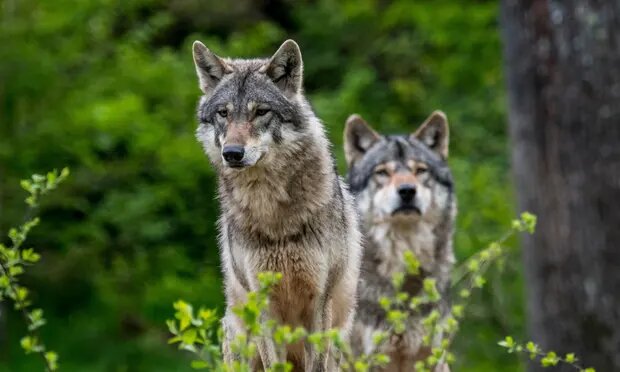
German farmers, conservationists, and politicians convened at a wolf summit to address concerns regarding the burgeoning wolf population and its implications for the future. The farmers' union advocates for a relaxation of regulations surrounding the shooting of wolves, which are currently under strict protection according to EU law. Their stance stems from a string of highly publicized fatal attacks on farm animals, instilling fear not only for livelihoods but also for the safety of rural communities.
According to the Federal Wolf Documentation and Advisory Office, Germany is home to approximately 161 packs of wolves, with each pack consisting of eight to 12 animals. Additionally, there are 43 pairs and 21 individual wolves registered in the country. Since the species was granted protection in 1990, wolf numbers have steadily increased year after year, as they were nearly extinct by the late 19th century.
Recognizing the specific threat posed to livestock, the southern state of Bavaria has already enacted its own decision to permit the targeted killing of wolves in situations where livestock is deemed particularly vulnerable. Markus Söder, the leader of Bavaria, visited an alpine village where grazing animals had fallen victim to wolf attacks. He emphasized the potential jeopardy faced by the farming sector if wolf populations remain uncontrolled.
Speaking at a gathering of farmers and their families in Oberaudorf, Söder firmly expressed his stance, stating, "The wolf does not belong here." He highlighted a new wolf bylaw, which enables the removal of wolves from a region upon a single violation. Söder's party, the Christian Social Union (CSU), aims to eliminate all wolves from Germany. The CSU's sister party, the centre-right CDU, supports the expansion of hunting rights to include wolves.
Harald Ebner, representing the Greens party and heading the federal committee for environment and nature protection, disagrees with granting such permissions. He argues that hastily resorting to arms is not a solution and that the pursuit of wolf-free zones and quotas contradicts EU law, providing no respite for livestock keepers.
Steffi Lemke, the Greens' environment minister, advocates for increased protection for both grazing animals and wolves. She emphasizes the inconsistency of calling for animal protection in African countries while simultaneously suggesting that wolf protection is unfeasible. Lemke believes that a balance can be achieved where both livestock and wolves coexist harmoniously.
In Brandenburg, a northern German state with the highest number of wolves in the country (47 packs and 14 pairs), the farmers' union proposes an annual quota for legal wolf shootings. This approach draws inspiration from wolf population control measures implemented in Finland and Sweden. In 2022, Brandenburg authorized wolf shootings under specific circumstances following a series of livestock killings. One male wolf was culled in March after being attributed to 76 livestock deaths.