Germany Will Not Invite Russia and Belarus to Second World War Commemoration
-
 Loading...
 - Maxim Sidorov
- 17 Apr 2025
- 31 Views
- 0 Like
- 0 Comment
Germany has decided not to invite the ambassadors of Russia and Belarus to the upcoming commemorations marking the 80th anniversary of the end of the Second World War. This decision stems from concerns that the representatives could exploit the event for anti-Ukraine propaganda, particularly in light of the ongoing conflict resulting from Russia's invasion of Ukraine.
Exclusion of Russian and Belarusian Ambassadors
The ceremony, scheduled for May 8 in the Bundestag, will commemorate the defeat of Nazi Germany by the Allies. While several representatives from the diplomatic corps in Berlin will be present, the ambassadors from Moscow and Minsk will be notably absent. A spokesperson for the parliament stated that this decision was based on the government's assessment regarding the invitation of representatives, which led to the exclusion of the Russian and Belarusian ambassadors.
The German foreign ministry had previously issued guidance to local, state, and federal bodies, advising them to refrain from inviting Russian and Belarusian officials to official ceremonies marking the war's end. The ministry expressed concerns that these envoys could "exploit the events and maliciously connect them with the war of aggression against Ukraine." This stance reflects Germany's strong support for Ukraine in its defense against the Russian invasion, as the country is the second-largest supplier of military aid to Ukraine after the United States.
Focus of the Commemoration
The upcoming Bundestag ceremony will be the first major commemoration of the war's end since the onset of Russia's full-scale invasion of Ukraine in February 2022. The event will feature speeches from German President Frank-Walter Steinmeier and Bundestag Speaker Julia Klöckner, who plans to emphasize the war's impact on women and the lessons that can be drawn for today. The spokesperson noted that the focus of the event would be on the Second World War, which began in 1939 at the hands of Germany, and its millions of victims. No officials based abroad will be invited to attend.
Reactions to the Decision
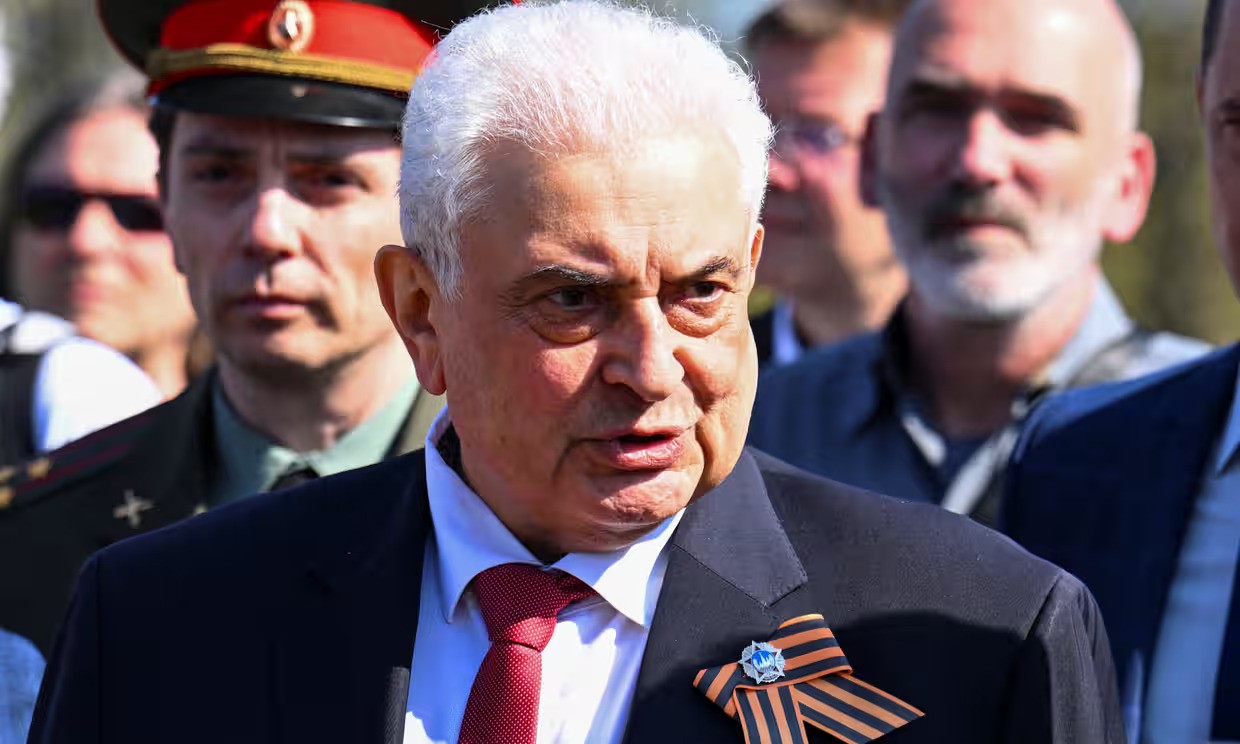
The Russian ambassador to Germany, Sergey Nechayev, expressed disappointment over the exclusion, describing it as a "bitter disappointment." He criticized the foreign ministry's guidance, stating that traditional anniversary commemorations are part of the path to reconciliation, and such decisions jeopardize that process. This announcement follows a recent controversy regarding Nechayev's attendance at a commemorative event in Seelow, where he was warmly greeted by local officials despite the sensitive nature of the occasion.
Ukraine's ambassador to Germany, Oleksii Makeiev, condemned Nechayev's participation in the Seelow event as "inappropriate," labeling him as a representative of a "criminal regime" that attacks Ukraine daily with missiles and drones.
Germany's Commitment to Ukraine
Friedrich Merz, who is set to be sworn in as chancellor on May 6, just two days before the anniversary, has pledged to maintain Berlin's strong support for Ukraine. The far-right, pro-Kremlin Alternative für Deutschland party has emerged as the largest opposition bloc in the new parliament following the general election on February 23.
Germany has a history of maintaining elaborate war memorials to honor the Red Army's role in defeating Adolf Hitler, a legacy rooted in agreements that facilitated national reunification after the fall of the Berlin Wall in 1989 and the dissolution of communist East Germany. Russian President Vladimir Putin has frequently invoked the legacy of the Second World War to justify his actions in Ukraine, further complicating the historical narrative surrounding the commemoration.
As the anniversary approaches, Germany's decision to exclude Russian and Belarusian representatives underscores its commitment to supporting Ukraine and addressing the complexities of historical memory in the context of contemporary geopolitical tensions.