Gluten-free and insect-friendly: buckwheat returns to Dutch farms
-
 Loading...
 - Belle Rolland
- 14 Oct 2022
- 59 Views
- 0 Like
- 0 Comment
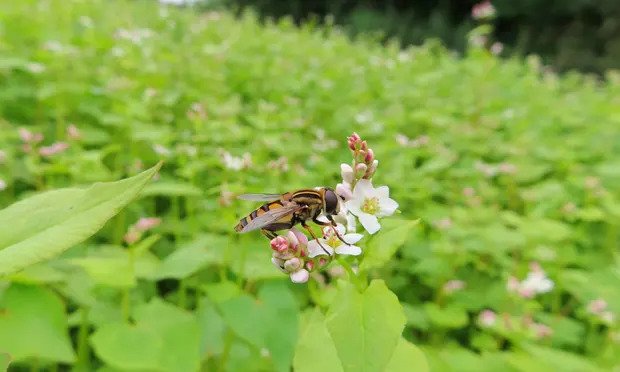
Organic farmer Kees Saibenga looks at the sea of white and pale pink blossoms before him. It is mid-July and millions of tiny buckwheat (Fagopyrum esculentum) flowers sway in the wind on the plot he is cultivating in the Dutch province of Drenthe. Saibenga is delighted that the crop is buzzing with a multitude of insect pollinators. “I’m so happy to be growing buckwheat,” says the third-generation farmer.
Saibenga is one of 23 farmers in the provinces of Groningen and Drenthe in the north-east of the Netherlands who are part of an ambitious, nature-inclusive agricultural project to re-establish buckwheat farming in the country.
Buckwheat flour, made from the seeds of the plant, is a key ingredient in popular Dutch foods such as pannenkoeken (thin, flat pancakes) and poffertjes (fluffy mini-pancakes), but almost all of the flour is imported. “At the beginning of the 19th century, buckwheat was the second-largest crop grown in the country, after rye,” says Peter Brul, an organic farming adviser. “It was a staple food in the country at that time.”
But with increasing access to synthetic fertilisers in the 20th century, farmers moved to more high-yield and lucrative crops. “Potatoes became the staple food, and buckwheat cultivation completely disappeared,” says Brul.
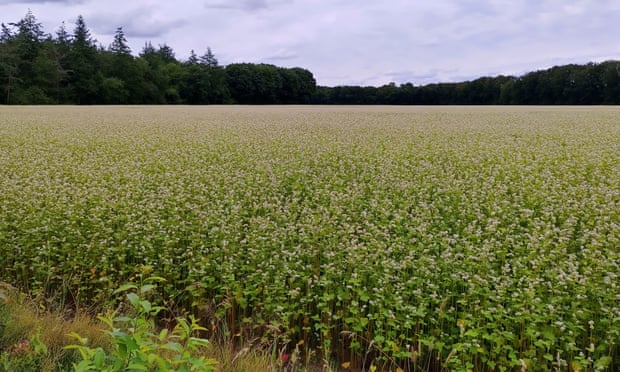
In 2019, Brul embarked on a serious effort to revive the cultivation of buckwheat in the Netherlands. The fact it is gluten free, and rich in antioxidants and high in fibre has boosted the market for it, but Brul’s efforts are also spurred by its reputation as a pollinator-friendly crop. More than half of the Netherlands’ bee species are endangered, and pollinator-friendly agriculture is crucial to their conservation.
In a pilot four years ago, a farmer in Groningen cultivated buckwheat on a one-hectare plot with Brul’s guidance. The experiment was deemed a success and now 23 farmers are producing the crop on 85 hectares scattered across Groningen and Drenthe. “What has worked well so far, is that farmers are interested and we could expand the programme,” says Brul. Read More...