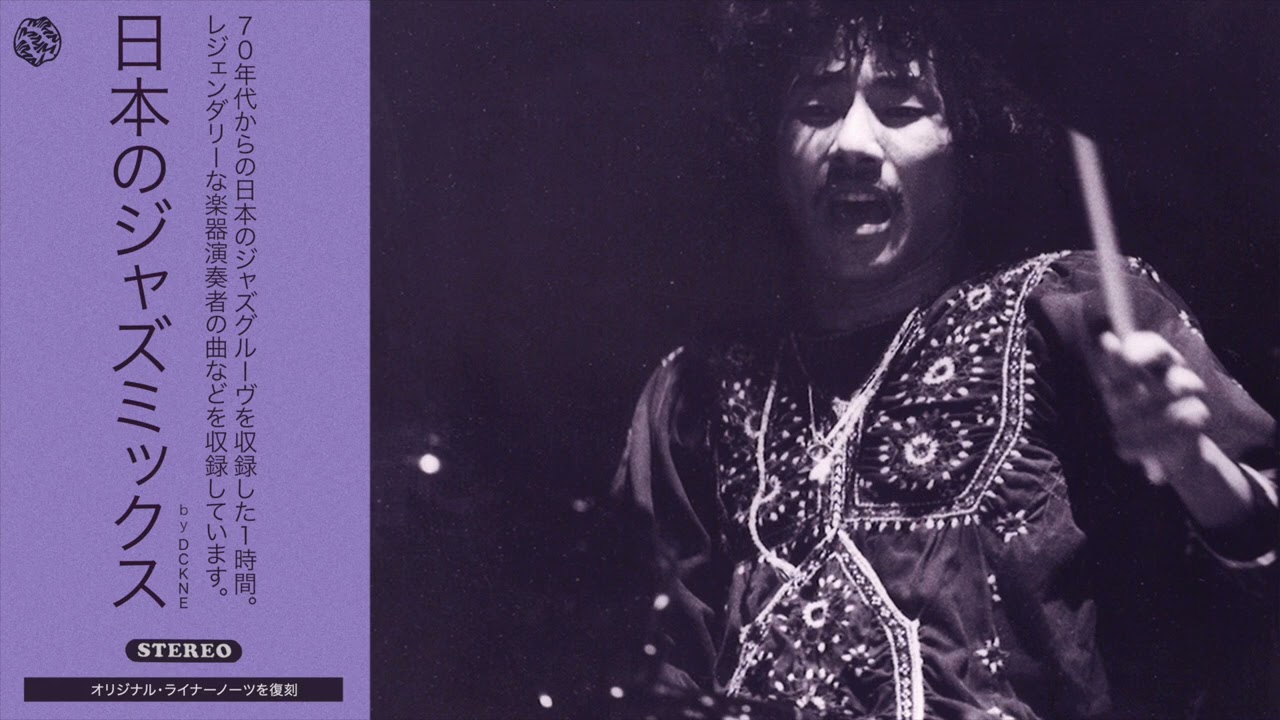
Great Mixtapes of 1970s Japanese Jazz: 4 Hours of Funky, Groovy, Fusion-y Music
-
 Loading...
 - Asmara Lubis
- 13 Jun 2022
- 247 Views
- 0 Like
- 0 Comment
Like American jazz, Japanese jazz started with earlier styles like foxtrot and ragtime. Jazz was an international music, spreading across the Atlantic to London, Paris, and Berlin and across the Pacific to Shanghai, Manilla, and Tokyo. Luxury liners crossed the ocean and their house bands ferried new styles of dance music with them. “There was precious little improvisation,” in early Japanese jazz, “but that wasn’t as big a deal, as you know, in American jazz of the 1910s or ’20s,” historian E. Taylor Atkins tells NPR.
Japan even had its own jazz age. The word first entered the country in a 1929 “popular song attached to a movie called Tokyo March,” says Atkins. “The lyrics refer to jazz, and … that’s sort of where it came into mass consciousness. It was associated with dance halls, it was associated with ‘modern girls’ and ‘modern boys’ — the Japanese version of flappers and dandies — and the urban leisure classes: excess, and dogs and cats sleeping together, and all those sorts of portents of future calamity.”
When calamity came in the form of World War II, jazz was banned in Japan as the music of the enemy. On August 15, 1945, when the Emperor went on the radio to announce Japan’s surrender, Hattori Ryoichi, “Japan’s premier jazz composer and arranger,” found himself stuck in Shanghai, “the city that since the late 1920s had served as the jazz Mecca of Asia,” Michael Bourdaghs writes in a history of Japanese pop music. “From now on,” Ryoichi supposedly toasted his fellow musicians upon hearing the news, “we can carry out our musical activities in freedom.”
How little Ryoichi could have predicted the kind of musical freedom Japanese jazz would find. But first there was a period of imitation. “In the early postwar years, Japanese musicians were essentially copying the Americans they admired,” notes Dean Van Nguyen at The Guardian. Some of the most popular bands on TV and film were comic acts like Frankie Sakai and the City Slickers, a big band formed in 1953 in imitation of Spike Jones & The City Slickers. Another popular jazz comedy act, Hajime Hana & The Crazy Cats “are significant,” writes Atkins, “for capitalizing and purveying an image of jazz musicians as clownish, slang-singing ne’er-do-wells.”
Pianist Toshiko Akiyoshi was “the first Japanese artist to break away from simply copying American artists and develop a distinctive sound and identity that incorporated Japanese harmonies and instruments,” Van Nguyen writes. By the later 60s and 70s, economic development led to a “renaissance” of Japanese jazz, writes the Sabukaru Guide to 1970’s Japanese Jazz. “The unique creative landscape in the jazz community, along with Japanese music as a whole becoming simultaneously more experimental and mainstream, led to an abundance of excellent Japanese jazz music in the 1970s.”
In the four playlists here, you can hear hours of this groundbreaking music from some of the greatest names you’ve probably never heard in Japanese jazz. These include trombonist Hiroshi Suzuki, “one of the most-revered Japanese jazz artists,” notes the blog Pink Wafer Club, “even if most listers are only familiar with his work thanks to the number of times his music has been sampled.” Suzuki’s 1975 album Cat is one of the funkiest jazz albums from any country released in the decade.
These playlists also include fusion keyboardist Mikio Masuda, saxophonist Sadao Watanabe, and other musicians who, like Akiyoshi, helped spur “young artists to evolve away from Blue Note mimicry towards free jazz, fusion, funk, spiritual, modal and bebop,” writes Van Nguyen. “These daring virtuosos implanted rock and electronic elements, or took influences from Afrobeat and flamenco music.” Their international influences reflected 1970s jazz experiments around the globe. The music also benefitted from the excellent recording quality of Japanese studios and the rise of smaller labels, which allowed for more experimental artists to record and release albums. Read More...