Greece Launches Largest Double-Sided Solar Farm in Europe
-
 Loading...
 - Owen Graham
- 08 Apr 2022
- 341 Views
- 0 Like
- 0 Comment
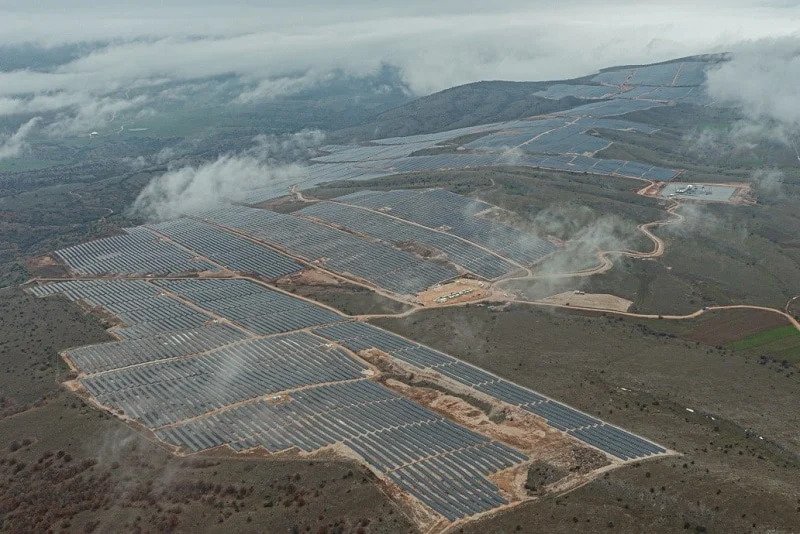
Greece opened earlier in the week the biggest double-sided solar farm in Europe at Kozani, Macedonia which was built by Greece’s biggest oil refiner Hellenic Petroleum (Helpe).
The two-sided, or bifacial, system of panels will supply power to 75,000 households and connect to the country’s power grid in the coming weeks.
“This project reflects our national goals for cheap and clean energy from the sun, from the wind, from the water,” Prime Minister Kyriakos Mitsotakis said at the park’s inauguration.
Mitsotakis promised to speed up permits for renewable energy projects, including the construction of large-scale offshore wind parks, as the country seeks to wean itself off polluting and costly imported fossil fuels.
“Greece will become a protagonist in the field of renewable energy sources. It will adopt new innovative technologies,” Mitsotakis added.
New solar farm to reduce natural gas imports in Greece
According to Helpe’s CEO Andreas Siamisis, the total benefit from the reduction in natural gas imports by the new solar farm in Kozani is estimated at 80-100 million euros annually. Additionally, he said, the park can:
- produce 350 GW hours of clean energy every year, equivalent to the consumption by 75,000 households
- provide income for local government, households and businesses amounting to 600,000 euros per year
- reduce carbon dioxide emissions by 300,000 tonnes per year, corresponding to 110,000 hectares (1.1 mln stremmas) of forest
- reduce energy costs at the national level, as the price at which energy will be sold in the system will be fixed at 57.72 euros per MWh for the next 20 years.
As Siamisis added, the photovoltaic investment totaled 130 million euros, with a national added value share of 35 pct, while during its construction 350 jobs were created.
Greece aims to almost double its installed capacity from renewables to about 19 gigawatts by 2030. This could be revised upwardly as part of the European Commission’s fresh drive to accelerate the transition to green energy and end reliance on Russian gas by 2027, following Russia’s invasion of Ukraine. Read More...