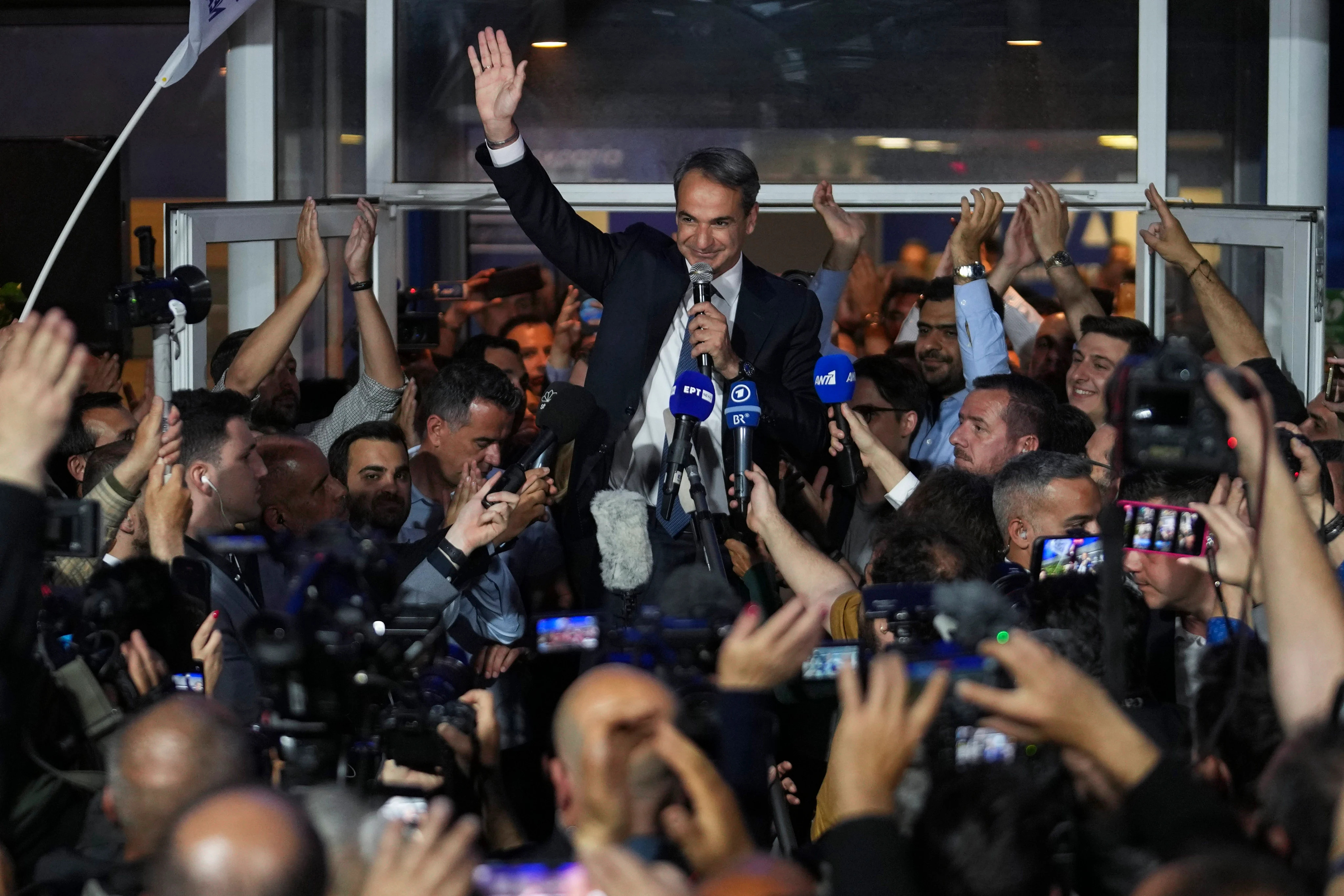
Greece's ruling conservatives emerge victorious in elections but fall short of an absolute majority
-
 Loading...
 - Jayden Moore
- 22 May 2023
- 79 Views
- 0 Like
- 0 Comment
In the recent parliamentary elections in Greece, the ruling New Democracy party achieved a resounding victory. However, they were unable to secure an outright majority. The election was dominated by concerns over the high cost of living, a wiretapping scandal, and public outrage stemming from the country's deadliest train crash in history. With over 99% of the votes counted, the ruling center-right party, led by Prime Minister Kyriakos Mitsotakis, exceeded all expectations by garnering over 40% of the vote. Mitsotakis described this result as a "political earthquake." On the other hand, Alexis Tsipras's center-left Syriza party, the main opposition, suffered significant losses and secured just over 20% of the vote.
Despite New Democracy's strong showing, Mitsotakis did not secure enough votes to form a single-party government due to the new proportional representation system in place, which requires a threshold of approximately 45%. As per the Greek President Katerina Sakellaropoulou's instructions, the top three parties will have up to three days to form a coalition. However, Mitsotakis has already indicated his lack of interest in power-sharing.
Addressing jubilant supporters gathered outside the party headquarters in Athens, Mitsotakis stated, "Undoubtedly, the political earthquake that took place today urges us to expedite the process of establishing a definitive government solution. Our country needs an experienced leader at the helm as soon as possible."
In the event of Mitsotakis failing to form a coalition, a caretaker government will be sworn in, and a second vote will be held in late June or early July. The subsequent round will follow different rules, requiring the winning party to achieve only 37% of the votes.
Greece's Economic Outlook at Stake During the elections
Greek citizens placed a significant emphasis on the future of the economy and their own strained personal finances. New Democracy's campaign for a second term focused on highlighting the country's successful economic recovery since coming to power in 2019. Prime Minister Mitsotakis portrayed himself as a capable leader who could further stimulate growth.
"The numbers speak for themselves," Mitsotakis conveyed during an interview with CNN while on the campaign trail. "We were lagging in terms of growth back in 2019, and now we are one of the best-performing economies in the eurozone."
Over the past decade, Greece's economy has experienced a remarkable turnaround, on the verge of regaining investment grade on the global market, which it lost in 2010. However, despite these achievements, many Greeks have yet to feel the positive effects, as they continue to grapple with high inflation and living costs. The financial crisis of the 2010s resulted in a significant reduction in the country's GDP, substantial cuts to salaries and pensions, and pushed thousands of people into poverty.
Alexis Tsipras, the main opposition leader, sought a second chance from voters. He came to power in 2015 with promises of radical change, but bank runs and capital controls fell short of convincing the electorate. "Greeks did not vote with a sense of optimism," explained Petros Ioannides, a political analyst and managing partner of aboutpeople pollsters. "Neither of the two main parties is new to the scene.
They have both held government positions over the last decade. In 2015, people voted for change with a newcomer prime minister, Alexis Tsipras, and there was hope in that. In 2019, there was a different kind of hope—a yearning for stability, once again with a first-time prime minister, Kyriakos Mitsotakis. In these elections, the parties and leaders are known, as are their perceived shortcomings."
The elections took place against the backdrop of a wiretapping scandal, with the government being accused of spying on opposition politicians and journalists. This situation raised concerns regarding the overall state of the rule of law. The scandal, referred to by one political party as "Greek Watergate," led to several high-profile resignations.
However, the most severe blow for the government came in the form of a devastating head-on train collision in February, which claimed the lives of 57 people, including many university students. This tragic incident, the deadliest railway disaster in the country's history, prompted tens of thousands of people to take to the streets, expressing their anger over corruption and the chronic lack of infrastructure. It also swayed some voters away from established parties.
National television coverage showed young protesters in tears, feeling betrayed by their politicians. Out of the total of 9.8 million registered voters, approximately 440,000 were first-time voters in this election, and they may have been influenced by the rail disaster.