Guatemala Holy Week unfolds under new UNESCO heritage status
-
 Loading...
 - Marin Pancho
- 12 Jun 2023
- 63 Views
- 0 Like
- 0 Comment
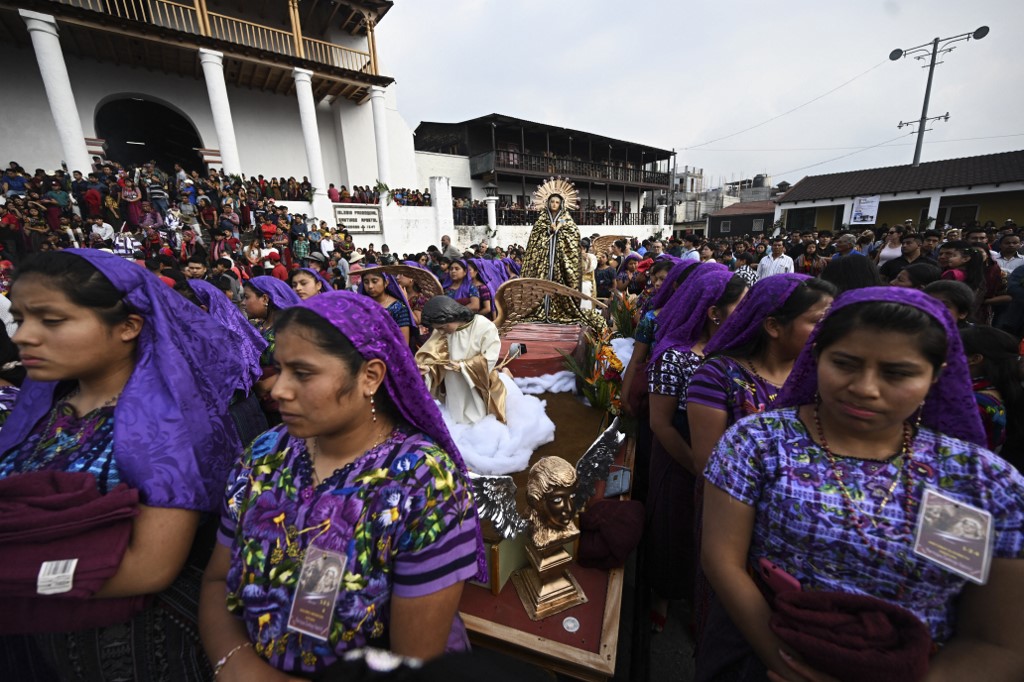
Thousands of Guatemalan worshippers, clad in black hoods and purple tunics, move slowly through the streets of Antigua, carrying images of Jesus over a vibrant carpet of flowers and fragrant sawdust while solemn music fills the air.
In November, Guatemala's Holy Week celebrations, a blend of Mayan rituals and Catholic religious fervor, received UNESCO heritage status, adding a special significance to this year's Good Friday processions held across the country.
Despite its name, Guatemala's Holy Week festival extends over six weeks, reaching its pinnacle at Easter when the Central American nation transforms with extravagant processions, vigils, and the adorning of streets with brightly colored carpets.
"For us, it is a cause for immense joy and a truly extraordinary day to partake in this offering, especially now," shared Roberto Matheu, a 45-year-old lawyer, as he completed the creation of a flower carpet alongside his family—a tradition he has cherished since childhood.
Guatemalans uniquely perceive Holy Week compared to the rest of the world, stated Culture Minister Felipe Aguilar, emphasizing how Guatemala's customs, music, food, and art are the result of a "cultural fusion" between the Catholicism brought by Spanish conquistadores and the ancestral beliefs of the Indigenous Mayan population.
Faithful believers and tourists have thronged the streets of Antigua, the colonial capital since Thursday to partake in the processions. This tourist destination, located approximately 40 kilometers southwest of Guatemala City, is renowned for its Jesus of Humility procession, which commemorates the final stages of Jesus's life, with certain devotees dressed as Roman soldiers.
"The Jesus of Humility has always bestowed blessings upon us... we are determined not to let go of this tradition that defines us as Guatemalans," expressed Jose Perez, a 44-year-old restaurant cook.
Adjacent to the churches, street vendors offer food, soft drinks, and various other products.
'Crawlers' Holy Week celebrations were introduced to Guatemala by Spanish colonizers in the 16th century, but the local Mayan population soon infused it with their customs and worldview.
Guatemalans prepare traditional colonial dishes during this time, including dried fish, pickled vegetables, and sweet preserves.
In Mayan neighborhoods, locals don traditional attire and take turns carrying images of their saints through the streets.
"People are overjoyed as it has been three years" since the last procession of this kind due to the pandemic, mentioned Susana Leimi, a 45-year-old trader from the village of Santiago Atitlan, situated around 100 kilometers (60 miles) west of the capital.
In the northwestern municipality of San Andres Sajcabaja, home to indigenous people of the Mayan K'che' ethnicity, around 15 devotees crawl on their hands and knees for approximately five kilometers, symbolizing the Passion of Jesus during the painful period leading to his death.
These "crawlers," dressed in nothing but loincloths and with their faces obscured, wear thorns on their heads or backs as a means of atonement for their sins or to express gratitude to God.
Other devotees lay down rugs along their path to protect their knees.