Habitat loss pushing more bird species to near extinction
-
 Loading...
 - Aadhya Babu
- 07 Jun 2022
- 261 Views
- 0 Like
- 0 Comment
Populations of nearly half of the world’s bird species are in decline, with 13% “in quite serious trouble”, according to Alexander Lees, a biologist at UK’s Manchester Metropolitan University.
Lees is lead author of the State of the World’s Birds review that collated various studies on birds, including findings in peer-reviewed journals and periodic assessments such as the International Union for Conservation of Nature’s Red List of Threatened Species and State of India’s Birds Report.
While 48% of the world’s 11,000 bird species are in decline, 39% have stable populations and the populations of only 6% of the bird species are increasing. Trends for the remaining 7% could not be ascertained from the data available.
Since 1988, more bird species (391) have moved closer to extinction than species whose threat ratings improved as a result of conservation (70).
The review identified loss of natural habitat as the main reason for the decline, as well as introduced species that disrupt ecosystems, illegal trade, energy infrastructure, and climate change.
“Grasslands are particularly at risk,” co-author Ashwin Viswanathan of the Nature Conservation Foundation in Bangalore told Nature India. In this, India is not so different from the rest of the world, he says.
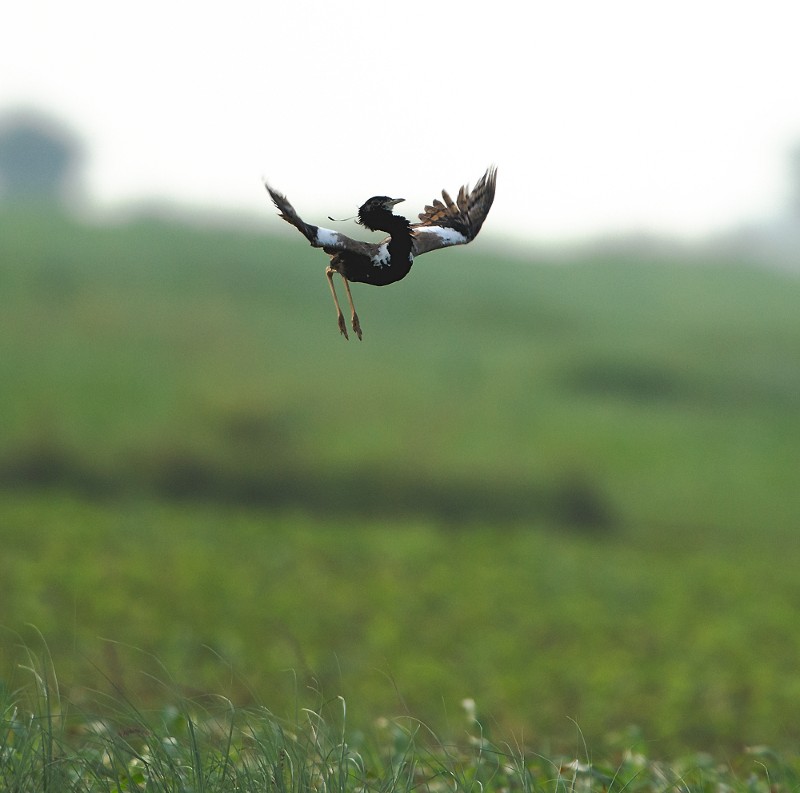
In the 2021 Red List update, the lesser florican, a grassland bird, was moved from endangered category to critically endangered largely because of habitat destruction.
Badly planned tree plantation programmes further aggravate habitat loss.
Tree planting is important, “but we also need to critically make sure it’s the right tree in the right place,” says Lees. In the rush to try and store carbon in trees, we shouldn’t neglect grassland biodiversity; many grassland areas have spectacularly high soil carbon content as well, he says.
The study also compared tropics to temperate regions in terms of bird diversity and conservation. A higher number of threatened species are known to be found in avian-rich tropics, but as a proportion of the number of bird species present in temperate versus tropical latitudes, 21% of temperate-restricted birds are at risk of extinction compared to 16.7% of tropical birds.
“Even though we have fewer of them to save, there are still proportionately more that need saving,” says Lees. “That actually suggests that in the Global North, we haven’t been doing a very good job of bird conservation.”
In the Global South, on the other hand, gaps remain in bird monitoring data, especially from Africa and Asia, says Viswanathan. Attempts to fill this gap in India are being made through citizen science projects such as eBird. The mission, he says, is to train people to monitor birds around the country and make sense of the data.
Conservation actions that have resulted in lowering the threat levels of endangered birds are control of invasive species such as rats, captive breeding and reintroduction of birds into the wild, awareness campaigns, habitat restoration, and legislation.
“We’ve stopped the extinction of many critically endangered species through conservation,” says Lees.
What we’re not doing very well is stopping this steady flow of species moving up the global Red List because we’re not protecting enough habitat at landscape scales, he says.
There isn’t enough protected land and what little there is, isn’t well-protected, Lees warns.
India is a case in point. Between 2018 and 2020, India has lost from its national parks, wildlife sanctuaries and conservation reserves about 1,050 hectares of Protected Area. The standing committee of the National Board for Wildlife — chaired by the Minister of Environment, Forest and Climate Change — diverted the majority of these legally protected lands for linear infrastructure projects, such as railways, roads, canals and transmission lines, according to wildlife clearance reports published by the Legal Initiative for Forest and Environment. Read More...