Why protecting very large swaths of land matters for wildlife conservation
-
 Loading...
 - Minna Virtanen
- 22 May 2023
- 83 Views
- 0 Like
- 0 Comment
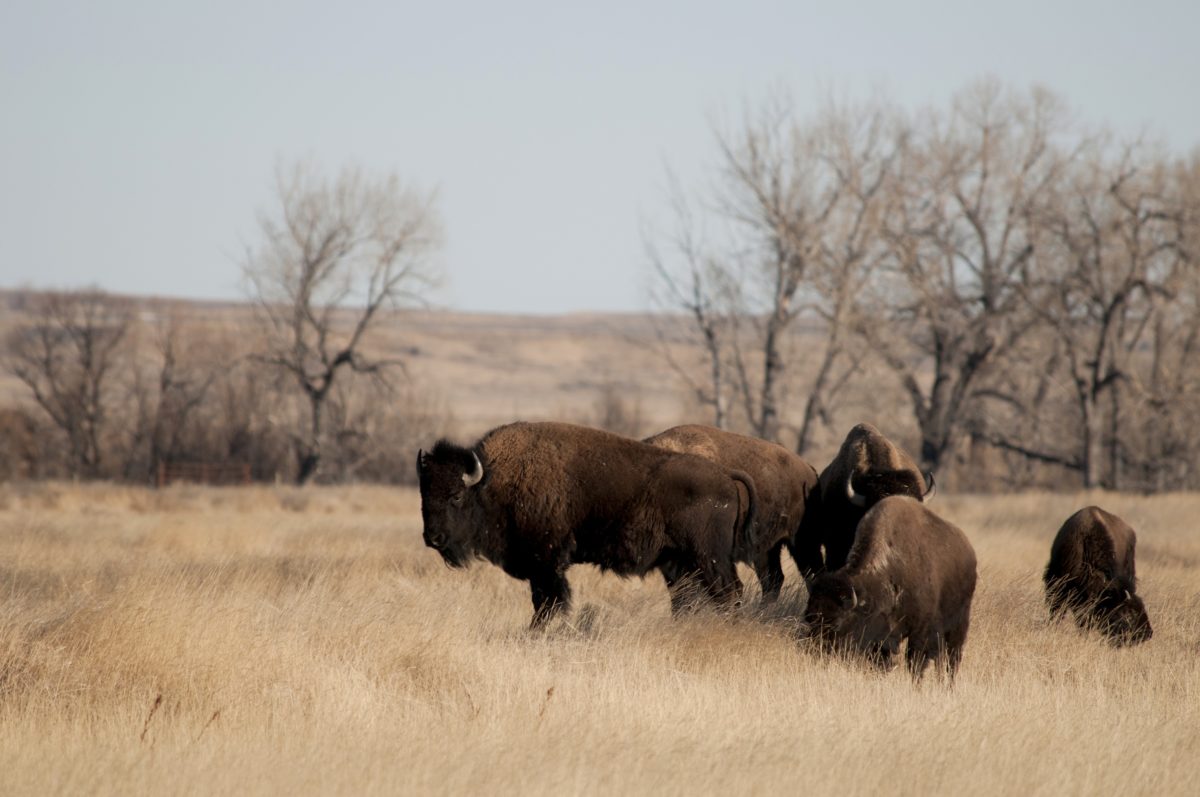
Driving north on State Highway 66 through Montana's Fort Belknap Indian Reservation, one may easily overlook a small group of bison relaxing just off the road, enclosed by an 8-foot fence. These bison migrate from Wyoming's Yellowstone National Park every winter due to heavy snowfall, the only place they have inhabited continuously since ancient times. In Montana, they are either killed or relocated to tribal lands to avoid conflicts with cattle ranchers. The past winter of 2022-2023 alone witnessed the removal of more than 1,500 bison, amounting to approximately 25 percent of Yellowstone's entire population. The bison at Fort Belknap are refugees transported 300 miles from previous winter culls in Yellowstone.
Despite being the national mammal of the United States, bison exist in small and fragmented populations across the Western region. The federal government is actively involved in restoring healthy wild bison populations, primarily relying on sovereign tribal lands for their conservation.
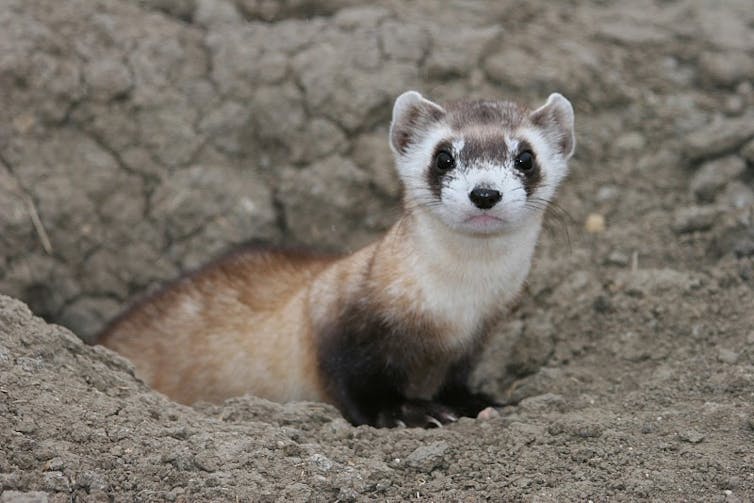
Indeed, tribal lands serve as significant wildlife refuges on the prairie. Fort Belknap, in Montana, is the sole location where bison, critically endangered black-footed ferrets, and swift foxes, which have only recaptured about 40 percent of their historical range, have been successfully reintroduced.
However, the responsibility of wildlife restoration should not solely rest on Indigenous communities. As an ecologist specializing in prairie ecosystems, I believe that conserving grassland wildlife in the Great Plains and other areas necessitates collaboration between public and private organizations to establish new, larger protected areas where these species can freely roam.
Reevaluating the approach to protected areas
On a global scale, conservationists have made significant strides in land conservation, establishing over 6,000 terrestrial protected areas annually in the past decade. However, small-scale protection has become the norm. The average size of newly established protected areas during this period has shrunk to 23 square miles (60 square kilometers), down from 119 square miles (308 square kilometers) in the 1970s.
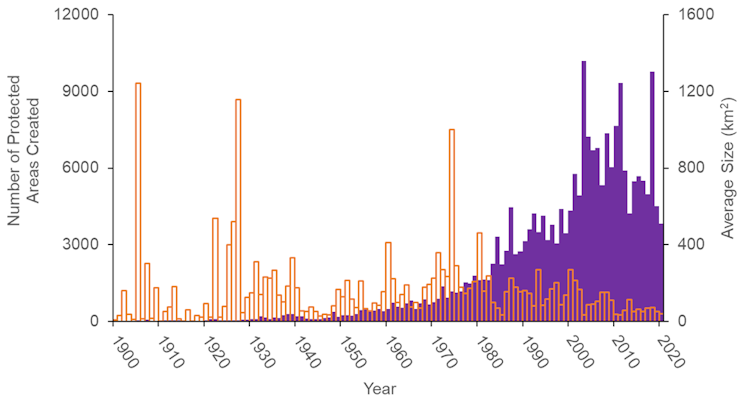
Creating expansive protected areas poses challenges. As the human population expands, the availability of land for conservation diminishes. Nonetheless, conserving vast areas is crucial as it enables the restoration of critical ecological processes such as migration and the preservation of endangered wildlife like bison, which require ample space to roam.
Developing an extensive protected area in the Great Plains proves particularly challenging, as this region was largely overlooked during the establishment of the U.S. national park system. Nevertheless, it has become evident that unconventional methods can facilitate the creation of large protected areas.
American Prairie is a nonprofit organization actively working to connect public and tribal lands in Montana, stitching together a protected area for grassland wildlife equivalent in size to Connecticut. Since 2004, American Prairie has acquired 37 parcels of land, accumulating a habitat base spanning 460,000 acres (approximately 720 square miles or 1,865 square kilometers).