Health Care in the Dark: The Impacts of Russian Attacks on Energy in Ukraine
-
 Loading...
 - Claire James
- 11 Dec 2024
- 50 Views
- 0 Like
- 0 Comment
A new report by Physicians for Human Rights (PHR) and Truth Hounds reveals the devastating effects of Russian attacks on Ukraine’s energy infrastructure, particularly on the health care system. The report, titled Health Care in the Dark: The Impacts of Russian Attacks on Energy in Ukraine, highlights the severe consequences of these attacks, which have endangered patients and compromised the working conditions of health care workers.
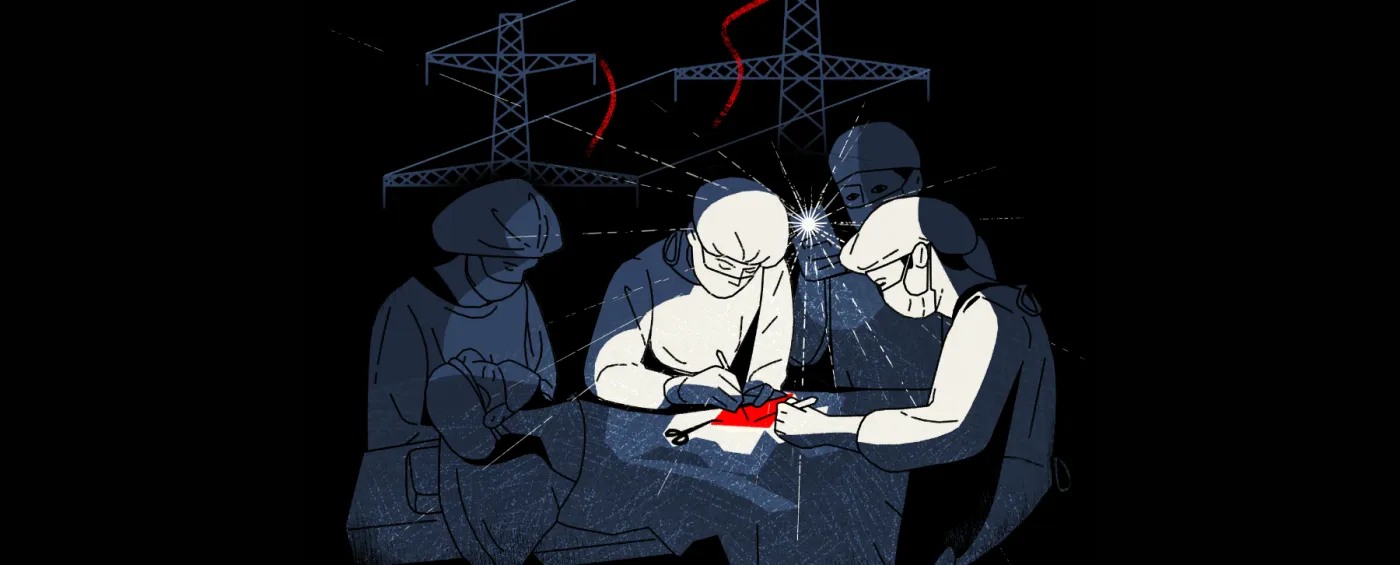
According to the survey of 2,261 Ukrainian health care workers, a staggering 92% reported experiencing power outages at their facilities due to attacks on energy infrastructure. These outages have led to significant disruptions in medical services, with many health care workers noting that the attacks have resulted in permanent health harms and even fatalities.
Uliana Poltavets, a co-author of the report and PHR Ukraine emergency response coordinator, emphasized the urgent need for accountability: “Russian forces must cease their ongoing bombardment of Ukraine’s energy and health infrastructure while prosecutors at the international and domestic levels should investigate attacks and hold perpetrators to account for these potential war crimes and crimes against humanity.”
The report documents a range of impacts stemming from the assault on Ukraine’s energy grid, including:
- Disrupted Medical Procedures: Two-thirds of health workers (66%) reported that power outages affected medical procedures, with 8% noting delays in elective surgeries and 2% experiencing interruptions during surgeries.
- Failures in Life Support Systems: The report highlights critical failures in life support systems due to power outages, which have dire implications for patient care.
- Communication and Water Supply Issues: Outages disrupted communication systems (36%), water supply (22%), heating and ventilation (19%), and elevators (17%), further complicating health care delivery.
- Diagnostic Equipment Malfunctions: Eight percent of respondents reported malfunctions in diagnostic equipment, such as X-ray machines and MRIs, due to power outages.
- Medication Storage Problems: Fourteen percent of health workers reported issues with medication storage, leading to spoilage, while 4% faced problems with storing biological samples.
- Increased Stress and Burnout: A significant 83% of health workers experienced heightened stress, burnout, and other challenges as a result of the attacks on energy infrastructure.
The report is the first comprehensive study to establish the links between attacks on energy infrastructure and health care in Ukraine. Roman Koval, another co-author and head of research at Truth Hounds, stated, “Russian attacks on Ukraine’s energy infrastructure have triggered a cascade of far-reaching consequences, disrupting countless aspects of daily life. These strikes go far beyond mere ‘inconveniences’ for civilians – they pose a severe threat to the lives and health of millions.”
As Ukraine enters winter, the urgency of the situation intensifies. Poltavets called for international support for Ukrainian health care workers and urged global actors to work towards ending the violence against civilians, including attacks on hospitals and energy infrastructure. She stressed the importance of holding Russia accountable for violations of international law resulting from these attacks.
Before the war, Ukraine had one of the most developed energy sectors in Europe, but by June 2024, available capacity had plummeted by 85% due to systematic attacks on energy infrastructure. Reports indicate that Russia has destroyed all thermal power plants and nearly all large hydroelectric power plants in Ukraine as of September 2024. The United Nations Office of the High Commissioner for Human Rights has condemned these strikes, warning of the “grave risks” they pose to the health and well-being of civilians, particularly vulnerable populations.
Despite clear protections for health and energy infrastructure during armed conflict under international law, attacks on these facilities have been a significant feature of the Russian invasion. The report highlights that at least 1,539 verified attacks on health care workers and infrastructure have occurred since February 2022, with 104 attacks impacting hospital utilities.
The findings of Health Care in the Dark are informed by case studies, in-depth interviews with health workers, and a survey conducted from July to September 2024. While the results may not be generalizable to the entire country, they provide a crucial snapshot of the experiences of health care workers in Ukraine. Given the challenges in reporting, particularly in Russian-occupied regions, the true toll of these attacks on civilians and civilian infrastructure may be even higher than documented.
In conclusion, the report underscores the urgent need for international attention and action to address the humanitarian crisis in Ukraine, particularly as it relates to the health care system and the ongoing impacts of the war on civilian life.