How Art Helped a Sudanese Woman Survive War
-
 Loading...
 - Zarifa Chumba
- 18 Nov 2024
- 51 Views
- 0 Like
- 0 Comment
In the midst of the ongoing conflict in Sudan, which has now lasted for 493 days, the resilience of the Sudanese people shines through the stories of individuals like Rania Aziz and Tanzeel, a young artist from El Fasher. As war ravages the country, art has emerged as a powerful tool for survival and expression, helping individuals cope with trauma and maintain hope.
The war in Sudan erupted on April 15, 2023, when two military leaders, General Abdel Fattah al-Burhan and Mohamed Hamdan Dagalo (Hemedti), escalated their long-standing rivalry into open conflict. The consequences have been devastating: millions displaced, widespread violence, and a humanitarian crisis that has left many without basic necessities. As the situation deteriorated, Rania Aziz, who was abroad at the time, quickly mobilized with her family to provide humanitarian assistance to those fleeing the violence.
At a Sudanese youth conference in July 2024, Rania met Tanzeel, a 27-year-old artist whose journey exemplifies the healing power of art. Tanzeel shared her story of how art became her refuge during tumultuous times. Despite her family's initial disapproval of her artistic aspirations, she found solace in drawing and eventually pursued her passion, becoming an active participant in the Sudanese art scene.
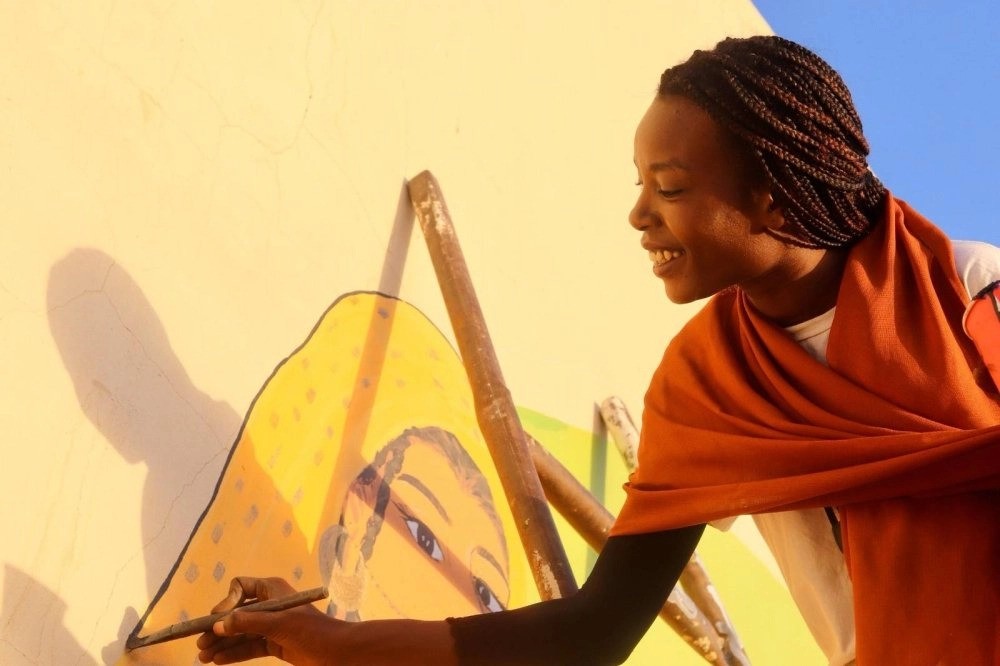
Tanzeel's involvement in the 2018 revolution saw her using her artistic skills to support protest movements, creating posters and murals that captured the spirit of resistance. Her work not only provided her with a sense of purpose but also fostered community solidarity during a time of upheaval.
When the war broke out, Tanzeel was in El Fasher, where life came to a standstill. The chaos forced her to flee with her sister during a sudden attack, seeking refuge with a family for safety. The trauma of witnessing violence and loss weighed heavily on her, but she remained determined to protect her family and find a way to survive.
After a harrowing journey to Port Sudan and then to Uganda, Tanzeel found herself in a new environment where she could continue her artistic endeavors. She quickly connected with other artists and began working on graffiti projects, which not only provided her with an income but also allowed her to channel her experiences into her art.
For Tanzeel, art has been more than just a creative outlet; it has been a lifeline. It has given her purpose, a means to support her family, and a way to process the trauma of war. Through her work, she has been able to help others in her community, fostering resilience and hope in the face of adversity.
Rania reflects on Tanzeel's story, recognizing that for many survivors, the focus is not solely on what has been lost but on the strength and hope that remain. "For us, the survivors, it is not about what we lost. It is about what we didn’t lose: hope and resilience," she emphasizes.
The experiences of Rania and Tanzeel highlight the profound impact of art in times of crisis. As Sudan continues to grapple with the consequences of war, the stories of individuals who find solace and strength in creativity serve as a reminder of the human spirit's resilience. Art not only helps individuals cope with their circumstances but also fosters a sense of community and hope for a better future. In the face of unimaginable challenges, the power of art remains a beacon of light for those navigating the darkness of conflict.