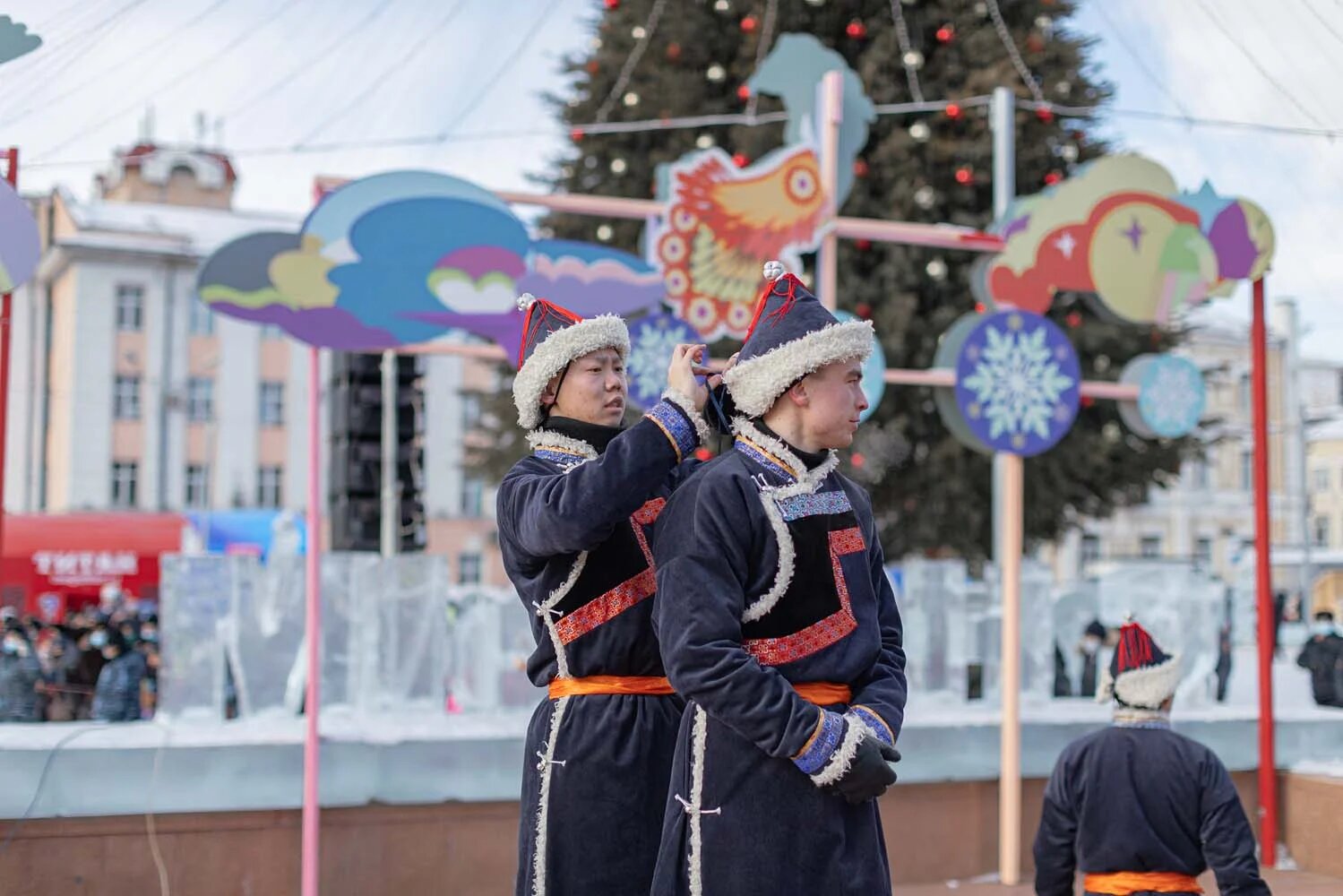
How Russia celebrates the Buddhist New Year ‘Sagaalgan’
-
 Loading...
 - Diana Gorokhov
- 22 Feb 2023
- 55 Views
- 0 Like
- 0 Comment
Ethnic peoples who practice Buddhism celebrate the New Year according to their calendar. In Buryatia, Kalmykia and Tyva, it is the official holiday.
Besides the secular New Year, which the whole country celebrates on the night of December 31 to January 1, many ethnic peoples of Russia have their own traditional dates for this holiday. For many Siberian (and not only) peoples, the most important holiday is the Buddhist New Year. In 2023, it is celebrated on February 21 in Buryatia, Kalmykia and Tuva and on February 23 in Altai.
Peoples of Buryatia call this holiday ‘Sagaalgan’, ‘Tsagan Sar’ in Kalmykia, ‘Shagaa’ in Tuva and Chaga Bayram in the Altai Krai and Republic. These names are translated as “white month”, because it is counted according to the lunar calendar. The ‘Year of the Tiger’ will be replaced by the ‘Year of the Blue Hare’. Another meaning of these titles is “to step over time”.
In some areas, the first day of the Buddhist New Year is an official day off.
The rite of purification
People prepare for the holiday in advance, focusing first of all on cleanliness and it is not only a matter of housework, but also of a special purification rite, called ‘Dugzhuuba’.
As a rule, it is conducted at special sites near Datsans. During the ceremony, there are made pyramids called ‘Soor’, which are solemnly burned under prayers as a symbol of spiritual purification. After the prayers, it’s necessary to turn away from the fire to leave all bad things in the past. Read More…


