How Russians welcome guests in different regions
-
 Loading...
 - Reece Gibson
- 14 Jul 2022
- 124 Views
- 0 Like
- 0 Comment
Russians
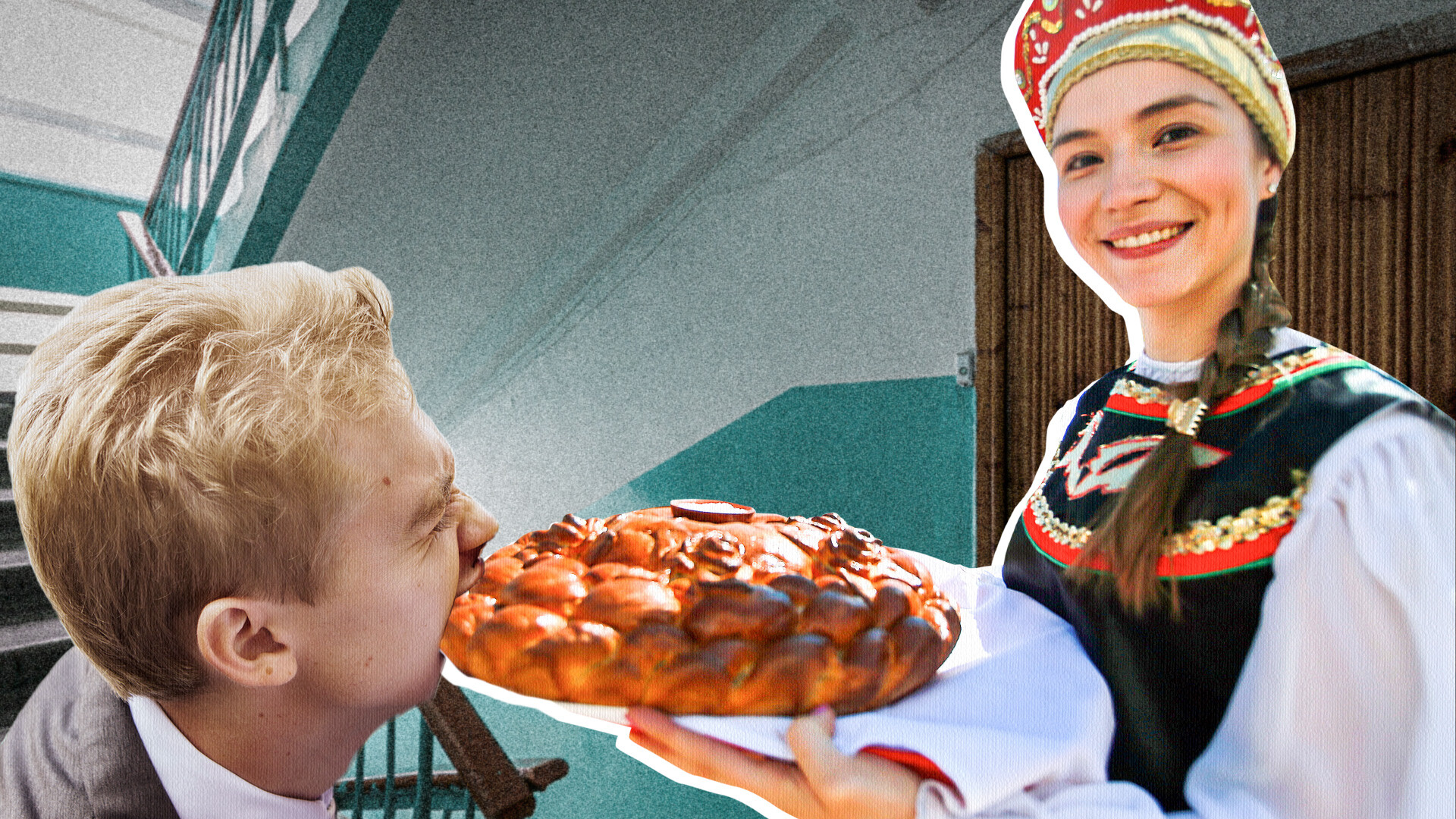
The greeting of a guest with bread and salt is probably the most famous tradition of the Slavic people. Today, this tradition is now usually reserved to Russians welcoming official foreign delegations; moreover, they often wear folk costumes for the entourage. But, in everyday life, everything is simpler. If you are invited as a guest, you will be welcomed by the hosts, fed with the best dishes and will be supplied tea (or something stronger!) until you can’t move. After that, the hosts will offer you cake.
Do you play the guitar or an accordion? Feel free to bring your own. Russians love home concerts (‘kvartirniks’).
And what Russians never do is ask guests to leave, so, technically, the evening could last forever! Before you leave, Russians will always offer you a drink “na pososhok” (“one for the road”) to make the journey home pleasant.
Tatars
The Tatars, the second largest ethnic group in Russia, used to bake an entire goose for their guests, as well as many, many delicious pastries (you’ve probably heard of echpochmak and chak-chak) and prepare a banya. Today, city dwellers still often invite guests to their homes and, among the old customs, the most important one is still alive. It’s called kuchtenech, which translates as “a gift”. The guests usually bring a kuchtenech: usually something edible to be divided among everybody. When the guest leaves, the ware in which they brought gifts are filled with something tasty made by the hosts - as it’s not customary to leave empty-handed.
Yakuts
Good hospitality is one of the main attributes of the Yakuts’ character (and northern peoples, in general) and it’s connected, first of all, with the harsh living conditions and remoteness of settlements from each other. In addition to treats, Yakuts will certainly offer the guest hot tea, most likely it will be made from local willowherbs. In Yakutsk, the capital of Yakutia, there is even a tourist excursion dedicated to the Yakut tea ceremony, which is held in a specially built “old-style” hut.
Chechens
Receiving guests has also always been a matter of honor among Chechens, especially in the mountainous regions, but it’s considered rude to enter a courtyard without an invitation. Usually, the youngest members of the family greet the guests.
Chechens believe that a person who visited their home once automatically becomes their friend. Interestingly, some old traditions say that if a guest stays longer than three days, they should contribute and take part in housework.
Some families even specially build guest houses in their yards. During the feast, the host takes a place by the door and is the first to get up to see the guest off.
Nenets
When visiting the Nenets, one of the numerous indigenous peoples of Yamal, it’s not customary to knock on the door or to call out to the hosts. If you are invited to a nomadic camp (not to an apartment or home), you should first walk around each chum (tent) to greet all inhabitants.
The meal consists of wild meat (venison), fish, berries and, of course, herbal tea, which will be constantly poured until you put your cup upside down. Refusing a treat is not polite. If food has fallen on the floor, it’s necessary to throw it in the fireplace - to “feed” the spirits.
Also, during a meal with Nenets people, never sing or whistle and never offer to help the hosts clear away the dishes. Nenets people believe that the guest will take away their good luck by doing so.
The Nenets often give something to guests: it can be some accessory, trinket or any other souvenir (almost always exclusively homemade). Guests can also bring gifts to the hosts. Read More…