How social media affects teen mental health: a missing link
-
 Loading...
 - Megan Miller
- 15 Feb 2023
- 66 Views
- 0 Like
- 0 Comment
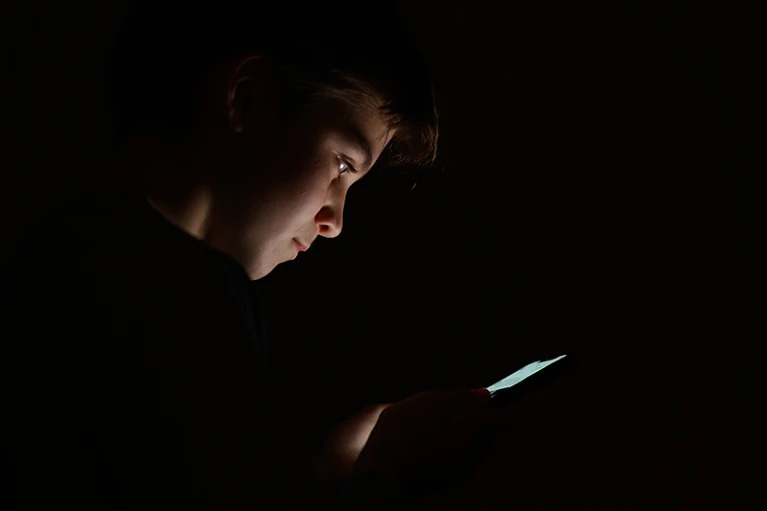
Researchers investigating the impacts of social media on mental health must consider where exactly adolescents are in their cognitive and social development.
Depression, anxiety and suicidality have all sharply increased in adolescents over the past decade1. So, too, has the amount of time that young people spend online (see ‘Troubling trends’). Partly because of fears that there’s a link between these trends, governments around the world are under pressure to do more to regulate technology companies.
In the United Kingdom, the Online Safety Bill, currently being debated by Parliament, seeks to protect children from harmful content online. Last year, the European Union approved the Digital Services Act — which, among other things, has introduced tougher mandates requiring companies to remove illegal content from their websites. And in 2021, the US surgeon-general called for social-media companies to prioritize adolescent health and well-being at “all stages of product development”1.
A difficulty facing policymakers, however, is that most of the scientific evidence on the impact of social media and other online activities on adolescent mental health is inconsistent2. Some studies might report similar effects, such as small negative correlations between time spent on social media and measures of well-being, but researchers differ in how important they think such findings are3.
There might be many reasons why psychologists, psychiatrists, computational scientists and others have failed to obtain a clearer picture of what is going on2. Many have called for more detailed, objective assessments of what activities users engage in during their time online — an issue being addressed in part by smartphone apps that track the amount of time people spend on certain platforms4. Others say that what makes any one person vulnerable to the negative impacts of social media needs to be better understood5.
All these arguments make sense. But in our view, there is another gap: researchers have not systematically interrogated, using large-scale data sets or experiments, how the relationship between social-media use and mental health changes with developmental stage.