How spotted hyenas adjust foraging behaviour to survive climate change
-
 Loading...
 - Busara Laizer
- 27 Apr 2022
- 316 Views
- 0 Like
- 0 Comment
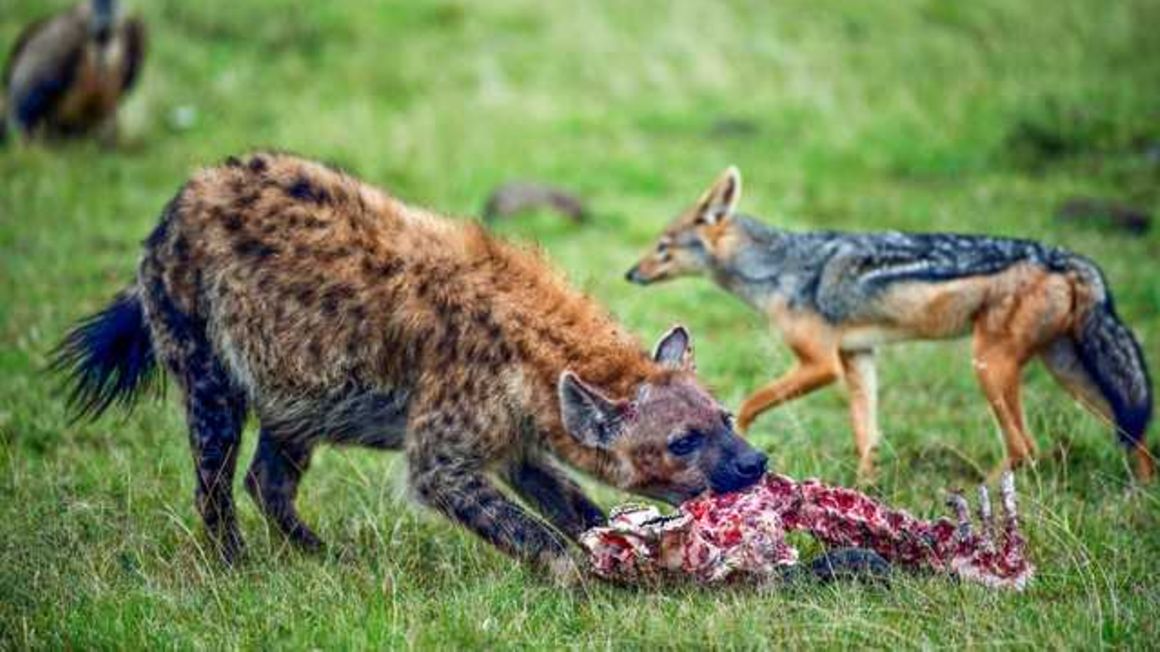
A recent paper on the foraging behaviour of spotted hyenas in Tanzania’s Serengeti National Park shows just how adaptable these creatures are to the vagaries of climate change.
A study by a team of researchers from the Leibniz Institute for Zoo and Wildlife Research (Leibniz-IZW) in Germany and France’s Centre for Functional and Evolutionary Ecology spanning three decades, reveals that the spotted hyenas can adjust their foraging behaviour, regularly commuting long distances outside their clan territory to feed on migrating herbivores.
Serengeti study
The project analysed data from 1990 to 2019 on three clans of spotted hyenas in the centre of the Serengeti National Park.
“To assess how the hyenas responded to these changes in rainfall patterns and prey abundance in their territories, we focused on maternal den attendance – the presence of lactating hyenas with entirely milk-dependent offspring at communal dens”, says Morgane Gicquel, first author of the paper and doctoral student at the Leibniz-IZW.
The research team found that with increase in rainfall migratory herbivore herds increased in hyena clan territories, as did the lactating hyenas. But as rainfall continued to increase over the years, the herds of migrating herds decreased in the hyena clan territory.
Surprisingly, the female hyenas were able to raise their young ones successfully despite having few prey in their territory and continued to do so throughout the study period, just the same as when there was lots of prey.
“The presence of mothers at the communal den is a key behaviour directly related to cub survival. Spotted hyenas in the Serengeti National Park reproduce throughout the year.
Their cubs entirely depend on milk for their first six months of life”, explains Dr Marion East.
When there are large numbers of migratory herbivores in the clan territory, all lactating mothers feed inside the territory and nurse their cubs daily. Read More…