How Thatcher Transformed British Politics
-
 Loading...
 - Jorge Mendez
- 18 Feb 2025
- 133 Views
- 0 Like
- 0 Comment
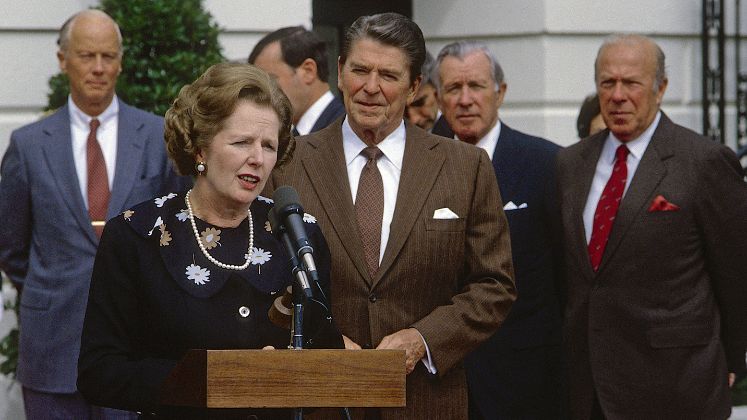
Fifty years ago this month, the Conservative Party announced its new leader, Margaret Thatcher. Her ascent marked the beginning of a transformative era in British politics, culminating in her becoming the first female Prime Minister and the longest-serving Prime Minister of the 20th century. Thatcher's administration dismantled key elements of the postwar consensus that had dominated British politics since 1945, reshaping the political and economic landscape of the nation and paving the way for a global neoliberal movement.
To understand the rise of Thatcherism, one must consider the historical context of Britain in the 1970s. The country was grappling with economic decline, often referred to as “the sick man of Europe.” The global economic downturn exacerbated existing issues, leading to rampant inflation, industrial unrest, and a series of crises that left the government struggling to maintain order. The Conservative government under Edward Heath faced significant challenges, including miners' strikes that resulted in power shortages and a three-day workweek. The Labour government that followed, led by Harold Wilson and later Jim Callaghan, attempted to manage inflation through an incomes policy, but this only fueled further discontent and strikes, culminating in the Winter of Discontent in 1978-79.
Amidst this chaos, Thatcher emerged as a challenger to the status quo. Her victory in the Conservative leadership contest in 1975 was a long-shot, but it positioned her at the helm of a major political party ready for transformative change.
Upon becoming leader, Thatcher faced the challenge of uniting a divided party. Many members of the Shadow Cabinet were One Nation Tories who believed in adapting to the postwar consensus rather than dismantling it. They viewed the previous Conservative government as a victim of bad luck rather than a failure. To solidify her position, Thatcher needed to articulate a clear alternative to the existing policies.
She sought the support of outside thinkers through the Centre for Policy Studies, where influential figures like John Hoskyns and Norman Strauss developed the “Stepping Stones” strategy. This approach called for a radical shift in Britain’s political economy, urging voters to reject socialism and embrace transformative regeneration. Despite resistance from party moderates, Thatcher’s vision began to take shape.
The political landscape shifted dramatically during the Winter of Discontent, as widespread strikes and public discontent created a vacuum for new ideas. Thatcher had spent years articulating her vision of economic and political liberty, advocating for capitalism and a smaller state. With the Labour government struggling to manage the crisis, Thatcher seized the opportunity to present herself as the leader capable of restoring order and prosperity.
The 1979 election became a referendum on the status quo, and Thatcher’s message resonated with voters who were disillusioned with Labour’s handling of the economy. The Conservative Party’s commitment to a radical departure from the postwar consensus won them the election, and Thatcher entered Downing Street with a mandate for change.
Thatcher’s rise was not solely her own doing; she was supported by a network of key allies and intellectuals. Figures like Sir Keith Joseph and the team at the Centre for Policy Studies played crucial roles in shaping her policies and public image. Thatcher’s ability to navigate the political landscape, combined with her strategic patience, allowed her to capitalize on the shifting tides of public opinion.
Margaret Thatcher’s transformation of British politics was a complex interplay of historical context, economic necessity, and political opportunity. The conditions that allowed her to rise to power were not merely coincidental; they were the result of a series of political preconditions that created a fertile ground for change. As we reflect on her legacy, it is essential to recognize that significant political transformations do not happen in isolation. They require a confluence of factors, including economic crises, public discontent, and visionary leadership.
For those seeking to understand the pathways to political change today, examining the rise of Thatcherism offers valuable insights into the practicalities of enacting transformation in a complex political landscape. History may not repeat itself, but it can provide lessons for those discontented with the status quo and eager to forge a new political-economic order.