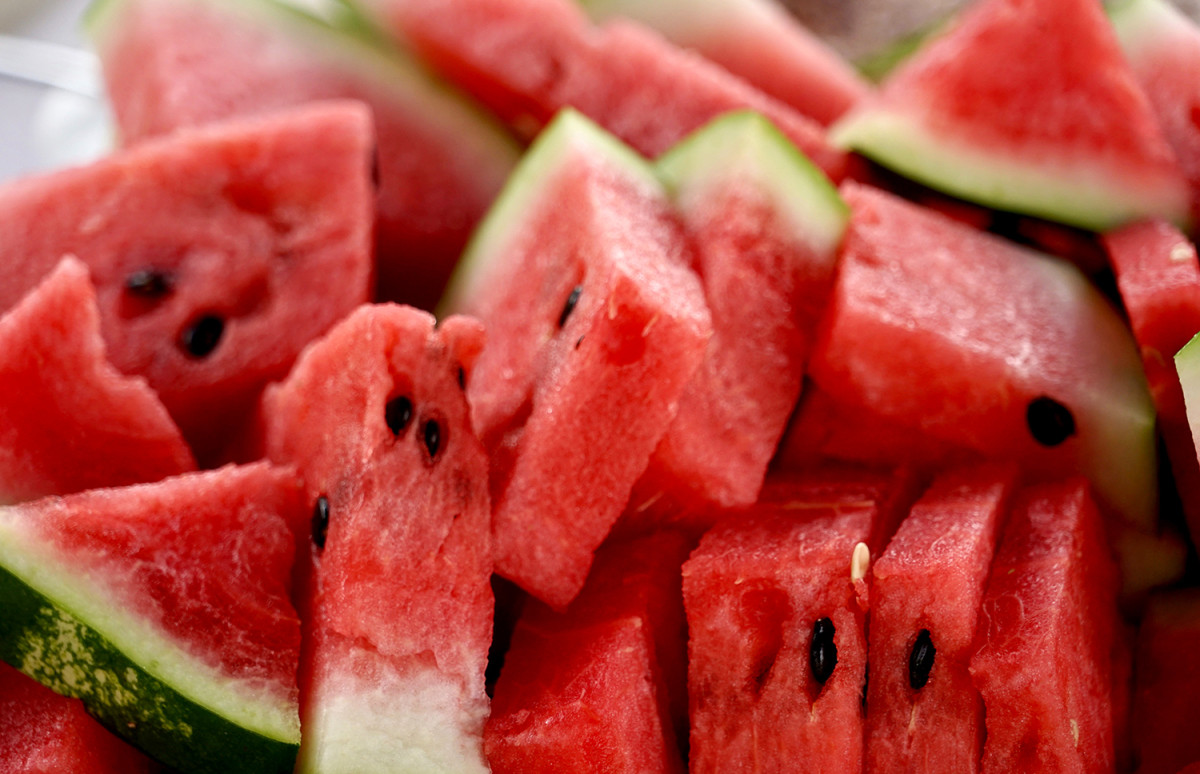
How to choose the best watermelon: 5 easy ways

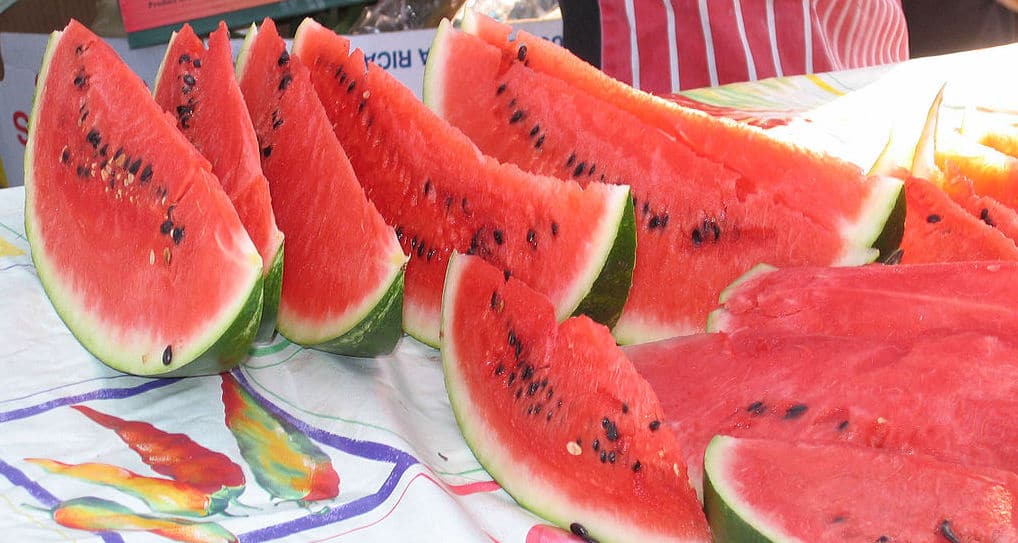
A ripe watermelon is both sweet and low in calories, making it ideal for a snack throughout the day. 100 g of this fruit contains only 30 calories, but 8.1 mg of vitamin C (10% of the daily value) [1] . Also, watermelon is rich in antioxidants, among which scientists especially note lycopene. It helps protect the body against heart disease, diabetes, and certain forms of cancer [2] .
Watermelon pulp contains up to 13% fast sugars (glucose, fructose, sucrose) and 91% consists of water. Therefore, you can make delicious juice from it.
The surest way to verify the ripeness and juiciness of this giant berry is to cut and look at its flesh. However, buying a pre-cut watermelon is fraught with certain risks. It is impossible to be sure that the fruit was cut with a clean knife and immediately packaged so as to protect it from bacteria. Therefore, it is recommended to buy whole watermelons, without cuts.
There are several ways to tell if the specimen in front of you is ripe enough without cutting it open. Candidate of Agricultural Sciences Artem Sokolov shared his advice.
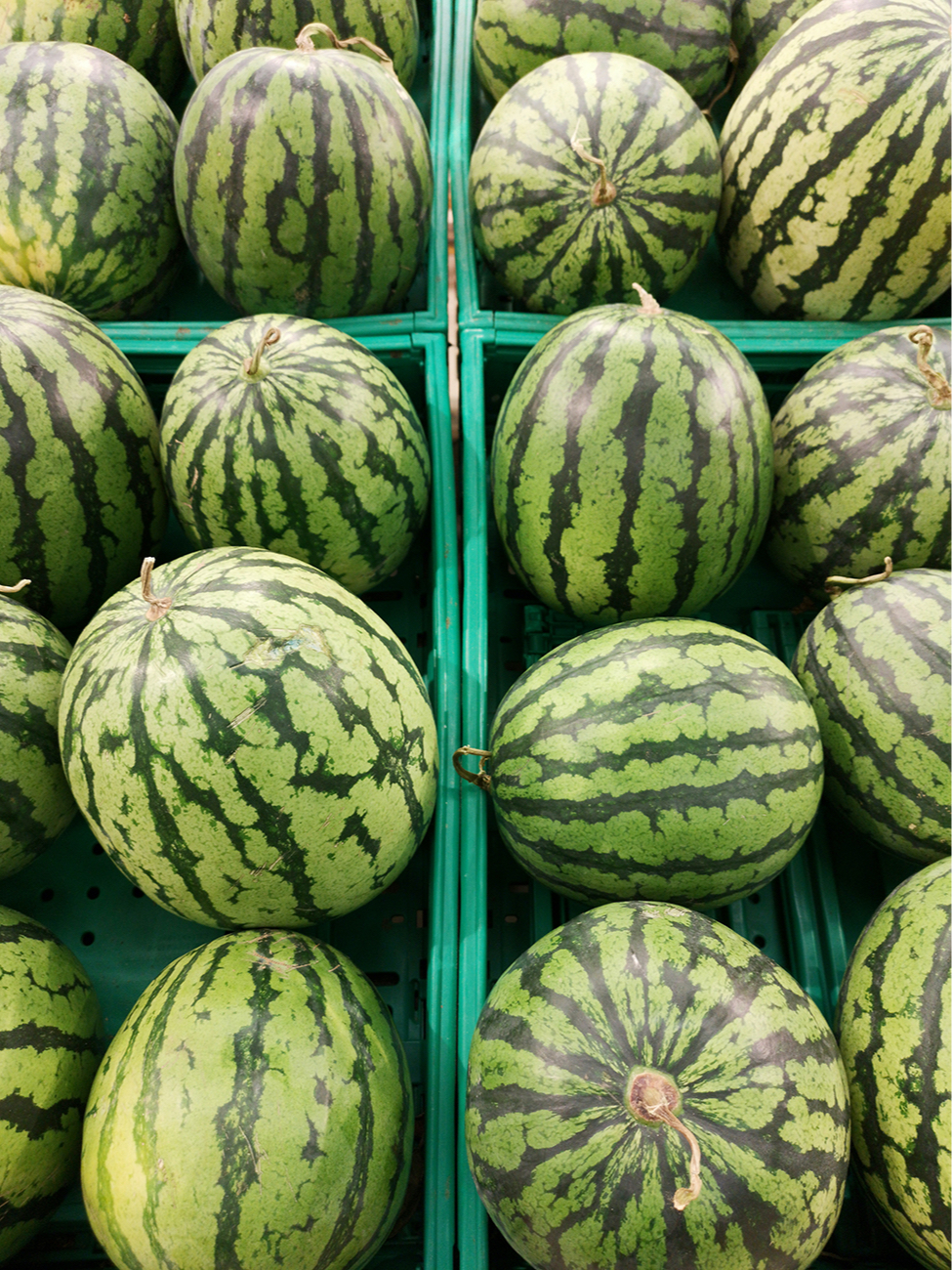
How to choose a watermelon
1. Pay attention to its color
The most important thing here is to determine if the watermelon you choose is healthy and if it has begun to spoil.
“When you come to the supermarket, to the market or to the collapse, the first thing you need to decide on the appearance of the watermelon. It must be without external damage - traces of impact or dents. Scratches are acceptable - this is nature. But if there are dents, potholes or impact marks, then in this place the watermelon will definitely begin to rot, and its quality will be low, ”advises Sokolov.
Watermelon can not be cut, it is enough to slightly scrape the peel - and a grassy smell will immediately appear. If this does not work out, then the fetus is still too young, not ripe. The color and stripes of the outer shell depend on the variety. Some species may not have a pattern at all, but there are varieties that are completely yellow. However, if you choose a striped watermelon, such as Astrakhan, then pay attention to its pattern: it should be contrasting and clear.
“The color of the bark of the fruit does not really affect its taste. It is much more dependent on growing conditions, temperature, irrigation, precipitation. Therefore, Astrakhan watermelons are sweeter than those grown in other regions. The climatic conditions here are ideal for ripening fruits, ”the expert believes.
Watermelon is a melon culture, which means that it ripens lying on the ground. On the side that was in contact with the ground, in the process of growth, a light spot is formed - a “cheek”. It can also be used to determine the ripeness of the fruit. The "cheek" should be small and yellow. This means that the watermelon has received plenty of heat and sun.
“The ground patch is the place where the watermelon is directly attached to the soil. It differs in color from the main color of the bark, it can be bright yellow, yellow or light - any contrasting color. The darker the crust, the brighter the stain. An earth stain must be obligatory.”
2. Knock
Does it rattle, ring, or make a dull sound? A ripe watermelon will ring in a special way when tapped, and crackle when squeezed tightly. But a dull sound is made by an overripe watermelon overflowing with water.
“We tap on the watermelon with a finger or palm - as someone is used to. If the watermelon rings strongly, then it is not ripe, still green. And if it absorbs sound, that is, after tapping, a dull sound appears, then the watermelon is overripe. It is also better not to take such fruits. We choose a moderately sonorous sound: when tapped, it should, as it were, return back.
3. Look at the ponytail
There are different opinions about the ponytail, mainly it is recommended to give preference to a dry ponytail. But this is not always correct, Artem Sokolov believes: “Everywhere they write that the tail should be dry, but this is not so. The tail should be green. After removing the watermelon, the tail lives only 5-7 days, after which it dries up. Therefore, in stores most often this tail is already dry. But if you see a green tail, take a watermelon without hesitation. This is a guarantee that it has been plucked not so long ago, fresh and of excellent quality.”
Thus, a ripe watermelon will have a green or dry tail. And if it has darkened or is generally sluggish, then this fruit has already deteriorated and it is better not to buy it. Read More…