How to Choose Trekking Poles and Hiking Staffs
-
 Loading...
 - Teresa Butler
- 11 Mar 2025
- 31 Views
- 0 Like
- 0 Comment
Trekking poles and hiking staffs can significantly enhance your outdoor experience by providing stability, reducing strain on your joints, and improving your overall balance. When selecting the right trekking poles or hiking staffs, consider the following factors:
1. Material
- Aluminum: Durable and often more affordable, aluminum poles are heavier than their carbon fiber counterparts but are less prone to breaking.
- Carbon Fiber: Lightweight and strong, carbon fiber poles are ideal for long treks but can be more expensive and may break under extreme stress.
2. Weight
Choose poles that are lightweight yet sturdy enough to support your weight. Lighter poles reduce fatigue during long hikes, but ensure they are durable enough for your terrain.
3. Adjustability
- Telescoping Poles: These poles can be adjusted in length, making them versatile for different terrains and user heights. Look for poles with easy-to-use locking mechanisms.
- Fixed-Length Poles: These are lighter and often more stable but may not accommodate different users or varying terrain.
4. Grip
- Material: Common grip materials include cork, foam, and rubber. Cork grips are comfortable and wick away moisture, while foam grips are lightweight and provide good insulation. Rubber grips are durable but can become slippery when wet.
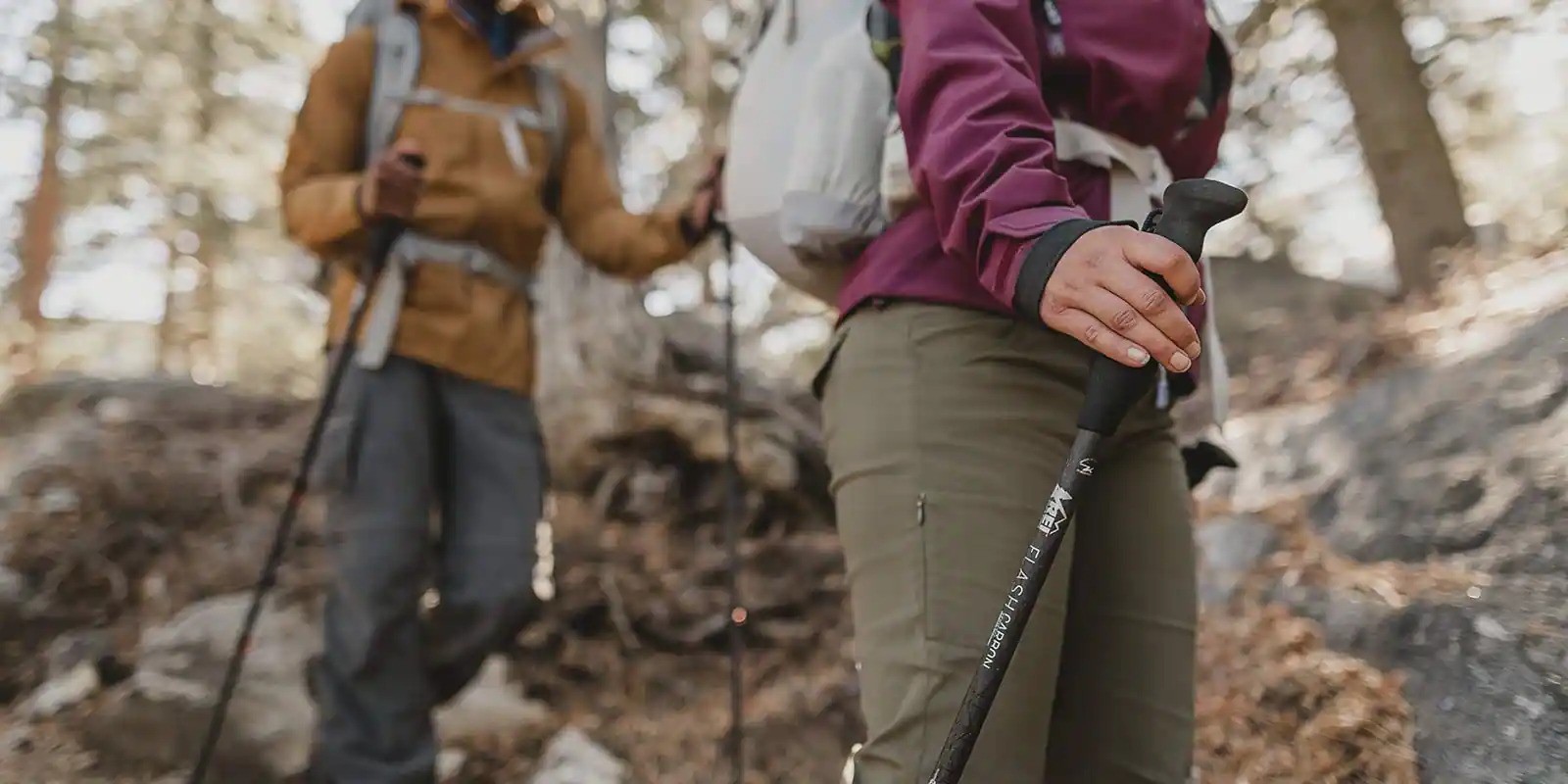
- Shape: Ensure the grip fits comfortably in your hand. Some poles have ergonomic designs that reduce hand fatigue.
5. Straps
Look for adjustable wrist straps that provide additional support and help transfer some of the weight from your hands to your wrists. Padded straps can enhance comfort during long hikes.
6. Basket Size
Poles often come with interchangeable baskets that help prevent sinking into soft ground or snow. Larger baskets are better for snow and mud, while smaller baskets are suitable for rocky or hard-packed trails.
7. Tip Material
The tips of trekking poles are typically made of carbide or rubber. Carbide tips provide excellent traction on rocky surfaces, while rubber tips are better for use on pavement or indoor surfaces to prevent slipping.
8. Price
Set a budget that reflects how often you plan to use the poles. While higher-priced models often offer better materials and features, there are many affordable options that provide good performance for casual hikers.
9. Brand and Reviews
Research reputable brands known for quality trekking poles and read customer reviews to gauge performance and durability. Brands like Black Diamond, Leki, and REI often receive positive feedback.
10. Test Them Out
If possible, visit a store to test different poles. Check the weight, adjustability, and grip comfort. If you’re purchasing online, ensure the retailer has a good return policy in case the poles don’t meet your expectations.
Choosing the right trekking poles or hiking staffs can enhance your hiking experience by providing stability and reducing fatigue. By considering factors such as material, weight, adjustability, grip, and price, you can find the perfect poles to suit your needs. Whether you’re a casual hiker or a seasoned trekker, the right equipment can make all the difference on the trail.