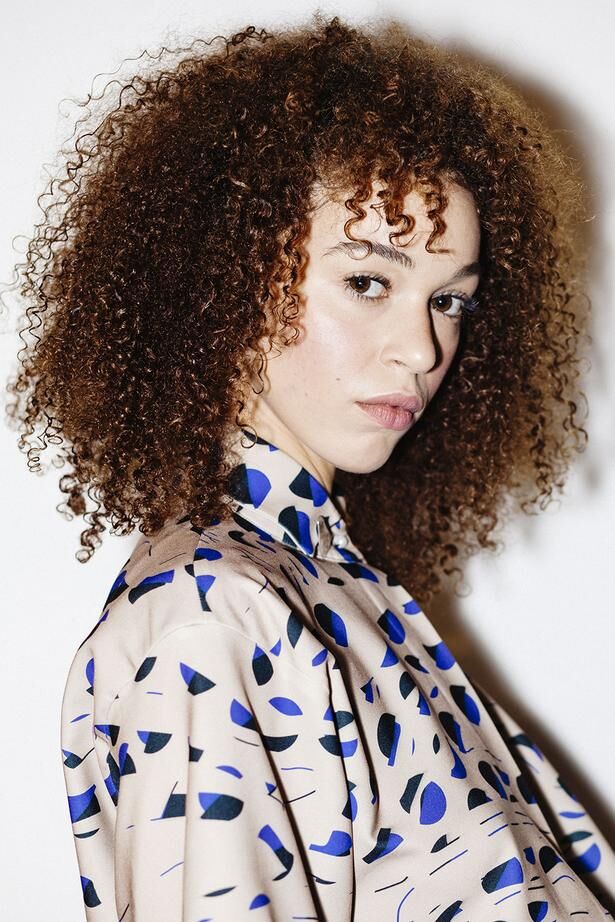
How To Get Your Best Curls, According To Your Hair Type
-
 Loading...
 - Chase Bennet
- 16 Feb 2022
- 820 Views
- 0 Like
- 0 Comment
“I’m washing my hair tonight” isn’t simply an excuse to get out of that Tinder date/dinner with the in-laws/The Crown marathon with your nan. For some people, hair washing is more of an event than a regular beauty practice. Especially for those with hair that’s curly, coily or kinky.
Establishing where your hair sits on that scale can be confusing, especially since several different textures can exist on one head alone.
The current hair typing system, albeit slightly flawed, was first developed by hairstylist Andre Walker in the 1990s and has since been modified by members of the curly hair community.
It breaks down curls into types and sub-types, ranging from 2A to 4C, each with their own unique set of traits. The number points to curl families, while the letter refers to how tightly wound curls are.
Andre’s method has been critiqued for being too divisive or narrow, but for now it remains a useful tool to identify your unique curl pattern (or patterns) and acts as a solid jump-off point for which products to use, and styling tips.
No two heads of hair are the same, so to get the 411 on the different curl types and how to properly identify which category your locks fall into, we reached out to two pros in the hair game: Sky Cripps-Jackson, a freelance hairstylist whose work spans from Aotearoa to the UK; and natural haircare extraordinaire and founder of local haircare brand Sans Ceuticals, Lucy Vincent.
Why understanding your hair type matters
According to Sky, making sense of the characteristics of your hair will help with everything from manageability to selecting the right products or accessories that enhance (rather than flatten or separate) your curls.
“As soon as you understand what your hair type is and how to work with it, it gives you endless possibilities as to what you can do with your hair from a styling, cut and colour perspective,” she says.
Lockdown provided Sky with the downtime she needed to develop a localised version of Andre’s aforementioned hair type guides, which are now available on her website Skycrippsjackson.com or on her Instagram @Skycrippsjackson_hair. Each one is broken into the four main types and sub-types, into which we’ll dive a little deeper in this story.
This blueprint of sorts will ensure you don’t waste time (or money) on products that leave your tight curls looking lank or limp, or vice versa — if you’ve got fine waves, you can opt for lighter formulas that won’t weigh them down. It’ll help you feel well-researched when shopping, to avoid being mystified by buzzwords and marketing hype.
An overview of hair types
Each of the curl types are determined by the shape of the follicle that the hair grows out of. Oval-shaped follicles lead to curlier hair, while circular-shaped follicles lead to straighter hair.
The way in which each strand grows also informs how much moisture is retained in the hair, which is why some hair types are more prone to dryness or frizziness.
“Straight hair grows out of the hair follicle perpendicular to the scalp. As it grows out of the follicle it passes the sebaceous glands, which give it this luscious lacquer. That lacquer or coating is responsible for slip and sheen, as well as protecting hair from the elements, like heat and UV, while sealing moisture into the hair,” Lucy explains.
“But when hair is wavy, curly or coily, as the hair grows out of the follicles, it spirals and corkscrews so it sometimes inadvertently misses the sebaceous glands and doesn’t get the same lipid coating, making it drier and lacking in moisture.”
The basic overview is this: type 1s are straight, type 2s are wavy, type 3s are curly and type 4s are coily. The sub-classifications of each (A through C) speak to the width or circumference of the wave, curl or coil pattern. Type As have the widest pattern size, type Bs medium and type Cs the smallest of the three.
TYPE 1 HAIR
Generally speaking, type 1 hair is straight from roots to ends, making it shiny in appearance and prone to looking oily quickly, Sky explains. This hair type can be more resistant to heat, meaning it doesn’t always hold curls as easily.
1A hair is thin and fine with a softer texture, and is most commonly found in people who are undergoing extreme hormone shifts like menopause, or recovering from treatments like chemotherapy, Sky says. Often referred to as baby fine, this hair type doesn’t hold curl well because it’s so soft. Curling type 1A hair can prove a tricky task, as curling tongs can flatten individual strands rather than giving the desired result of creating volume and width.
1B hair is denser than its predecessor, but equally as straight. “It has medium body and medium texture, but with a higher density,” Sky says. But despite its higher density, it’s still resistant to holding waves and curls. “It’s just so soft and slippery,” says Sky.
1C hair is naturally coarser and thicker in texture, and contains a higher concentration of keratin and melanin (the colour pigment that sits inside hair). For this reason, Sky says it’s slower to respond to colour and heat treatments. “Because it’s stronger and naturally a bit drier, you need to hold the heat on for a very long time,” she explains, adding that a Parlux 385 Ceramic & Ionic Dryer, $333, is her pick to dry hair fast.
Think of 1C hair like bamboo, Sky says. Its natural structure allows for the ability to bend and flex, but it will always return or relax back to its original state.
TYPE 2 HAIR
Not quite straight and not completely curly, type 2 hair encapsulates wavy hair textures ranging from loose loops to coarse, thick S-shaped waves combined with curls.
“The hair’s texture is typically flatter at the root and lays close to the head, getting curlier towards the ends,” Sky says. Where sub-classifications are concerned, types A and B are softer and finer, but type C is slightly coarser and a bit frizzier (even though curls aren’t
super tight).
Sky recommends tools that mimic the circumference of your natural curl pattern. In type 2’s case this ranges from 19-24mm. Try diffuse drying hair with a Dyson Supersonic Hair Dryer, $649, which Sky says has the best air flow for achieving results on type 2 hair.
2A waves are fine and thin, and form a slight C-shape bend towards the ends for a loose, tousled texture. It’s typically fine, but can be easily straightened using a lower heating setting — 120-170 degrees is best to avoid any heat damage.
Look out for sea salt sprays (try Goldwell Stylesign Surf Oil Salty Oil Spray, $30) as well as cream-based products and oils, like the Sisley Paris Hair Rituel Precious Hair Care Oil, $150, to enhance waves without losing body.
2B hair is straighter at the roots, and falls into more defined S-shaped waves from mid-lengths to ends. It’s medium in texture, with a tendency to frizz at the crown. Keep it light is the styling motto with type 2B, with a light leave-in conditioner like Evo Liquid Rollers Curl Balm, $38, or an oil like Olaplex No. 7 Bonding Oil, $57, as well as a sea salt spray for dry styling.
To style from wet, diffuse on a medium speed with a medium heat (once again, the Dyson Supersonic Hair Dryer is Sky’s go-to). If you’re heat treating, select a 90mm tong to match the hair’s circumference, and cap the temperature between 165 and 195 degrees.
2C waves tend to start at the root, and hair is generally thick or coarse and prone to frizzing. While many 2C hair types may think their hair will benefit from thinning the bulk out, Sky says it actually sits far better if the weight is retained. “When you start cutting into the hair and removing too many individual strands, it just exacerbates frizz,” she says.
It’s best to style this hair type from wet, applying product first then twisting out each curl. Apply cream-based products in layers to ensure the middle layer isn’t missed. Try Joico Zero Heat Dry Styling Creme, $29.
A drying technique known as plopping can be used to speed up the drying process for hair types 2, 3 and 4. Flip your hair upside down and “plop” it on to a microfibre turban like the Aquis Rapid Dry Turban, $48, before collecting the hair/turban back up to sit on top of your head. This method helps hair to dry in its naturally curly state without having to twist it into a towel. Read More…