How To Navigate Bitcoin’s Price Volatility: A Guide For Investors
-
 Loading...
 - Fiona Cullen
- 20 Feb 2023
- 68 Views
- 0 Like
- 0 Comment
Since its inception in 2009, Bitcoin has become an increasingly popular form of digital currency.
It is a decentralized digital currency with no central bank or central authority.
These assets can be sent from user to user on a peer-to-peer network without the need for intermediaries.
This form of asset class grew so much that it drove prices into the stratosphere during the last bull cycle, sending its market capitalization from only $100 billion in 2017 to a whopping $1.28 trillion in 2021.
And more growth is expected as more user adoption takes place.
With these impressive figures, it’s no wonder many investors are focusing on understanding this emerging asset class and taking advantage of its potential high returns.
Read on, find out how the Bitcoin market cycle works, and learn some tips on positioning yourself for the next run-up.
What Bitcoin Is And Why It’s Volatile
Bitcoin is the first cryptocurrency created that came into existence. It was invented in 2009 by an anonymous individual or group of people known only as the pseudonym Satoshi Nakamoto.
It is decentralized, meaning any central authority, such as a government or bank, does not issue it.
Instead, it relies on cryptographic algorithms running on a distributed network of computers worldwide.
Bitcoin has become increasingly popular over the past few years due to its potential as a store of value, an investment asset, and a form of digital payment.
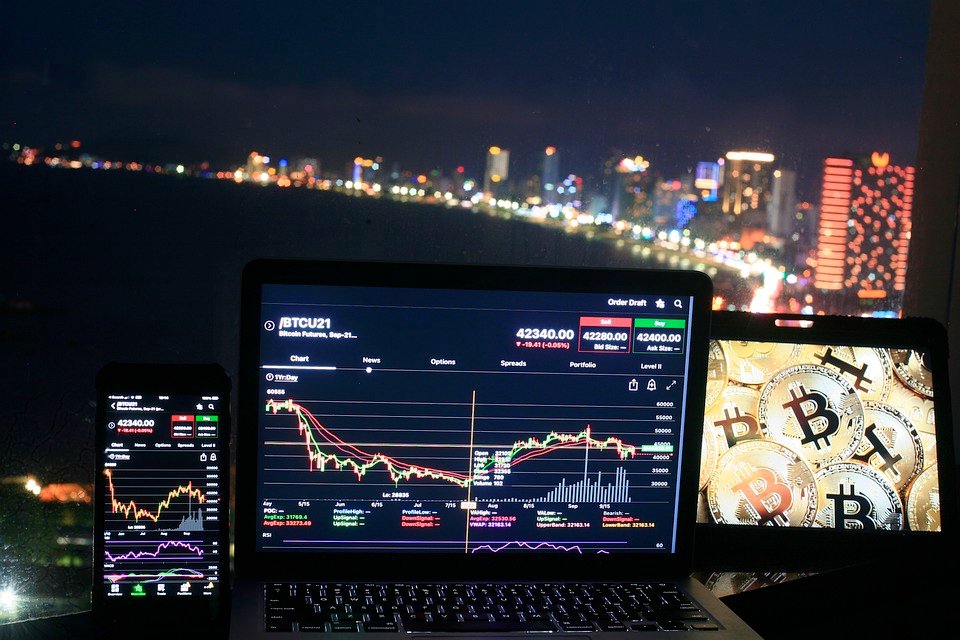
The price of Bitcoin is highly volatile and can be impacted by several factors, including news about the cryptocurrency industry, geopolitical events, regulatory policies, or even user demand changes.
This high level of volatility can make it difficult for investors to predict the movement of Bitcoin prices accurately.
And they must be prepared to manage their portfolios accordingly. By knowing how volatility works, investors can better position themselves to take advantage of potential gains while minimizing losses.
Finally, by understanding the key factors influencing Bitcoin’s volatility, investors can learn how to manage their positions better and navigate the risks associated with trading this digital asset.
In doing so, they can maximize their returns and minimize losses in an ever-changing market environment. Read More…