How to Paint Upholstery (& Keep It Soft!)
-
 Loading...
 - Spora Njoya
- 29 Aug 2022
- 66 Views
- 0 Like
- 0 Comment
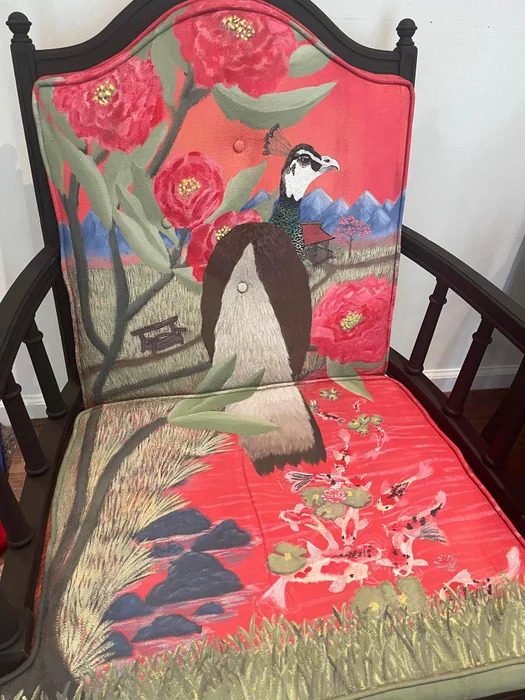
Did you know you can paint exquisite works of art (or even just simply paint) on upholstery fabric?
It's true!
And I'm not talking simply applying paint to a piece of fabric, which can cause the fabric to feel thick, grainy, or even leather-like. I'm talking about painting the upholstery and still keeping it SOFT and fabric-like.
This Instructable will teach you exactly that. And once you learn this simple technique, the sky is literally the limit!
Supplies
-Upholstered Furniture (I am painting a set of chairs)
-Chalk or Mineral paint in a variety of colors
-Dixie Belle BOSS (I prefer it in the color White)
-3000 grit sandpaper (or sanding block)
-Spray bottle with a Super Fine hole
-Variety of Round chalk brushes
-Variety of paintbrushes
-Fabric Sealer (I recommend Easy Peasy Spray Wax by Dixie Belle)
-Pencil and big eraser
-Vacuum
-Cleaning wipes
-OPTIONAL: Hairdryer
-OPTIONAL: Furniture Transfers or Embellishments
-OPTIONAL: Black permanent paint pen
Step 1: Prep the Furniture

Use a vacuum to thoroughly clean on and under the upholstery fabric and cushions.
Use a cleaning wipe to clean the framing of the furniture.
Paint any soiled areas of the fabric with Dixie Belle BOSS. This may take a couple coats. And you don't need to apply it EVERYWHERE (unless everywhere is soiled), it only needs to be applied to places that need it. Dixie Belle BOSS prevents bleed through, bad smells, and more! It's a great thing to have on hand!
TIP: Choose a furniture piece that has fabric that can handle some "abuse." Don't choose one with velvet or a thinner material. Also, try to stay away from heavily textured fabric, unless you have done this technique a bunch and feel comfortable with the extra work required for dealing with this type of fabric. It's best to pick a smooth fabric that is durable upholstery fabric. So if you're considering buying a furniture piece specifically TO paint, then this tip will come in handy! If you don't have a choice and are painting whatever you have already, just know that some fabrics make painting them a lot more challenging -- although not impossible.
Step 2: Paint the Base Coat
TIP: DO NOT PAINT THE FRAME OF YOUR FURNITURE FIRST. You will regret it (trust me!). Paint your frame LAST.
Using your lightest color on hand, paint the entire piece's fabric (front, back, everywhere) with it. This is an important first step to give yourself a "blank canvas," and to make your painted colors more vibrant! Since they're over a light-colored or white background, they will show up better.
TECHNIQUE TO PAINT UPHOLSTERY FABRIC:
1. Get a thick layer of that light-colored paint on the ROUND chalk brush of your choosing.
2. With spray bottle in hand (you may be able to find one with a fine tip in the makeup section of Walmart), start a couple of CIRCULAR brush strokes. Then spray the area you started painting VERY LIGHTLY with water (maybe 1-2 spritzes).
3. Next, continue working the paint in a CIRCULAR motion as far away in all directions as you can from the origin. Really move that paint out as far as it can go.
4. Repeat this process over and over until all the fabric is painted.
WARNING:
Do NOT drench the fabric with water as you've seen done in some tutorials!
This causes the paint to seep down into the cushions, and it makes the cushion texture and plushness of the cushion soppy and globbed full of paint (which is even more disgusting when the paint dries). It can also cause a breakdown of the cushion material inside, as well as cause it to develop mold from the soaked cushion material being "locked in" to the cushion with nowhere for it to go as it tries to dry out. You really only need the water to help the paint spread and seep into the SURFACE of the fabric, NOT into the cushions.
Step 3: Sand It!
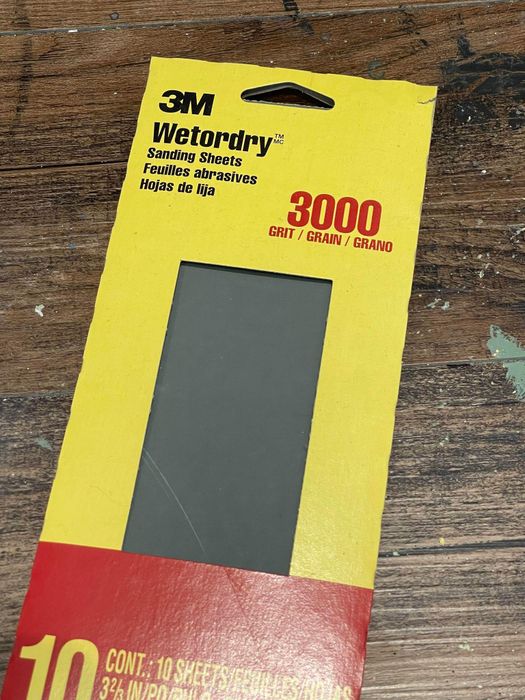
This is the TRICK (besides using minimal water) to getting that nice and soft upholstery finish!
SAND THE FABRIC AFTER EACH PAINT LAYER.
It keeps the painted fabric feeling like FABRIC. :)
If you don't have a sanding block, use 3000 grit sandpaper for this! Especially if you are painting highly detailed work on your piece (like I am), you don't want all those hours of work sanded off with too heavy of sandpaper. And yes, 220 is TOO HEAVY!!! Especially if you're using chalk paint, as it is SUPER EASY to sand off with just barely touching it! So trust me on the 3000 grit sandpaper!
Lightly, I repeat, LIGHTLY sand between EACH paint layer. Read More...