How to Store Film Negatives and Honor Your Work
-
 Loading...
 - David Smith
- 01 Jun 2022
- 285 Views
- 0 Like
- 0 Comment
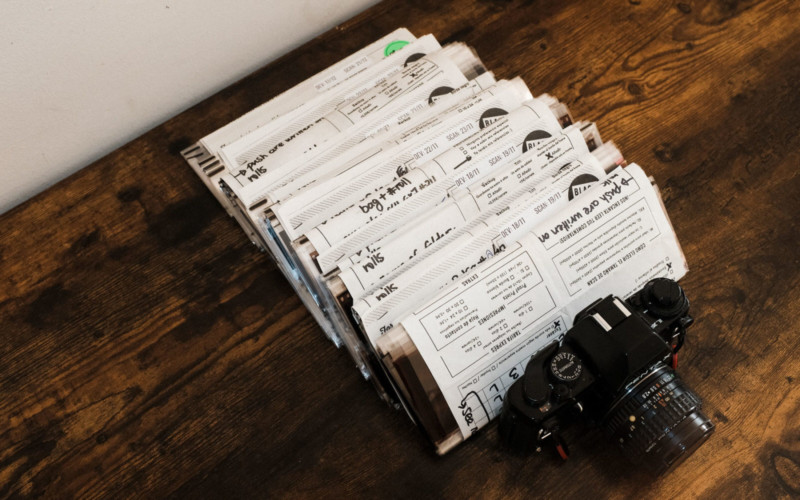
In the past few weeks, I’ve received a lot of requests to share my process for organizing and archiving negatives, and the timing was perfect because a big batch just arrived from my friends at Carmencita Film Lab. Look at this sweet sight of fresh negatives!
There are many reasons to keep your negatives organized and at the center of all of them is the belief that your photos matter. Whether you’re a professional or a hobbyist, your work is important. It doesn’t matter whether it’s important to the entire planet or only to your partner or your future child or your family.
Keeping a tidy archive is like making your bed in the morning. It’s a little bit of work up front but it pays off tremendously if you do it consistently. A calm mind, an easily found photo, a chronological timeline of your life and photography skills, and a bunch of other things that Future You would be grateful to Today You for.
Sure, you can keep your negatives in the envelope and throw them in a shoebox and you could probably find something if you dig through it for a while, but once again: your work matters, so treat it that way.
Negative Binders and Sleeves
Let’s get started! Here’s everything we need. A pen, negative binders, and sleeves.
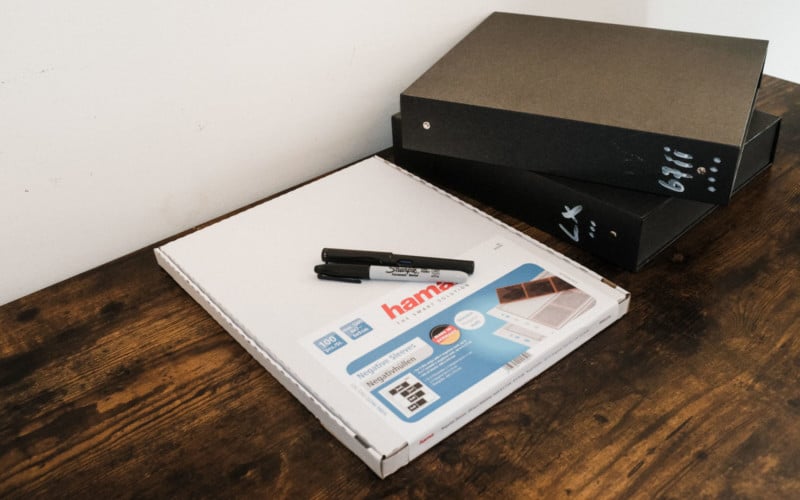
I recently switched from polyethylene sleeves by Printfile to glassine sleeves by Hama. The polyethylene sleeves are transparent which makes it easier to see the negatives, but they’re significantly more expensive and it’s 2022 so I switched.
Hama has been around for nearly 100 years and all my dad’s negatives from the 80s and 90s have been stored in these for decades. They’re also a bit lighter in weight, and they have a satisfying sound when you’re leafing through your binder.
For storage, I use Ars-Imago ring box binders, which keep away dust and look great on my shelves. My pals at Retro Camera sell them and they fit 100 rolls of film. There are many other options that are fine too. All you really need is any three-ring binder.
I mark the spine with the name of the camera used since that is the top level of my organization. I add dots to indicate which rolls are in that binder. If the spine has one dot, that means it contains rolls 1 through 100. The top binder in the picture above says “67ii ••••”, which means it has rolls 300 through 400 shot on the Pentax 67ii.
Handling Each Batch of Film
Let’s grab our first roll from the batch of fresh negatives and get started!
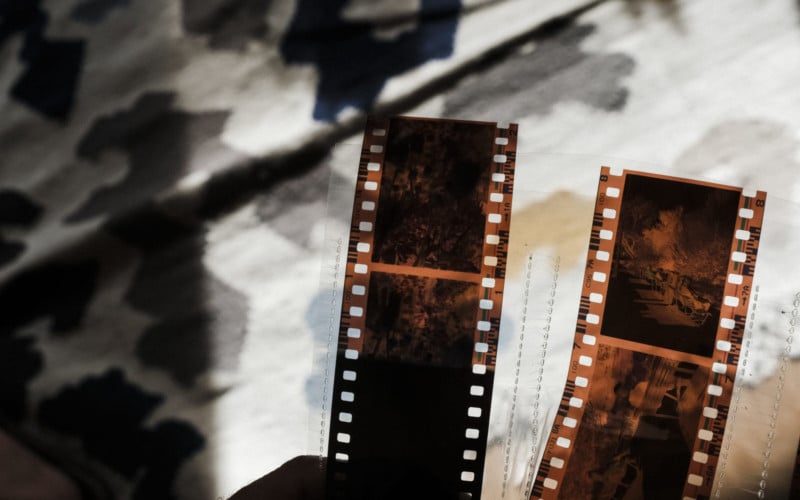
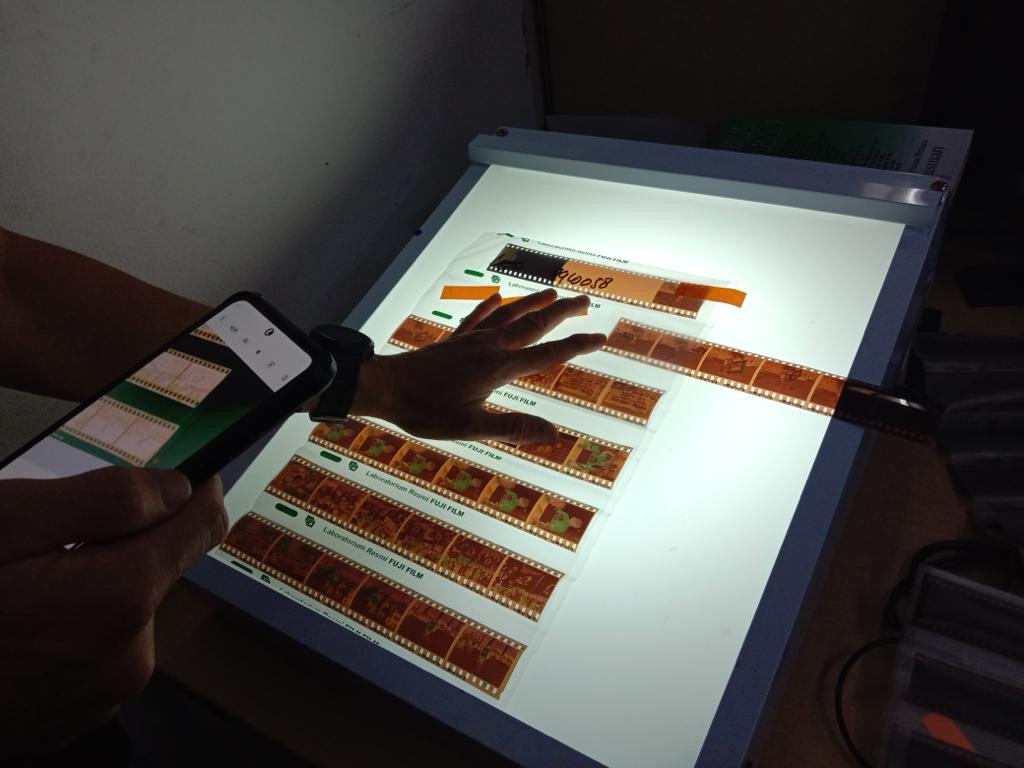
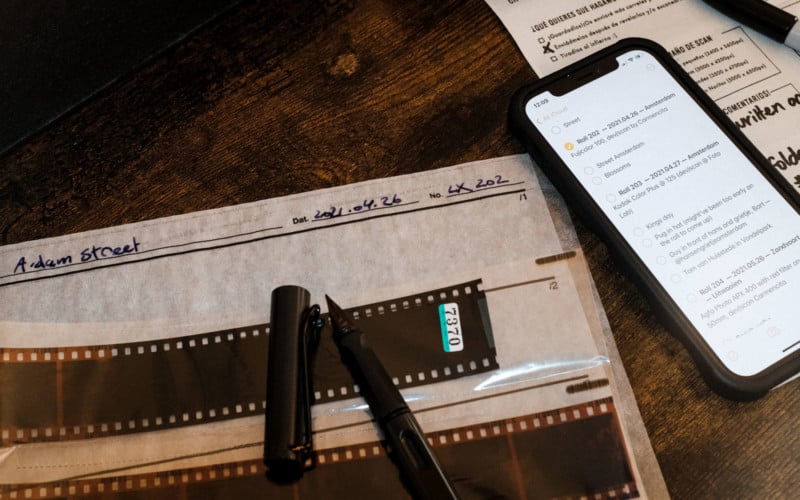
First I take a quick look to see what’s on this roll (see above). Then I consult my roll notes (see the phone screen below) to confirm it was roll 202 shot on the Pentax LX.
Next, I cross-reference what I see on the negative with what is in the scan folder for roll 202 to make sure no mistakes were made (see below). These first three steps take maybe one minute combined once you’re well-practiced.
I am a big proponent of keeping notes for each roll of film, which I do on Apple Notes. These notes play a key role in an organized archive. If I ever need to find a portrait of a specific person all I have to do is search my roll notes for their name with the Apple search function and it shows me which roll it’s on, which in turn tells me which binder to grab. It’s super fast and easy.
Back to archiving: Now that I’ve determined which roll this sleeve is, I transpose the key information from my roll notes onto the new sleeve (see below). Each sleeve has, from right to left, the shorthand code for the camera (LX = Pentax LX), the roll number (202), the date (2021.04.26), and the theme of the shoot (Amsterdam street photography).
Now we know which roll we’re archiving and we’ve marked up the sleeve. It’s time to move the negatives from their temporary non-archival plastic sleeves into their new forever home . Read More...