Hungarian Food & The 85 Dishes You Should Know
-
 Loading...
 - Adio Tarek
- 20 Sep 2022
- 58 Views
- 0 Like
- 0 Comment
From lángos to goulash to chicken paprikash — learn about the history of Hungarian food and the country's top dishes.
Hungarian food 101
Hungarian food is a reflection of Hungary's continental climate (cold winters, hot summers), the countryside fare, and the influences of neighboring countries and ethnic minorities. For example, while Hungarians have been eating some form of goulash for hundreds of years, dishes like stuffed peppers, schnitzel, and cholent have gradually seeped into the mainstream thanks to Ottoman, Austrian, and Jewish influences, respectively.
The culinary high point of medieval Hungary was the 15th-century reign of renaissance king Matthias. Through his Naples-born wife, Beatrice, Matthias hired skilled foreign chefs who whipped up elaborate feasts in the royal palace that could rival those in Italy at the time.
While the occupation by Ottoman Turkey ended Hungary's independence for nearly two centuries, it also brought forth important culinary innovations — stuffed vegetables, some dessert dishes, and coffee appeared in this time. This was also when New World produces like beans, squash, corn, potato, tomato, and paprika first arrived in Hungary. In fact, paprika (capsicum) went on to revolutionize Hungarian food after local farmers cultivated a host of subspecies ranging from sweet to scorching hot.
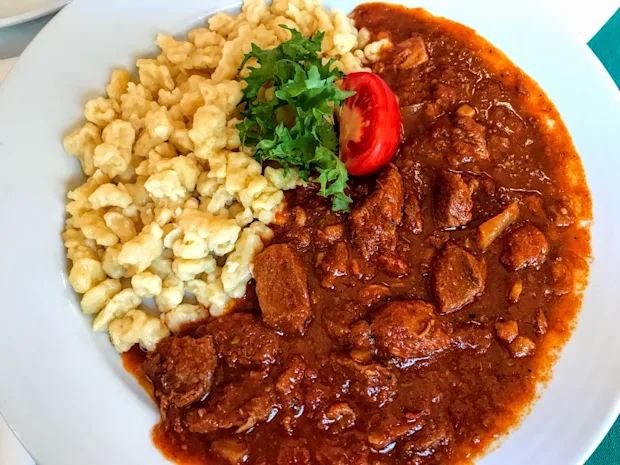
Meanwhile, the delicate French cooking techniques began to spread into the households of the aristocracy and later the whole country, taming the somewhat crude and spicy Hungarian peasant fare (for example roux replaced bread as a thickener). This yielded a more refined yet still distinct cooking style that's considered the basis of modern Hungarian food. Read More...