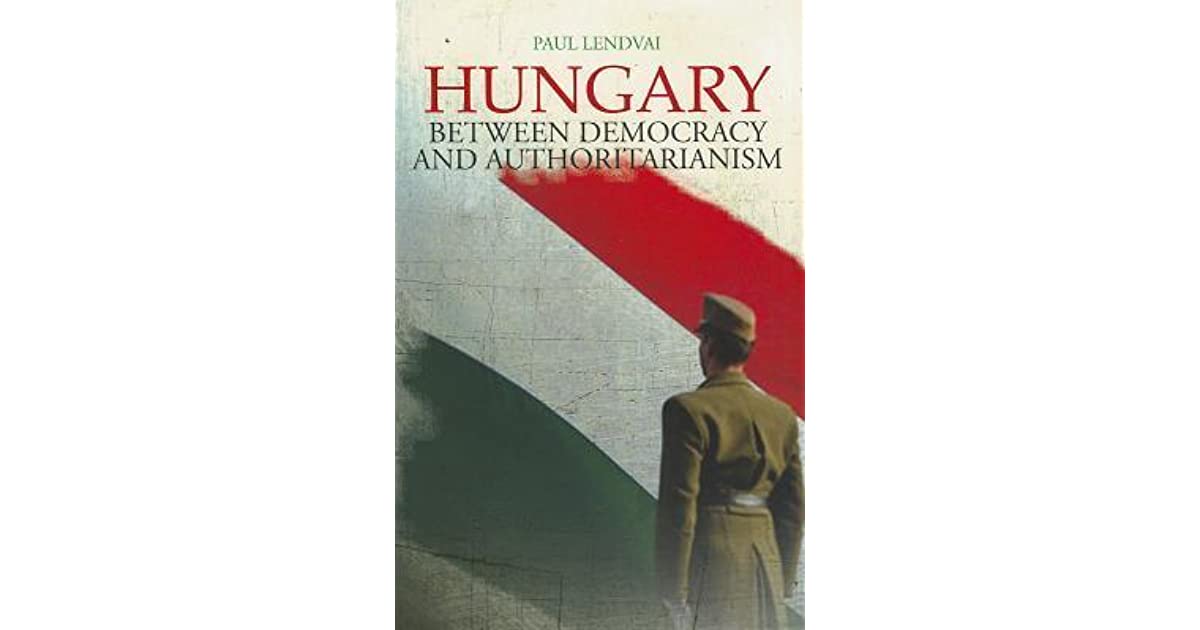
Hungary: Between Democracy and Authoritarianism
-
 Loading...
 - Anneli Manurmi
- 17 Jun 2022
- 253 Views
- 0 Like
- 0 Comment
How has Hungary, a country once in the vanguard of political and economic reform under Communism, become a chilling example of the new threats confronting democracy in Central Europe? The return of Hungary’s demons of the past — nationalism, ethnic hatred, deeply-rooted corruption and authoritarian tendencies — has engendered international concern. Since winning a two-thirds majority in parliament in the spring of 2010, the dynamic right-wing populist Prime Minister Viktor Orban has embarked on a sweeping and ruthless concentration of power and has sought to reshape the state in his own image.
A new constitution and a sweeping series of laws and decrees — radical changes in the judicial and electoral system and the dismantling of constitutional safeguards ensuring the autonomy of the executive branch and the freedom of the media — seem destined to ensure a long-term hegemony of the far right. Meanwhile a campaign of vituperative nationalist rhetoric and the granting of voting rights to 2.5 million ethnic Hungarians living in neighbouring countries are bound to increase tensions in this volatile corner of Europe.
Lendvai offers readers an unsparing and dispassionate account, based on his intimate personal knowledge of Hungary’s major political figures and its political culture, of the turbulent events since the collapse of the Communist regime which affect not only Hungary, but also the political and economic stability of the Danube basin.
Reviews
‘The case against Orbán is set out with great passion in this convincing indictment of the most powerful political figure in the eastern EU … This is gloves-off political writing at its best.’ — The Financial Times
‘Paul Lendvai, the Hungarian writer with Budapest roots, sheds light upon the darkening internal affairs of the young Hungarian democracy. … Lendvai provides indispensable help for our orientation and attitude towards the country and its representatives.’ — Die Zeit
‘Hungary: Between Democracy and Authoritarianism charts the political decline of Hungary in the two decades following the changes of the late 1980s and its rightward slide. … Lendvai’s account is lucid, thoughtful and honest. … [it] is currently the best introduction.’ — Slavonic & East European Review
‘This book makes disturbing reading. Tracing the evolution of Hungarian politics since the end of communism, the highly experienced Austrian journalist and author Paul Lendvai provides a picture of repeated governmental failure to overcome economic difficulties and democratic deficit, culminating in the problematic course since 2010 of the ruling Fidesz Party, led by Viktor Orbán. Lendvai, a Hungarian-born refugee from the suppressed revolution of 1956, has used his insider-outsider position and late communist Hungary’s relatively liberal reputation to interview all Hungarian leaders from János Kádár onwards extensively, with the exception, it seems, of Orbán.’ — Robin Okey, H-Net
‘Paul Lendvai is a legend. No one knows Hungary better or is better equipped to navigate its political decent. Lendvai’s thesis weaves the critical insights of an outsider with a native’s fluency and understanding, all translated through a journalist’s eye for detail and narrative, to portray the grim reality of a teetering democratic society.’ — Frederick Kempe, President and CEO of the Atlantic Council and author of Berlin 1961
‘Lendvai, a Hungarian-born veteran Austrian journalist, paints a discouraging picture of Hungary. For those who assume that the country, safely sheltered in the European Union and NATO, is well on the way to democratic stability and western European-style liberalism, this book will come as a bit of a shock. In Lendvai’s eyes, the wilful, power-hungry Orbán has evolved from a dynamic leader into a calculating nationalist bent on closing off democratic options and ready to exploit anti-Semitism and anti-Roma sentiment. Although Lendvai’s indictment is sharpest against Hungary’s current leader, he makes plain that the corruption and economic recklessness of earlier governments did their part to bring about the country’s degradation. Not surprisingly, Lendvai’s assessment has kicked up more than a little dust in Hungary.’ — Foreign Affairs
‘Hungary faces a major crisis affecting its national economy, as well as its foreign policy. With the country moving away from Europe, it is no longer certain whether it will remain part of it. In this critical situation Professor Lendvai’s book provides an authoritative account of the background of this crisis and its likely outcome.’ — Walter Laqueur, author of After the Fall: the End of the European Dream
‘Lendvai is one of the grand old men of Central European journalism … but never before has one of his titles provoked such fierce reactions from the powers that be.’ — Paul Hockenos, The Boston Review
‘In this deeply disturbing book, the veteran journalist and historian Paul Lendvai shows how from the heady optimism of 1989, Hungary has turned into the most autocratic state in the European Union. It has a government now that is reminiscent in style, if not ideology, of the one-party states of the Soviet era. And he argues, powerfully, that Hungary’s slide backwards from shared European values has created a democratic deficit that poses a fundamental challenge to the EU every bit as dangerous as the financial deficits faced by countries like Greece.’ — International Affairs
‘Lendvai’s new book is essential reading for anyone concerned with the struggle of the post-Communist world to free itself of the persistent stranglehold of political corruption.’ — New English Review
‘Hungary: Between Authoritarianism and Democracy is more than a history of the last twenty-five years … In a mere 250 pages Lendvai investigates Hungarian nationalism, the roots of antisemitism, the state of the Hungarian media, the growth of the extreme right and its targets, the Roma and the Jews. […] Foreign diplomats, journalists, and businessmen … should definitely read Lendvai’s book … the rest of us can learn from Lendvai’s unique insights.’ — Hungarian Spectrum
‘Lendvai’s book should be required reading for diplomats, politicians and investors as well as the informed public concerned with the phenomenal current rise of anti-Semitism in this region. [It] has been endorsed by the Hungarian political and intellectual elite, in their own way. The first prospective publisher of an earlier, Hungarian version of this book, backed out from the project under government pressure; but the book was eventually published last year, and immediately became a bestseller.’ — The Jerusalem Report
‘[Lendvai’s] sympathetic coverage of Hungary’s now floundering effort to build a liberal democracy … has won this country many friends abroad. … His new book is essential reading for diplomats, politicians and investors as well as the informed public concerned with the phenomenal current rise of the anti-Semitism in this region.’ — Thomas Orszag-Land, Association of Jewish Refugees Journal
‘This vivid history of Hungary after the end of communist rule is a must-read for anybody interested in understanding how easily liberal democracy in central Europe can be rolled back.’ — Karl Pfeifer, Harry’s Place. Read More...