The Chilean Democracy: Unwritten and Thriving
-
 Loading...
 - Pippa Bruni
- 05 Apr 2023
- 73 Views
- 0 Like
- 0 Comment
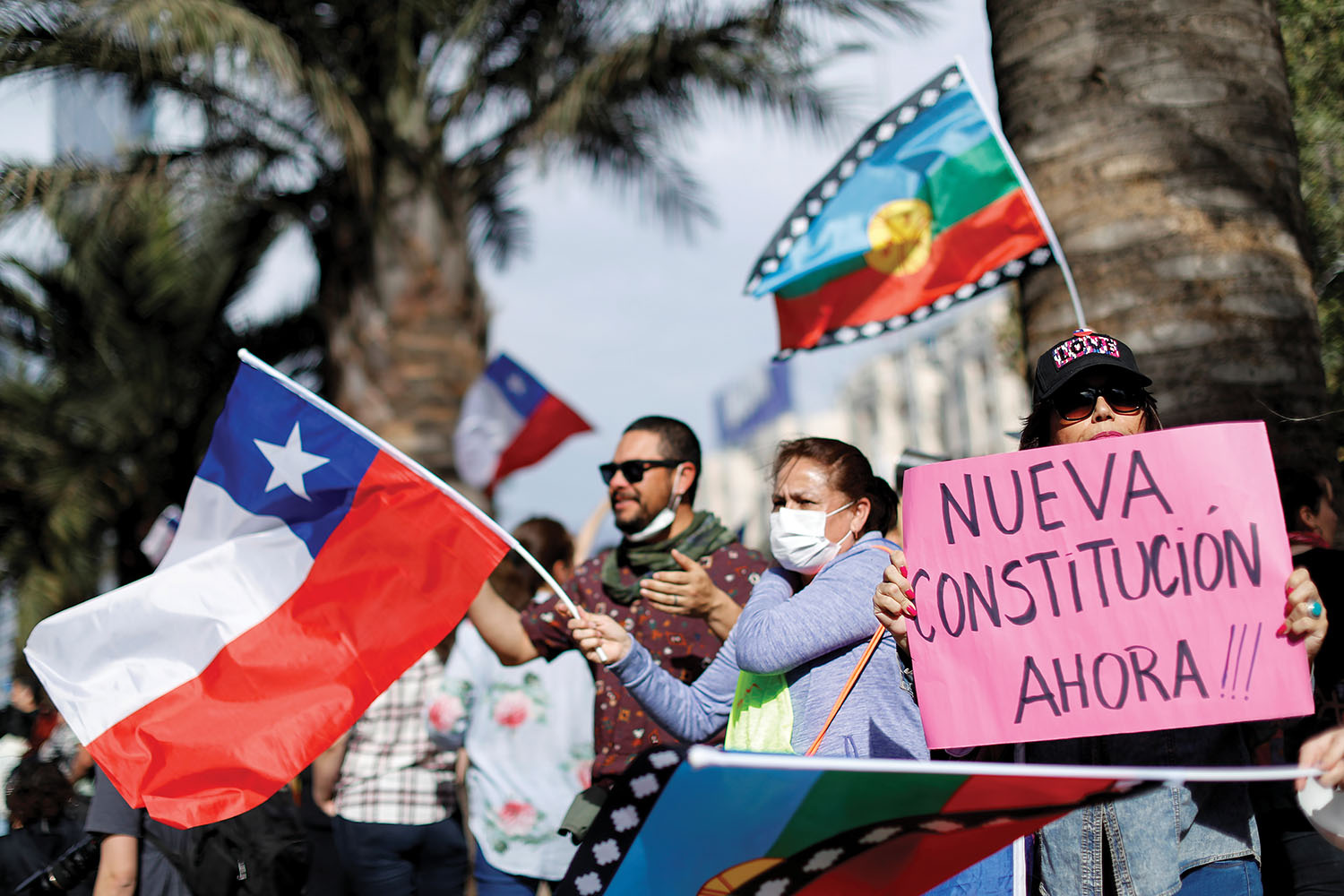
In 2019, Chilean citizens took to the streets in one of the largest anti-government protests in the nation’s young democratic history. One of their key motivations was a request to rewrite the Chilean constitution. The existing document is one of a few remnants of the dictatorship of Augusto Pinochet, who was installed in 1973 by a coup that received covert support from the CIA. His violent, military-supported seizure of power usurped the democratically-elected socialist government of Salvador Allende. His constitution granted undemocratic veto power to military and far-right parties, even after the fall of his regime. For young liberals and leftists in the country, this constitution represents a dark past of authoritarianism and imperialism.
Pressured by the protestors, the then-centrist government held a referendum in 2020 to measure public support for a new constitution. The results were undeniable: 78 percent of people voted in favor of writing a new constitution. The government of Chile acted swiftly to rewrite the country’s founding document, establishing an elected 154-body Constitutional Convention with gender parity and indigenous participants. For the past two years, this convention has been working on a draft constitution, covering rights for women, the autonomy of indigenous communities, environmental regulations, and a system of universal healthcare. Many people, both within Chile and globally, waited excitedly for the new constitution, hoping it would position Chile to become one of the most progressive countries in Latin America.
Despite the overwhelming public support for redrafting the constitution, the finalized document was vehemently opposed by the majority of Chileans. Only 38 percent of voters supported the new constitution. Many Chileans explained that the document was far too radical; one complaint was that it named Chile a “plurinational” state comprising indigenous and European-descended communities. It seems that the average political stance is far more moderate than what was previously predicted.
The election of President Gabriel Boric, a socialist, in 2021, following the second presidential term of conservative Sebastian Piñera, made it seem like the majority of Chileans were ready for a progressive, reformist government. For most of the past decades, Chilean presidents have been members of the center-right or center-left parties which largely maintain the free market status quo. Left-leaning political sentiment, catalyzed by the wave of student protests in 2019 against economic disparities, probably pushed a lot of people, at least momentarily, further left. Read More…