In Cameroon's Ebo Forest, the Oscar should not go to DiCaprio
-
 Loading...
 - Noura Achu
- 11 Aug 2022
- 68 Views
- 0 Like
- 0 Comment
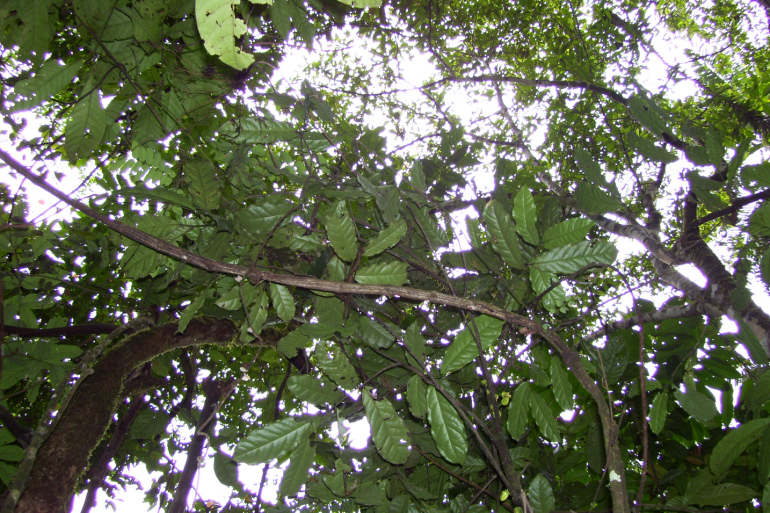
Earlier this month, Leonardo DiCaprio gained a new namesake in the form of a tropical tree from Cameroon. The first plant species named in 2022 by the UK’s Royal Botanic Gardens, Kew, is called “Uvariopsis dicaprio” after Leonardo DiCaprio’s “efforts to preserve its home in the precious Ebo Forest”.
He used social media “to help revoke a logging concession for the forest in 2020”, but while no effort should be underestimated, the real heroes in the campaign to save the forest were the local Banen communities.
Cameroon’s Ebo Forest is an intact forest ecosystem, with a surface area of more than 2,000 sq km (772 sq miles) – greater than the size of London in the UK. It is a massive biodiversity hotspot, home to forest elephants, drills, gorillas, and Nigeria-Cameroon chimpanzees, who fashion tools from stones to crack nuts and sticks to fish for food and are the rarest subspecies in Africa.
Like any rainforest, Ebo is an important carbon sink. It contains an estimated 35 million tonnes of carbon – that is about three times the annual emissions from passenger cars in London.
The forest is also home to more than 40 Banen communities. These communities have been campaigning for their right to return to the forest from which they were displaced in 1963 during the dirty war by France’s puppet regime against the freedom fighters who had just freed the country from colonial rule. To the Banen people, Ebo Forest is their sacred ancestral land where their dead are buried.
In early 2020, Cameroon’s government told local communities it had decided to open up Ebo Forest for industrial logging. Logging has never advanced any Central African economy but has, instead, made a small circle of elites richer and local communities poorer.
The government pushed ahead, despite the rejection of the plans by Banen communities, the violation of the local forestry law, and the internationally recognised right of local and Indigenous communities to give their free, prior and informed consent (FPIC).
It was Banen leaders who spearheaded the political struggle for Ebo Forest from day one until logging plans were indefinitely suspended six months later in August 2020. They did so in tandem with Cameroonian researchers like Dr Ekwoge Abwe, who has devoted his life to the protection of Ebo Forest, its biodiversity and the rights of its communities.
The decree to allow felling also violated a 2006 pledge by Cameroon’s government to turn Ebo Forest into a national park, a plan which was also opposed by the communities – unsurprisingly, given the disastrous reputation big-budget conservation has gained in the region – though favoured by the UK scientists who named Ebo’s tree after DiCaprio. Read More...