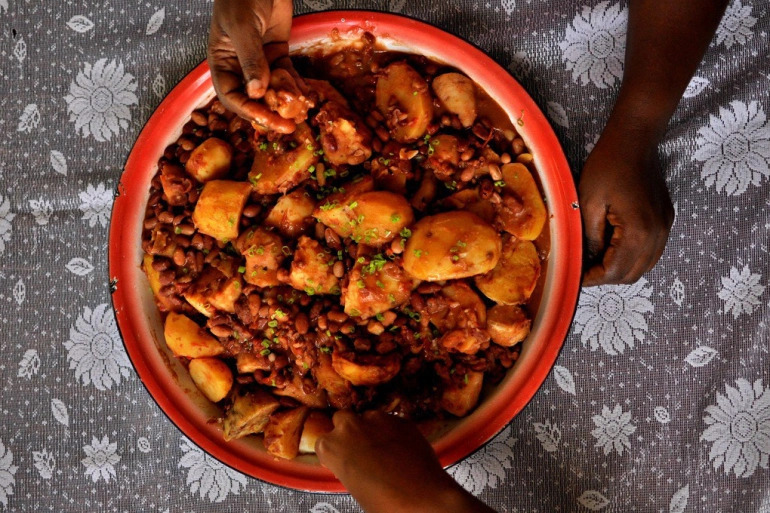
In Uganda, katogo is more than sun-dried cassava and memories
-
 Loading...
 - Hope Atubo
- 23 Jun 2022
- 166 Views
- 0 Like
- 0 Comment
“We have two more bunches,” I shouted so that my younger sister, who was in the other room, could hear me as I carried two hands of fresh green bananas (locally known as matooke) from the front door to the kitchen. It was the second time that week that we had received bananas from generous neighbours and now we had a heap of four hands to eat our way through.
Preparing green bananas for cooking is a tedious process, so I suggested we sit on the verandah to peel them while we still had daylight as it was late in the afternoon. Armed with the best knives we could find, my sister and I sat down, put on a podcast, and started peeling the bananas. The plan was to peel all of them and then store them in the refrigerator to be used for katogo later; prepping, as most cooks will tell you, is everything.
As I haphazardly, unevenly, peeled one finger – something that was expected, especially if you are still considered an amateur – I remembered the many times that I, as a clumsy child, watched my mother peel matooke to make katogo with effortless grace. Her process was a rhythmic flourish between hands, knife and banana fingers. She would do more than just grip the knife, she gently held it in position, just so, so the peels glided off the bananas in an impressive swoop.
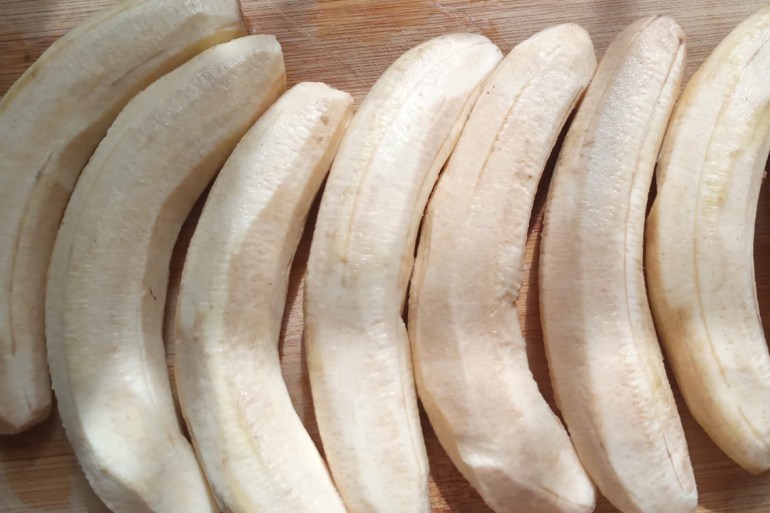
My greatest desire as a child at that time was to grow up so I could know how to peel matooke perfectly, like my mother. That was how we learned to cook, that was how knowledge in general, and food knowledge in particular, was handed down through the generations. You watched a lot, then practised and practised until you knew how to do it.
As a curious child, that was how I learned the food knowledge that would kick-start my interest in food and eventually food storytelling. Fast forward to now, I love talking about food, writing about it, cooking it, photographing it, and eating it.
‘Eh, katogo just!’
Today, if you were to ask me what meal I am most likely to eat for the rest of my life, I will always choose katogo, that simple Ugandan dish I watched my mother and grandmother make so many times as a child. It is very adaptable, it gives me – and any cook really – room to experiment with it and to work with either whatever ingredients are readily available or new ones that I want to try out.
I think I knew that as a child because I paid close attention to how that simple dish – of a starch cooked down with either a protein or a vegetable together in one pot into a rich pottage-like meal – is made.

Even though it is commonly perceived as a simple, basic dish, katogo is an anything and everything-goes meal that is so much more than just mixing ingredients together. In just one bite, the composition of the dish can tell you a lot about the cook, the season, or the place you are eating it.
The word katogo itself is derived from various Bantu languages in Uganda and directly translates to “a mixture or mélange of things” in English. Originally, katogo is known to have consisted of cassava cooked with beans. In parts of Uganda where Irish potatoes are grown a lot, it is more likely to find katogo made with Irish potato as the main starch, and areas where matooke is consumed the most will have matooke instead of cassava. Occasionally, yams and sweet potatoes are used too.
“Katogo” has made its way out of the kitchen too, and the word can also be used to describe non-food items and situations in Uglish – which is the local urban dialect that mixes English, Luganda, and sometimes Swahili. For example, if you are attending a concert and it looks disorganised and chaotic, you would simply say “Eh, that concert is katogo just!” Read More…