Indian astronomers investigate open cluster NGC 1027
-
 Loading...
 - Darsh Patel
- 25 Apr 2023
- 63 Views
- 0 Like
- 0 Comment
By analyzing the data from the 104-cm Sampurnanand Telescope (ST) and ESA's Gaia satellite, astronomers from India have inspected a Galactic open cluster known as NGC 1027. Results of the study, published April 12 on the arXiv pre-print server, shed more light on the properties of this cluster.
Open clusters (OCs), formed from the same giant molecular cloud, are groups of stars loosely gravitationally bound to each other. So far, more than 1,000 of them have been discovered in the Milky Way, and scientists are still looking for more, hoping to find a variety of these stellar groupings. Expanding the list of known galactic open clusters and studying them in detail could be crucial for improving our understanding of the formation and evolution of our galaxy.
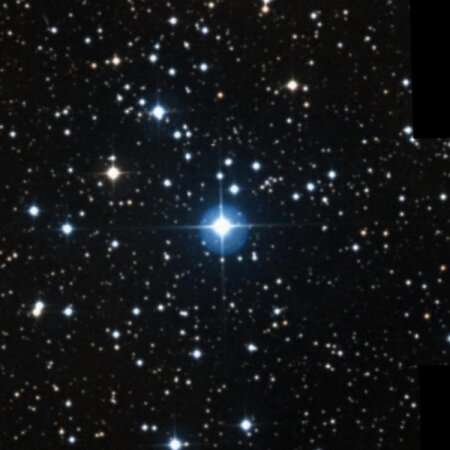
Located some 3,300 light years away in the eastern part of the Cassiopeia constellation, NGC 1027 (also known as Melotte 16 or Collinder 30) is an intermediate-age OC discovered by William Herschel in 1787. The cluster is estimated to be 355 million years old and its reddening was found to be at a level of 0.36 mag.
A team of astronomers led by Apara Tripathi of the Deen Dayal Upadhyaya Gorakhpur University in Gorakhpur, India, decided to perform a photometric and kinematic study of NGC 1027 in order to get more insights into its structural and fundamental parameters. For this purpose they analyzed the available data collected by ST and Gaia.
"We present the photometric and kinematic study of the intermediate-age open cluster NGC 1027 using UBV RIc data taken with the 1.04m Sampunanand telescope and Gaia EDR3 [Early Data Release 3] data," the researchers wrote in the paper.
The study found that NGC 1027 has a radius of about 8.64 light years and that its center is approximately 2 arcminutes away from the center reported by previous observations. The mean proper motion for the cluster was measured to be -0.84 and 2.04 mas/year, in right ascension and declination, respectively. Read More…