Invasive jorŠspiders get huge and flashy — if they're female
-
 Loading...
 - Olivia Taylor
- 01 Apr 2022
- 354 Views
- 0 Like
- 0 Comment
Some thumbnail-sized, brown male spiders in Georgia could be miffed if they paid the least attention to humans and our news obsessions.
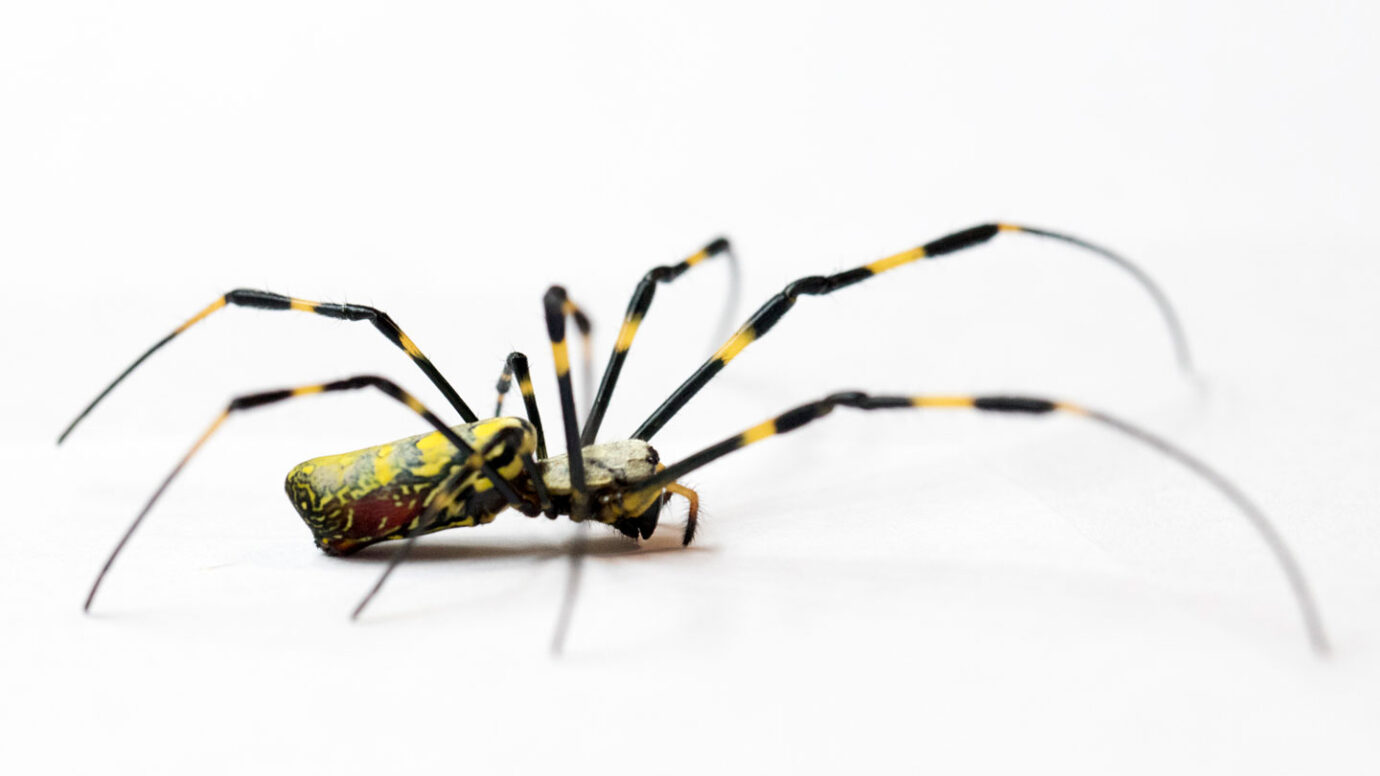
Recent stories have made much of “giant” jorÅ spiders invading North America from eastern Asia, some large enough to span your palm. Lemon yellow bands cross their backs. Bright red bits can add drama, and a softer cheesecake yellow highlights the many joints on long black legs.
The showy giants, however, are just the females of Trichonephila clavata. Males hardly get mentioned except for what they’re not: colorful or big. A he-spider hulk at 8 millimeters barely reaches half the length of small females. Even the species nickname ignores the guys. The word jorÅ, borrowed from Japanese, translates to such unmasculine terms as “courtesan,” “lady-in-waiting” and even “entangling or binding bride.”
Sign Up For the Latest from Science News
Headlines and summaries of the latest Science News articles, delivered to your inbox
E-mail Address*
E-mail
GO
Mismatched sexes are nothing new for spiders. The group shows the most extreme size differences between the sexes known among land animals, says evolutionary biologist Matjaž Kuntner of the Evolutionary Zoology Lab in Ljubljana, Slovenia. The most dramatic case Kuntner has heard of comes from Arachnura logio scorpion spiders in East Asia, with females 14.8 times the size of the males.
With such extreme size differences, mating conflicts in animals can get violent: females cannibalizing males and so on (SN: 11/13/99). As far as Kuntner knows, however, jorÅ spiders don’t engage in these “sexually conflicted” extremes. Males being merely half size or thereabouts might explain the relatively peaceful encounters.
When it comes to humans, these spiders don’t bother anybody who doesn’t bother them. But what a spectacle they make. “I’ve got dozens and dozens in my yard,” says ecologist Andy Davis at the University of Georgia in Athens. “One big web can be 3 or 4 feet in diameter.” JorÅ spiders have lived in northeastern Georgia since at least 2014.
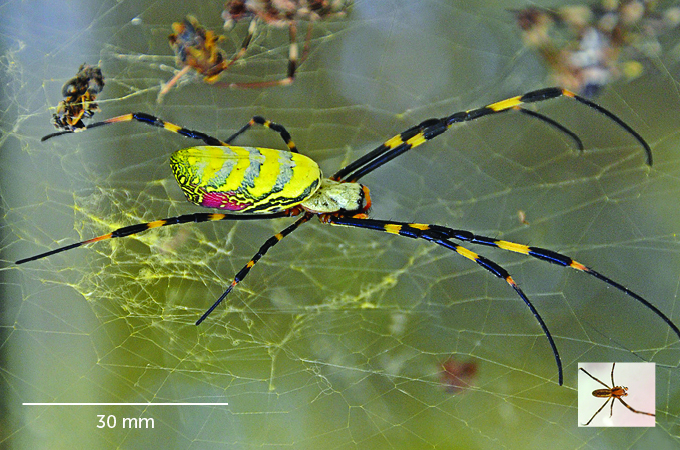
These new neighbors inspired Davis and undergraduate Benjamin Frick to see if the newcomers withstand chills better than an earlier invader, Trichonephila clavipes, their more tropical relative also known as the golden silk orb-weaver. (The jorÅ also can spin yellow-tinged silk.) The earlier arrival’s flashy females and drab males haven’t left the comfy Southeast they invaded at least 160 years ago.
Figuring out the jorÅ’s hardiness involves taking the spider’s pulse. But how do you do that with an arthropod with a hard exoskeleton? A spider’s heart isn’t a mammallike lump circulating blood through a closed system. The jorÅ sluices its bloodlike fluid through a long tube open at both ends. “Think of a garden hose,” says Davis. He has measured heart rates of monarch caterpillars, and he found a spot on a spider’s back where a keen-eyed observer can count throbs. Read More...


