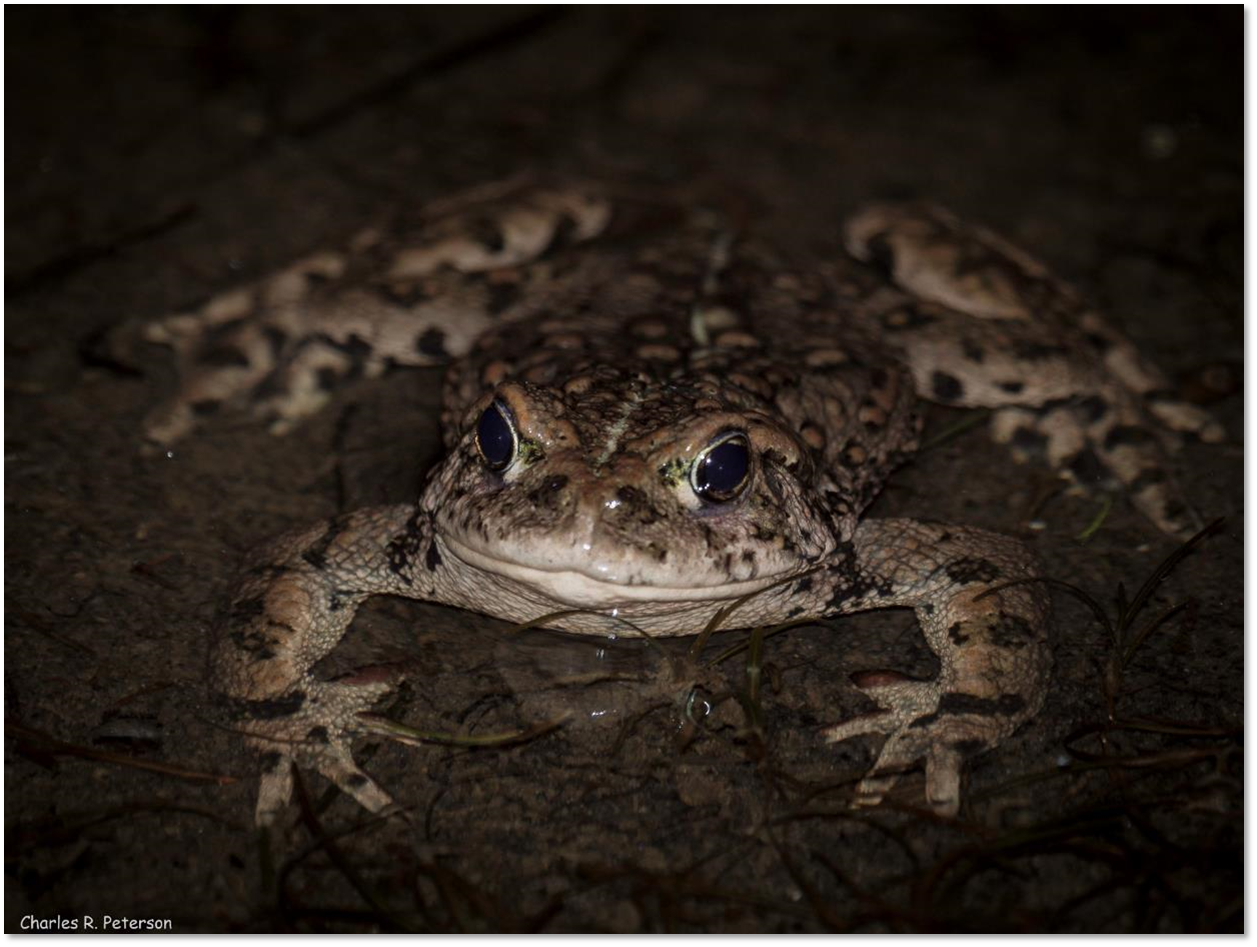
Amphibians of Grand Teton and Yellowstone National Parks
-
 Loading...
 - Jack Davis
- 01 Apr 2022
- 350 Views
- 0 Like
- 0 Comment
When it comes to understanding the health of landscapes like the Greater Yellowstone Ecosystem, scientists have their own canary-in-the-coal-mine – amphibians.
“Amphibians are cryptic and charismatic animals,” says National Park Service ecologist Dr. Andy Ray. “They depend on land and water habitats and are highly sensitive to environmental change, so their presence, their absence and their abundance tell us a lot about overall ecosystem health.”
And this is one big ecosystem – as large as 20 million acres across parts of Wyoming, Montana and Idaho including two national parks (Grand Teton and Yellowstone), portions of five national forests, three national wildlife refuges, BLM holdings, as well as state, tribal and private lands.
Ecologists and scientists have been studying Greater Yellowstone Ecosystem amphibians – frogs, toads, and salamanders – for up to 70 years in some cases. Multiple studies across decades offer scientists and land managers a nuanced look at the ecosystem and what drives the decline in amphibian species. According to the International Union for Conservation of Nature (IUCN), 35 percent of known amphibian species in North America are described as vulnerable in at least some part of their range. “And a 2013 study,” Ray says, “indicates that on average, U.S. amphibian populations are declining at a rate of approximately four percent annually. This includes populations on public lands.”
The volume of information and its importance to understanding amphibians and the Greater Yellowstone Ecosystem motivated scientists from the National Park Service, the U.S. Geological Survey, and the University of Wyoming to collaborate on a special series of papers in the journal Ecological Indicators. Long-term monitoring of a species suite of Ecological Indicators: A coordinated conservation framework for the Greater Yellowstone Ecosystem highlights the importance of long-term monitoring and research of amphibians and their primary habitats in national parks and other public lands.
Across the National Park System, long-term monitoring helps ecologists and other scientists understand of the effects of invasive species, disease, and climate change on amphibians. The American bullfrog, for example, is native in the eastern US but invasive in the west. Its Greater Yellowstone population is limited so far, but the species has contributed to native amphibian declines elsewhere. Widespread disease caused by the amphibian chytrid fungus and ranaviruses have been documented across the Greater Yellowstone Ecosystem.
Scientists don’t yet know how climate change will interact with invasives and disease, but it is likely to be a compounding factor. “The climate signal in national parks is clearest because we haven’t had large land-use changes—the development—that's happened outside park boundaries,” Ray says.
Each of the Ecological Indicators papers details the work that the authors have led or represents a review of the body of work on a topic, says Kristin Legg of the National Park Service’s Inventory and Monitoring Division and the Greater Yellowstone Network program manager. “One of the studies is focused on Lake Village in Yellowstone. The original work was done in the 1950s and has carried that work forward to the present day.”
The studies are wide-ranging. One looks at how data gathered with satellite technology can be used to characterize amphibian habitat change. Another examines the role of community scientists in contributing data and important observations to amphibian monitoring.
Other key takeaways from the papers include:
- National parks are important locations to explore impacts of climate change on amphibians and their habitats, In Yellowstone and Grand Teton national parks, air temperatures have increased and snowpacks declined in recent decades.
- Multi-species monitoring shows that Greater Yellowstone Ecosystem amphibian species differ in their vulnerability to climate change.
- Amphibians respond to changes in snowpack. Higher snowpacks typically correspond with more wetland habitat and a larger number of wetlands used by amphibians.
- National parks have been proactive in reducing amphibian threats. Grand Teton NP has implemented road closures to protect migrating amphibians. Read More...